

Spanish Rail Authorities Impose Temporary Speed Limits Amid Safety Concerns
In response to a recently detected fault, Spanish rail authorities have lowered the speed limit on a section of the high-speed line connecting Madrid and Barcelona. This decision by Transport Minister Óscar Puente comes after a crack was discovered in the track, located 110 kilometers (about 68 miles) west of Barcelona, specifically between Alcover and l’Espluga de Francolí in Catalonia. This announcement follows a tragic high-speed collision that resulted in the loss of 45 lives in southern Spain, amidst significant disruptions affecting rail services in northeastern regions.
Details of the Speed Reduction
The transport ministry reassured the public that the identified fault does not pose an immediate danger to trains operating on that line, stating they will continue traveling as scheduled. However, this measure represents the most recent and significant alteration to speed limits in light of the Adamuz accident earlier this month in Andalusia.
For the affected track segment, the new speed limit has been set at 80 km/h (50 mph) until further notice. For context, high-speed trains typically reach speeds of up to 300 km/h on the popular Madrid-Barcelona route, which is one of Spain’s busiest long-distance corridors. Additionally, the previous week saw a temporary reduction of speed limits on various portions of this line to 230 km/h, following drivers’ reports of unusual vibrations. These were later restored to normal limits after thorough technical evaluations.
Broader Impact on Local Rail Services
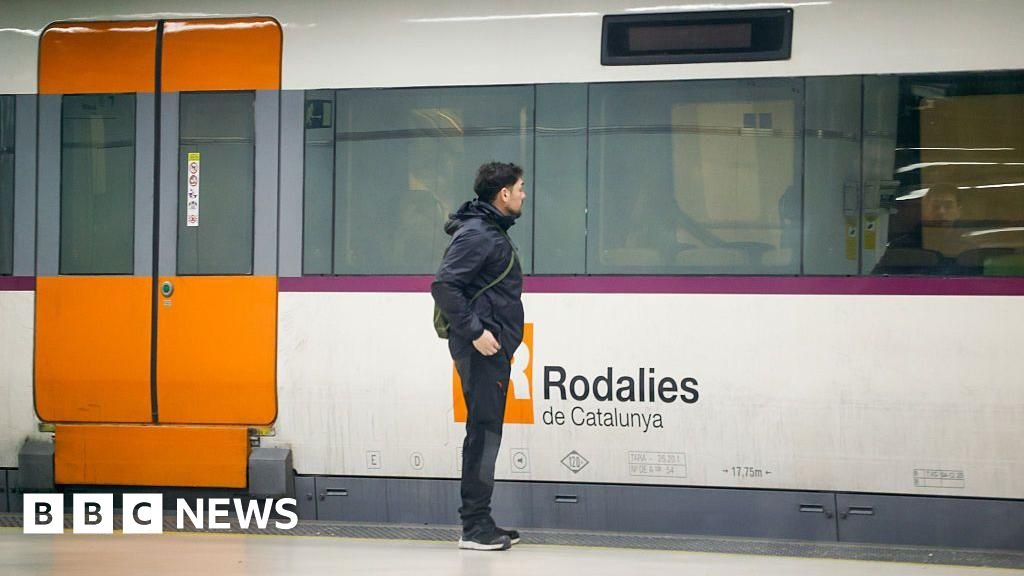
The situation has also adversely affected the local Rodalies rail service in Catalonia, with disruptions becoming frequent. In a tragic incident last week, a trainee driver lost their life when a train encountered a collapsed wall. This incident prompted the grounding of the Rodalies service as drivers sought enhanced safety measures, leading to a review of the lines. On Monday, two additional incidents further intensified the chaos in the region, causing interruptions before a partial resumption of service later on.
The Spanish government is currently investigating the underlying causes of these incidents and has not dismissed the possibility of a cyberattack being involved. The Catalan Republican Left (ERC) party criticized the Rodalies network for suffering from “decades of lack of investment.” Ramon Talamàs, president of the Chamber of Commerce of Terrassa, noted the reputational damage may be as significant, if not more so, than the economic repercussions.
Upcoming Government Accountability
Prime Minister Pedro Sánchez is scheduled to address Congress on February 11 regarding the rail crisis, highlighting the urgent need for accountability amidst ongoing challenges.
As investigations into the Adamuz high-speed crash continue, it has been revealed that the rear carriages of a train heading towards Madrid derailed on a straight section of track, colliding with an oncoming train. Investigators are focusing on a 40 cm (16 in) segment of track that detached shortly before the derailment occurred. Although the transport ministry indicated that this line had undergone renovations and recent technical assessments, it has come to light that the damaged rail segment, made in 2023, was welded to an older piece manufactured in 1989, with the crack appearing at the junction between the two.
Iñaki Barrón, head of the independent commission investigating the crash, stated that “everything appears to suggest that” the separation at the weld was the catalyst for the tragedy. In the aftermath, opposition politicians are calling for the resignation of Óscar Puente, accusing him of misleading the public in the wake of recent tragedies.
Conclusion
The recent actions taken by Spanish rail authorities emphasize the importance of safety and oversight in the wake of recent tragic events. With ongoing investigations and government accountability on the horizon, it remains crucial to address the infrastructure issues that have led to such devastating incidents.
- Speed limits have been temporarily reduced on the high-speed line between Madrid and Barcelona.
- A crack was discovered in the track, necessitating the enforcement of lower speed limits.
- The local Rodalies service in Catalonia has faced severe disruptions amid safety concerns.
- Investigations continue into the recent accidents, leading to calls for accountability from government officials.