

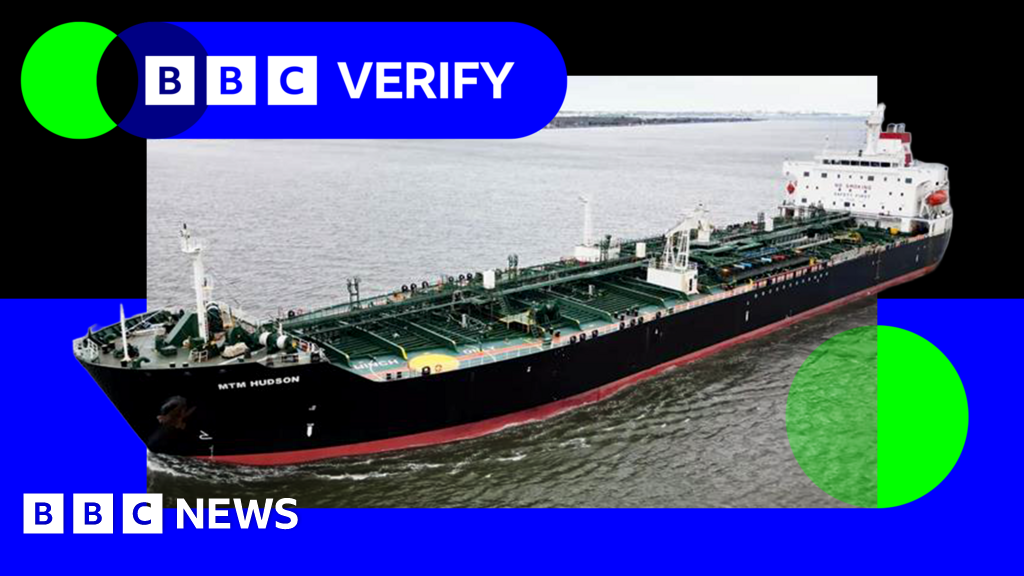
UK’s Struggle with Oil Tankers Evading Sanctions
The ongoing conflict in Ukraine has prompted the UK to impose sanctions on several oil tankers linked to Russia, yet many continue to traverse the English Channel. This article delves into the complexities surrounding these vessels, their connection to the shadow fleet, and the efforts the UK government is making to address this challenge.
The Shadow Fleet’s Movement
Despite pledges from defense officials to act decisively, dozens of tankers facing sanctions have navigated the English Channel this month alone. Since Russia’s extensive invasion of Ukraine, it has leveraged a network of aging tankers with hidden ownership—a phenomenon often referred to as the shadow fleet—to bypass sanctions on its oil exports.
Recent reports indicate that the UK government received legal guidance earlier this month affirming that these vessels could indeed be detained. Nevertheless, 42 sanctioned tankers, tracked by investigative teams, have moved through the English Channel in the aftermath of this legal advice.
Key Players in the Shadow Fleet
A notable example is the Sofos, a tanker that was sanctioned by the UK Foreign Office in May 2025. Having traveled from Venezuela, it recently navigated toward St. Petersburg, Russia. Ship-tracking data reveals that the Sofos loaded oil in Russia in mid-November, proceeded to Turkey, and later returned to Venezuela before turning off its tracking signal. Satellite images confirmed its presence at Venezuela’s Jose oil terminal in late December.
Another tanker, the Nasledie, aged over 20 years, also sailed through the Channel in January. It was sanctioned by the UK in the same month as the Sofos and has reportedly been associated with the shadow fleet since 2023. Having undergone a name change and registration switch, it managed to enter the Channel while carrying roughly 100,000 tonnes of Urals crude oil, despite being on the sanctions list.
Impact of the Shadow Fleet on Sanctions
This shadow fleet has significantly enabled Russia to soften the impact of the embargo imposed on its oil exports since 2022, thus bolstering an economy already strained by Western sanctions. UK Foreign Secretary Yvette Cooper highlighted the commitment to intensifying pressure on Russia, asserting that new measures against these tankers would be implemented, particularly after legal counsel indicated the potential for boarding and seizing vessels under existing laws.
Although the UK cooperated with US forces to intercept a tanker near Iceland earlier this month, it remains to be seen whether British troops will independently seize any of these sanctioned vessels. Investigations have identified several ships operating under false flags, which allows for their classification as stateless vessels and makes them eligible for seizure according to international maritime law.
Dissatisfaction with Current Measures
Dame Emily Thornberry, chair of Parliament’s Foreign Affairs Select Committee, expressed her disappointment regarding the lack of interceptions of these vessels, stating, “We need to ensure that our sanctions are not merely theoretical but also actionable.” Similarly, MP Mike Martin questioned the UK’s hesitance to board these ships, noting that engaging from 12 miles off the coast of Dover should not pose a significant challenge.
Responses from Russia
Amid these developments, Russia has begun to react to the UK’s intentions. Recent reports indicate that a Russian warship escorted the sanctioned tanker General Skobelev through the Channel, signaling a direct rebuttal to the UK’s sanctions enforcement efforts. Additionally, Russian foreign ministry officials have stated any attempts to detain their tankers would be perceived as violations of international law.
Challenges in Enforcement
Despite experiencing pressure to bolster sanctions, monitoring and enforcing actions against the shadow fleet proves to be a complex endeavor. Many sanctioned tankers adopt strategies to evade detection, such as switching their tracking devices off and falsely representing their locations.
According to analysts, sanctioned vessels contribute significantly to the global oil market, moving between $87 billion and $100 billion worth of oil each year. Furthermore, it has been noted that a substantial proportion of Russian crude oil shipments rely on these sanctioned tankers. There is consensus among experts that disrupting this fleet is vital for undermining Russia’s economic stability and its ongoing military operations in Ukraine.
Conclusion
The unfolding situation around the shadow fleet reveals the intricate dance between sanction enforcement and maritime evasion tactics. As the UK grapples with its response, ongoing monitoring and decisive action against these tankers may be crucial in holding Russia accountable and supporting Ukraine in its time of need.
- Dozens of sanctioned tankers have sailed through the English Channel despite UK government pledges to act.
- Legal consultations have confirmed the possibility of detaining these vessels, yet action remains limited.
- Russia capitalizes on the shadow fleet to mitigate sanctions, enabling significant oil trade.
- Calls for more assertive action highlight frustrations over the current enforcement measures against sanctioned vessels.