

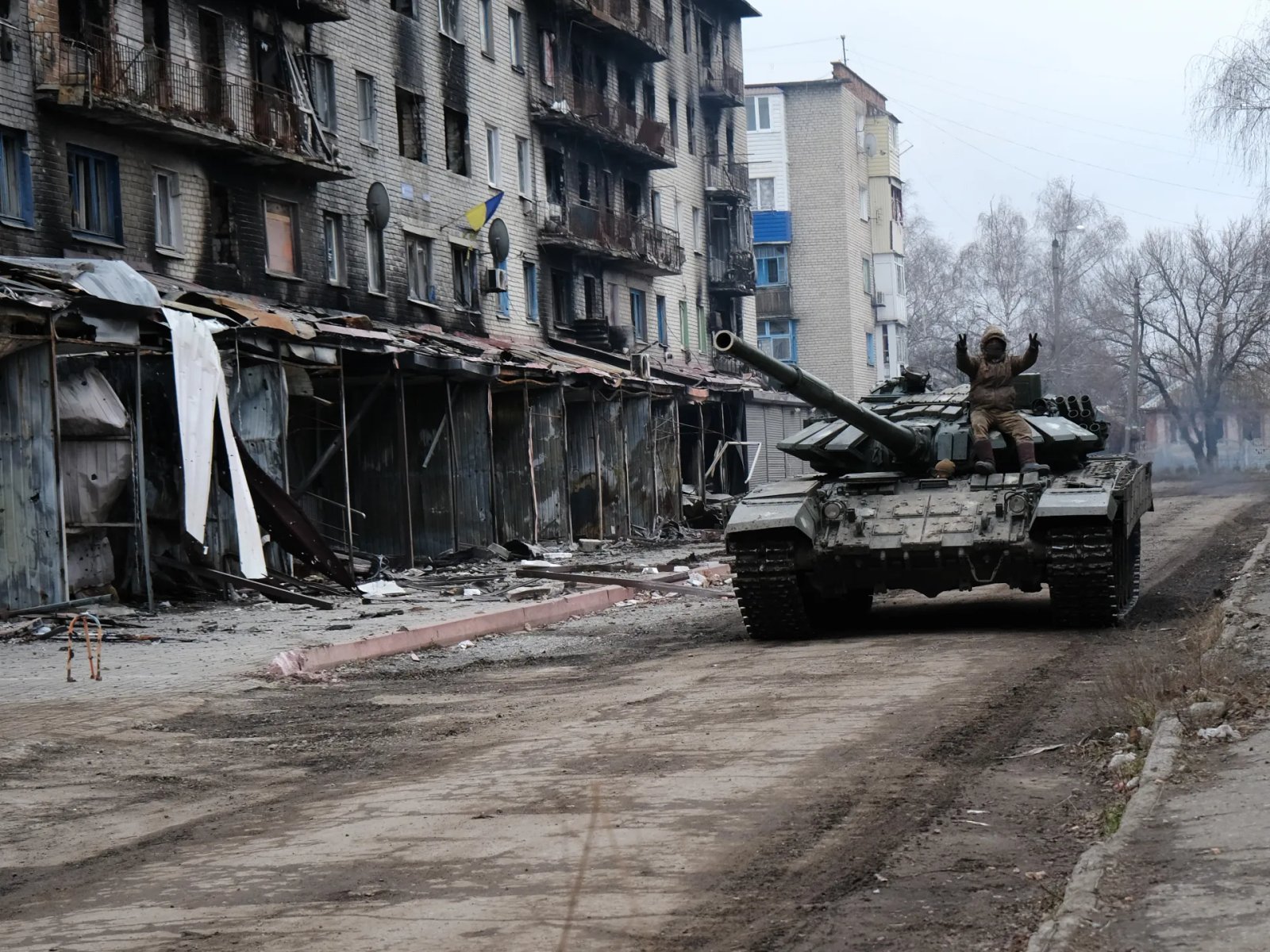
Ukrainian Forces Withdraw from Battleground Siversk Amid Ongoing Conflict
The Ukrainian military has confirmed the withdrawal of its troops from the heavily contested town of Siversk in the eastern Donetsk region following intense confrontations with Russian forces. This decision aimed at safeguarding Ukrainian soldiers and maintaining combat readiness has drawn significant attention amid the escalating conflict.
Military Reassessment in Siversk
In a statement shared on Telegram, Ukraine’s General Staff emphasized that Russian troops had established a substantial superiority in both manpower and equipment. They relentlessly pressured Ukrainian defenses through coordinated small-unit assaults, particularly in adverse weather conditions. The withdrawal was deemed necessary to “preserve the lives of our soldiers and the combat capacity of our units,” officials indicated.
Prior to this strategic retreat, Ukrainian forces reportedly inflicted considerable damage on Russian troops; however, Siversk remains under Ukrainian fire control. “Enemy units are being blocked to hinder their further progress,” the General Staff asserted, highlighting ongoing defensive efforts.
In reports from Ukraine’s DeepState military monitoring site, it was noted that Russian forces managed to take over Siversk along with Hrabovske, a Ukrainian village near the Russian border. Russian Lieutenant General Sergei Medvedev previously informed President Vladimir Putin about the capture of Siversk, although Ukrainian officials countered these reports, maintaining that Russian troops were facing severe challenges.
The Significance of Siversk
Although Siversk was home to a mere 10,000 residents before the war, its strategic importance is underscored by its role in defending the larger Sloviansk and Kramatorsk areas. These locations are pivotal in what is referred to as Ukraine’s “fortress belt,” an area that has resisted Russian advances since the onset of hostilities.
Donetsk, one of the three regions central to Russia’s territorial claims, continues to be a significant factor in thwarting efforts towards a ceasefire. Ukrainian leaders have reiterated their stance of not yielding territory lost during the ongoing invasion, highlighting the complexities of negotiations.
As of early December, estimates showed that Russian forces had captured approximately 19 percent of Ukrainian territory, including all of the Luhansk region, most of Donetsk, and various parts of Kherson and Zaporizhia. Ukraine continues to face challenges in these key regions.
International Reactions and Consequences
A recent 28-point peace plan proposed by the former U.S. administration suggested a negotiated resolution that would recognize Crimea, Luhansk, and Donetsk as de facto Russian territories. Meanwhile, Ukrainian President Volodymyr Zelenskyy claimed that the United States is advocating for Ukraine to withdraw from the Donetsk region to establish a designated “free economic zone.”
Pope Francis’ Call for Peace
The situation on the battlefield remains dire, with reports indicating a renewed Russian offensive that claimed multiple lives just before Christmas. Zelenskyy noted that at least three people, including a young girl, were killed across 13 targeted regions, further escalating the humanitarian crisis.
In response, Pope Francis expressed sorrow over the continued violence, particularly the refusal of Russian leadership to agree to a ceasefire on December 25, a day when many Christians celebrate Christmas. He appealed to the public for a moment of peace, hoping for at least a 24-hour ceasefire.
While the majority in both Ukraine and Russia identify as Christians, many follow the Orthodox calendar and celebrate Christmas on January 7. Notably, President Putin had earlier proposed a brief unilateral ceasefire during Easter, highlighting the ongoing complexities in the conflict approaching its third year since the full-scale invasion.
- Ukrainian military withdraws from Siversk to preserve soldiers and combat effectiveness.
- Russian forces reportedly take control of Siversk and Hrabovske amid heavy fighting.
- The strategic significance of Siversk is highlighted in defense against larger Russian offensives.
- Pope Francis calls for peace amid ongoing violence, particularly around the Christmas holiday.