

Escalation of Conflict in Ukraine: Recent Attacks in Odesa
In a tragic turn of events, a recent Russian missile strike in Ukraine’s Odesa port has resulted in the deaths of at least eight individuals and left 27 injured. As Moscow intensifies its offensive in the crucial Black Sea region, diplomatic efforts to bring an end to the ongoing conflict remain at a critical juncture.
Details of the Attack
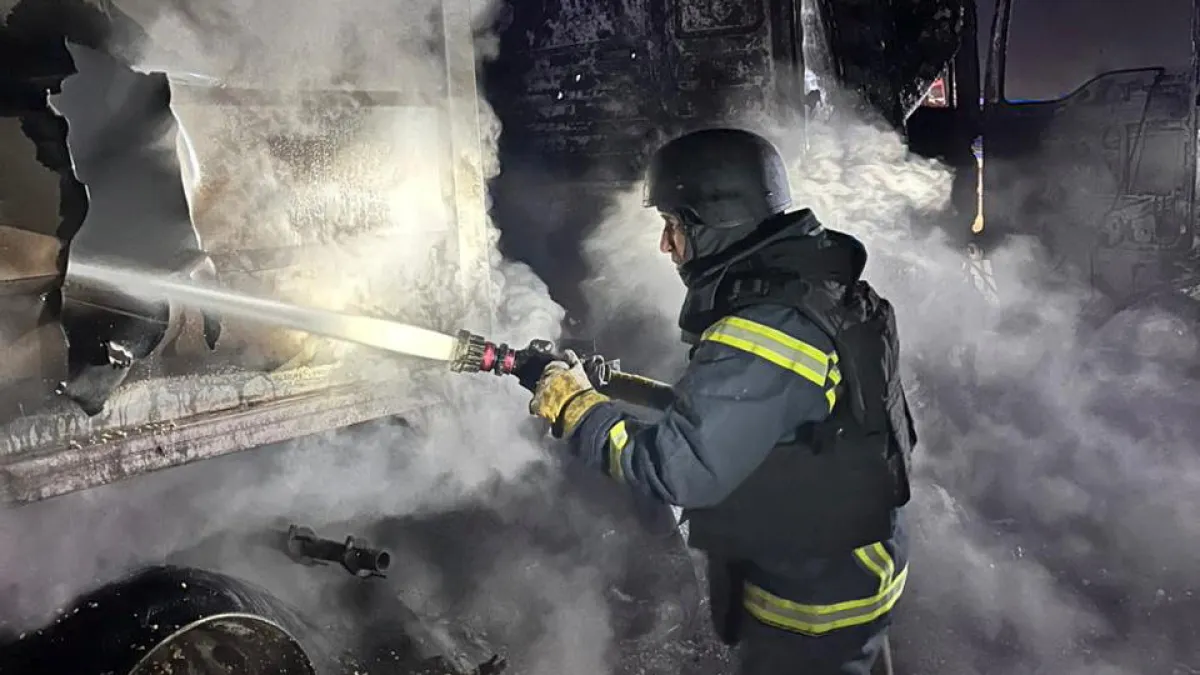
The missile strike occurred late on Friday, targeting vital logistics infrastructure. Some victims were reportedly trapped on a bus near the epicenter of the explosion, while trucks nearby were engulfed in flames. Ukrainian authorities describe this bombardment as part of a prolonged assault on Odesa’s civilian facilities, which has cut off power, water, and heating from over two million residents in frigid conditions during winter.
Continued Assault on Civilian Infrastructure
The situation worsened as Russia struck the Odesa port again on Saturday, targeting reservoirs in what Ukrainian Deputy Prime Minister Oleksii Kuleba characterized as a deliberate attempt to disrupt civilian supply routes. This escalation is occurring amid ongoing exchanges of fire between the two nations across multiple fronts and lengthy negotiations facilitated by the United States in Europe, which have yet to yield significant progress.
Military Developments
Russia has announced its control over the villages of Svitle in the eastern Donetsk region and Vysoke in northeastern Sumy, although these claims await independent verification. In response, Ukraine launched a series of assaults on Russian military and energy infrastructure. Notably, Ukrainian drones targeted the Filanovsky oil rig, owned by a prominent Russian energy company, marking the first acknowledged Ukrainian attack on drilling facilities in the Caspian Sea.
International Negotiations in Miami
This period of heightened conflict coincides with meetings in Miami involving American and European officials, alongside Russian and Ukrainian delegations discussing potential resolutions to the prolonged war. Russian envoy Kirill Dmitriev confirmed his participation in these talks, while U.S. Secretary of State Marco Rubio emphasized that the United States would not pressure Ukraine into any agreement, framing the conflict as “not our war.”
Discussions led by U.S. envoys, including Steve Witkoff and Jared Kushner, focus on negotiating terms with Ukrainian negotiator Rustem Umerov, in addition to officials from the UK, France, and Germany. Russian representatives are also engaging separately with American officials during these talks.
Sticking Points in the Negotiations
One of the primary obstacles in negotiations involves territorial concessions. Reports suggest that the U.S. is encouraging Ukraine to relinquish parts of the eastern Donetsk region. Meanwhile, Russian President Vladimir Putin remains resolute, reiterating his commitment to advancing military operations and expecting significant achievements before the year concludes.
Putin’s statements reinforce a pattern of uncompromising Russian demands for Ukraine to surrender territories in four key regions, as well as Crimea, which has been under Russian control since 2014. He also expects Ukrainian forces to withdraw from areas in eastern Ukraine that have yet to be occupied by Russian troops—a condition Ukraine has firmly rejected.
Current Battlefield Dynamics
While talks proceed, hostilities persist. Russia maintains control over substantial portions of Ukraine’s eastern and Black Sea coastal territories. Despite Putin’s assertions of military progress, contradictory reports suggest a more complicated reality. Ukraine has regained significant control over the northern city of Kupiansk, defying Russian claims of dominance in the area. Similarly, Russian forces struggled to gain ground against Ukrainian defenders in the eastern city of Pokrovsk.
Support for Ukraine
On a hopeful note, Ukraine received a substantial boost on Friday when European leaders agreed to provide a €90 billion ($105 billion) loan to assist with military and economic needs over the next two years. President Volodymyr Zelenskyy, during a meeting with Polish President Karol Nawrocki in Warsaw, emphasized that the funds will be allocated toward defense activities if the conflict endures, or for reconstruction in the event of peace.
Conclusion
The situation in Ukraine remains precarious, with severe impacts on civilian life due to ongoing military actions. As international negotiations unfold, the outcome remains uncertain, with critical issues surrounding territorial disputes still to be addressed.
Key Takeaways
- A recent missile strike in Odesa has resulted in at least eight deaths and numerous injuries.
- Ukrainian officials claim ongoing assaults target civilian infrastructure, leaving millions without basic services.
- Negotiations in Miami aim to address the conflict, but territorial concessions remain a major sticking point.
- Ukraine has received substantial financial support from European allies to bolster its military and economic efforts.