

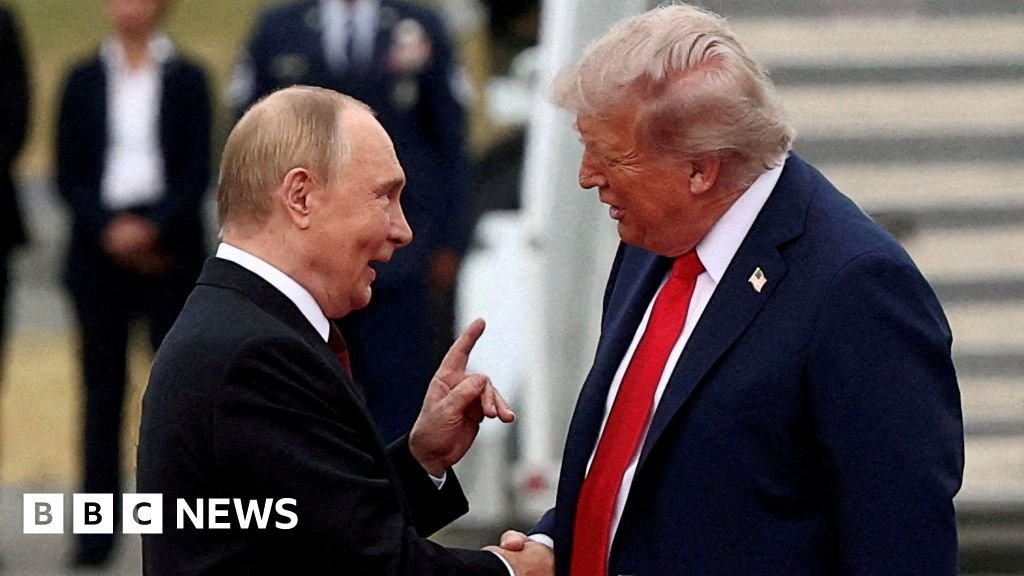
Trump, Greenland, and International Tensions
International relations have taken a curious turn with President Trump’s focus on Greenland, raising questions about the implications for global power dynamics. As he asserts U.S. control over the island to counter perceived threats from Russia and China, the reaction from Moscow is not what one might expect. Contrary to anticipated hostility, Russian media has surprisingly offered praise for Trump’s ambitions, highlighting the complexities of modern geopolitics.
Trump’s Vision for Greenland
Recently, President Trump articulated a vision where Russian and Chinese fleets pose a looming threat in the Arctic, emphasizing that U.S. control of Greenland is paramount for national security. “There are Russian destroyers, there are Chinese destroyers, and, bigger, there are Russian submarines all over the place,” he remarked. This perspective leads to a significant question: how has Moscow responded to what some consider a potential U.S. land grab?
Unexpected Praise from Moscow
In a surprising twist, a prominent Russian government newspaper, Rossiyskaya Gazeta, expressed commendation for Trump while criticizing European leaders who find his annexation plan outlandish. The publication highlighted that “the stubbornness of Copenhagen and the mock solidarity of European countries, including longtime allies, Britain and France, obstructs the U.S. president’s historic breakthrough.”
The Context of European Obstruction
The article goes further to describe how European nations seem to hesitate in embracing the American leadership that Trump advocates. The piece suggests that Brussels is hoping to undermine Trump’s influence ahead of the midterm congressional elections, aiming to prevent him from sealing “the greatest deal of his life.”
A Historic Opportunity
Rossiyskaya Gazeta elaborates on the potential historical significance of Greenland’s annexation, asserting that if Trump manages to claim Greenland before July 4, 2026, he could be remembered as a transformative figure in U.S. history. This would elevate the U.S. to the status of the second-largest country in the world, surpassing Canada, inviting comparisons to major events like the abolition of slavery and Napoleon’s territorial conquests.
The Political Stakes for Trump
The article also advises Trump against backing down, warning that such a step could weaken the Republican Party in the upcoming midterms. The Russian paper encourages Trump to expedite his plans for annexation, suggesting that doing so could positively alter the current political landscape.
Russia’s Calculated Gains
Why is Moscow so supportive of Trump’s Greenland fixation? The answer may lie in Russia’s long-term strategic interests. Trump’s aggressive approach has already strained transatlantic ties, which Moscow perceives as advantageous. The Russian outlet Moskovsky Komsomolets even expressed delight at Europe’s disarray over these developments.
Utilizing Tensions for Domestic Justification
Furthermore, some pro-Kremlin commentators are leveraging Trump’s threats toward Greenland as a narrative to justify Russia’s ongoing actions in Ukraine. Maintaining a favorable stance with the Trump administration is seen by Russia as essential to achieving its objectives concerning Ukraine.
Conclusion
The divergence in reactions from the U.S. and Russia highlights the evolving nature of international relations. As Trump’s ambitions clash with European stances, the implications for global alliances become increasingly significant. Understanding these dynamics invites further exploration of how individual leaders can alter the course of history through their foreign policy decisions.
Key Takeaways
- Trump’s focus on Greenland highlights geopolitical tensions with Russia and China.
- Moscow has surprisingly complimented Trump while criticizing European leaders opposing his plans.
- The annexation of Greenland is framed as a historic opportunity for Trump.
- Russia sees the current situation as a chance to weaken NATO and enhance its own interests.