

Putin Blames Ukraine for Alleged Terror Attack on LNG Carrier
In a recent statement, Vladimir Putin has pinned the blame on Ukraine for what he describes as a terrorist attack involving a Russian liquefied natural gas (LNG) carrier, which met a fiery fate and sank in the Mediterranean Sea near Libya. This incident highlights ongoing tensions and complexities in global energy politics.
The Incident
The affected vessel, the Arctic Metagaz, had already been subjected to sanctions from both the United States and the European Union as part of efforts to curb Russia’s oil and gas exports. This tanker, classified as part of Moscow’s “shadow fleet,” was involved in circumventing Western restrictions on energy shipments.
According to the Libyan Maritime Authority, the ship experienced “sudden explosions followed by a massive fire” on Tuesday, approximately 150 miles (240 km) off the coast of Sirte. The tanker was carrying around 61,000 tons of LNG when it ultimately sank between Libya and Malta. Thankfully, all 30 crew members were rescued and transferred to another vessel en route to the Libyan city of Benghazi.
Putin’s Accusations
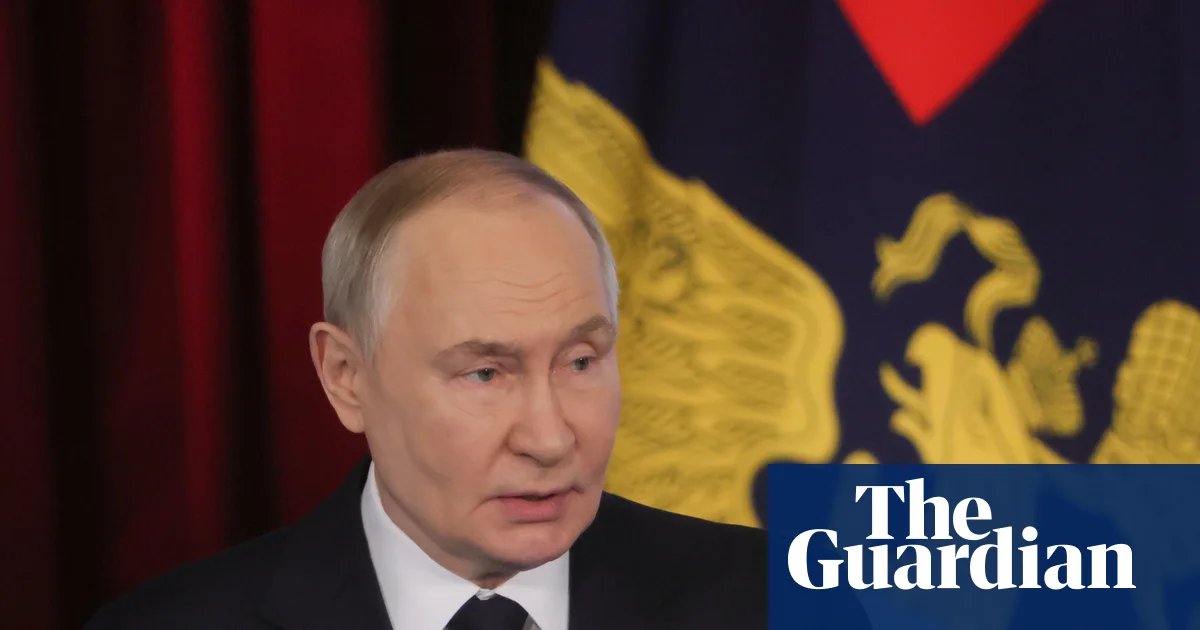
In a televised address late Wednesday, Putin claimed, “This is a terrorist attack. This isn’t the first time we’ve seen this kind of thing,” attributing responsibility to Ukraine. He asserted that such incidents could complicate conditions in global energy markets, particularly affecting gas supply chains.
Russia’s transport ministry had earlier indicated that the Arctic Metagaz was struck by Ukrainian sea drones launched from Libya, although no specific details were provided regarding the incident. While Ukraine has yet to officially comment on this event, it previously acknowledged an attack on a Russian tanker in the Mediterranean using aerial drones last December, marking the first confirmed strike of its kind during the ongoing conflict.
Previous Attacks and Developments
Reports suggest that earlier Ukrainian assaults on Russian vessels in the Mediterranean likely originated from the Libyan coast, although Kyiv has not made any definitive statements on these attacks. On a related note, Ukraine’s military noted its use of sea drones to sink Russian ships in the Black Sea.
Last October, Ukraine’s state security service unveiled an upgraded sea drone named the Sea Baby. This drone reportedly has a striking range of 930 miles and can carry weapons weighing up to two tons.
Current Position of the Arctic Metagaz
Before the incident, the Arctic Metagaz had departed from Murmansk, a city located in northwestern Russia by the Barents Sea, and was bound for Egypt’s Port Said. MarineTraffic, a ship tracking service, indicates that the ship’s last known position was off the western Mediterranean shores near Malta.
Potential for Change in Gas Supply
Putin also hinted at a potential shift in gas supply strategies for Russia, suggesting that the country might focus on alternative markets instead of supplying Europe. In this context, he stated, “And now other markets are opening up,” hinting that it might be more economically viable for Russia to discontinue its European gas exports.
Additionally, the European Commission is gearing up to present a legal proposal aimed at permanently banning Russian oil imports by April 15, just a few days after Hungary’s parliamentary elections. Concluding his statements, Putin remarked, “But this is not a decision, it is…thinking out loud,” adding that he would instruct the government to take actions alongside national companies on this matter.
Conclusion
With rising tensions between Russia and Ukraine, this incident serves as a stark reminder of the fragile nature of global energy supplies and geopolitical relations. The unfolding events not only threaten market stability but could lead to broader geopolitical ramifications.
- Putin accuses Ukraine of a terrorist attack on a Russian LNG carrier.
- The Arctic Metagaz sank after allegedly being struck by Ukrainian sea drones.
- All crew members were rescued and safely transferred to a nearby vessel.
- Russia is considering diversifying its gas markets away from Europe in response to ongoing geopolitical tensions.