

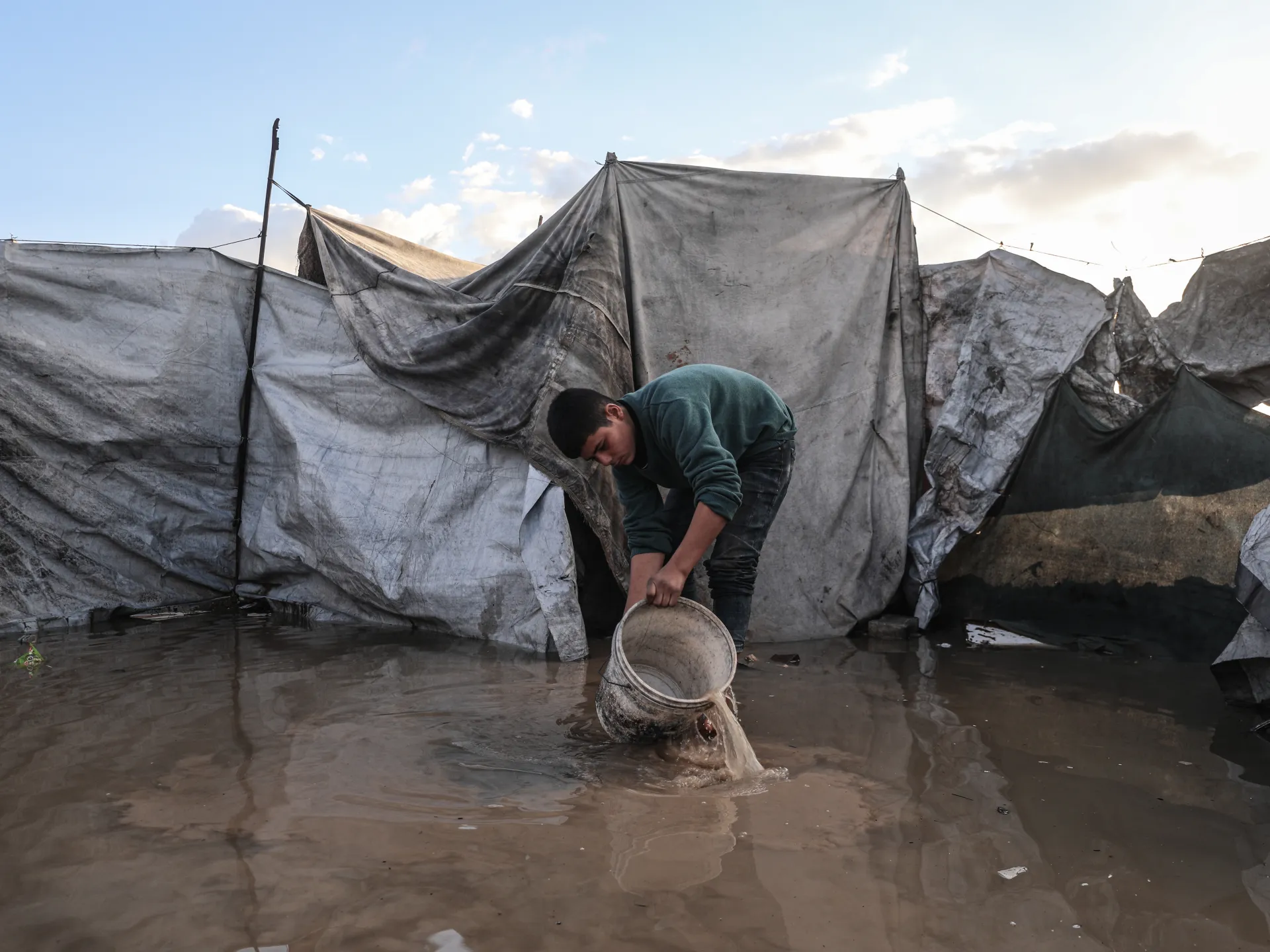
Struggles of Displaced Palestinians in Gaza as Winter Approaches
Tens of thousands of displaced Palestinians in Gaza are enduring another harsh winter, as their surroundings are filled with tents and debris following two years of devastating Israeli bombardments. This ongoing crisis has left many families struggling for basic survival as they confront freezing temperatures, heavy rain, and strong winds. A polar low-pressure system has recently swept through Gaza, bringing severe weather that compounds their suffering.
Winter Weather Impacting Displaced Families
On Saturday, a particularly intense weather front struck the Gaza Strip, marking the third polar low to affect the region this winter. Meteorologists have predicted a fourth low-pressure system will arrive early next week, adding to the challenges faced by those living in temporary shelters.
Living Conditions in Tents
Many families have been residing in tents since late 2023, with no respite from the ongoing conflict. As the weather worsens, authorities have warned that the rain may escalate into a full-blown storm, which could lead to even more dire conditions.
Mohammed Maslah, a displaced resident now in Gaza City, shared, “I had no choice but to stay here. My home is under Israeli control, and I’m left with nowhere else to go. After just a few hours of rain, we were completely soaked.”
The Struggles of Parents
In Deir al-Balah, Shaima Wadi, a mother of four displaced from Jabaliya, described the difficulties she faces in her tent. “We’ve been living here for two years now. Each time it rains and our tent collapses over us, we attempt to rebuild it with whatever wood we can find. Everything has become so expensive, and without any income, we can hardly afford clothes or proper bedding for our children,” she lamented.
The Toll of Severe Weather
Recent heavy rains in Gaza have led to severe flooding of tents and makeshift shelters, with many structures destroyed or damaged by previous attacks. Tragically, authorities reported that at least 15 individuals, including three infants, succumbed to hypothermia amid the chilling weather, with additional fatalities resulting from collapsing buildings.
Response Efforts
Ibrahim Abu al-Reesh, who oversees operations for Civil Defence in the Gaza Port area, spoke about the harsh conditions his teams are facing. “We’ve received numerous distress calls as the weather worsens, and we’ve been working tirelessly to cover damaged tents with plastic sheets to protect them from rainwater,” he said.
Ongoing Ceasefire Negotiations
As the Palestinian people continue to endure these harsh conditions, Israeli Prime Minister Benjamin Netanyahu is scheduled to visit Washington, D.C., where discussions concerning the next phase of the ceasefire are underway. The progress of the peace process has been slow, facing hurdles such as the proposed establishment of an international stabilization force and debates surrounding the disarmament of Hamas.
Lives Lost Amid the Conflict
Although the ceasefire was intended to bring relief, reports show that violence has continued. Since the ceasefire began, over 414 Palestinians have been killed and 1,142 injured, according to the Ministry of Health in Gaza. Meanwhile, approximately 679 bodies have been excavated from the rubble, highlighting the ongoing toll of the conflict, with the overall death count rising to at least 71,266 and more than 171,219 wounded as a result of the war.
Conclusion
The situation for displaced Palestinians in Gaza remains critical as they face the dual challenges of harsh winter weather and ongoing conflict. Their resilience in the face of adversity is truly inspiring, but urgent humanitarian assistance is needed now more than ever.
Key Takeaways
- Tens of thousands of displaced Palestinians are suffering through harsh winter conditions in Gaza.
- Recent polar low-pressure systems have resulted in significant rainfall, flooding shelters.
- An ongoing ceasefire is under negotiation, but violence continues to escalate.
- Humanitarian aid is urgently needed to support affected families throughout the region.