

The Challenges Facing Hungary’s Electoral Landscape
Hungary’s parliamentary elections, set for April 12, showcase a compelling political battle. While outgoing Prime Minister Viktor Orban seems poised to lose ground to the rising star Peter Magyar, leader of the Tisza Party, the situation might not be as straightforward as it appears. Despite his current struggles, Orban holds several strategic advantages that could impact the election outcome.
The Electoral System and Its Advantages
One of Orban’s significant advantages lies in the mixed electoral system, crafted to favor his far-right Fidesz party. In 2011, leveraging a two-thirds majority, he enacted controversial reforms that reduced parliamentary seats and reshaped electoral districts to enhance conservative representation. Paul Gradvohl, a historian at Paris 1 Panthéon-Sorbonne University, remarked, “This gerrymandering has become a bona fide national pastime,” highlighting the calculated manipulation of electoral boundaries.
Currently, of the 199 available parliamentary seats, 106 are determined in individual districts through a first-past-the-post system, while the remaining 93 rely on proportional representation from national party lists. This means even if Magyar garners more votes in urban areas, Orban could still prevail in rural constituencies where his support is strongest. Additionally, Hungary’s reforms introduced a mechanism known as ‘winner’s compensation,’ allowing Orban’s Fidesz to secure a comfortable two-thirds majority in the past three elections. For instance, in 2022, Fidesz captured 135 of 199 seats with only 54% of the total votes.
Media Control and Campaign Strategies
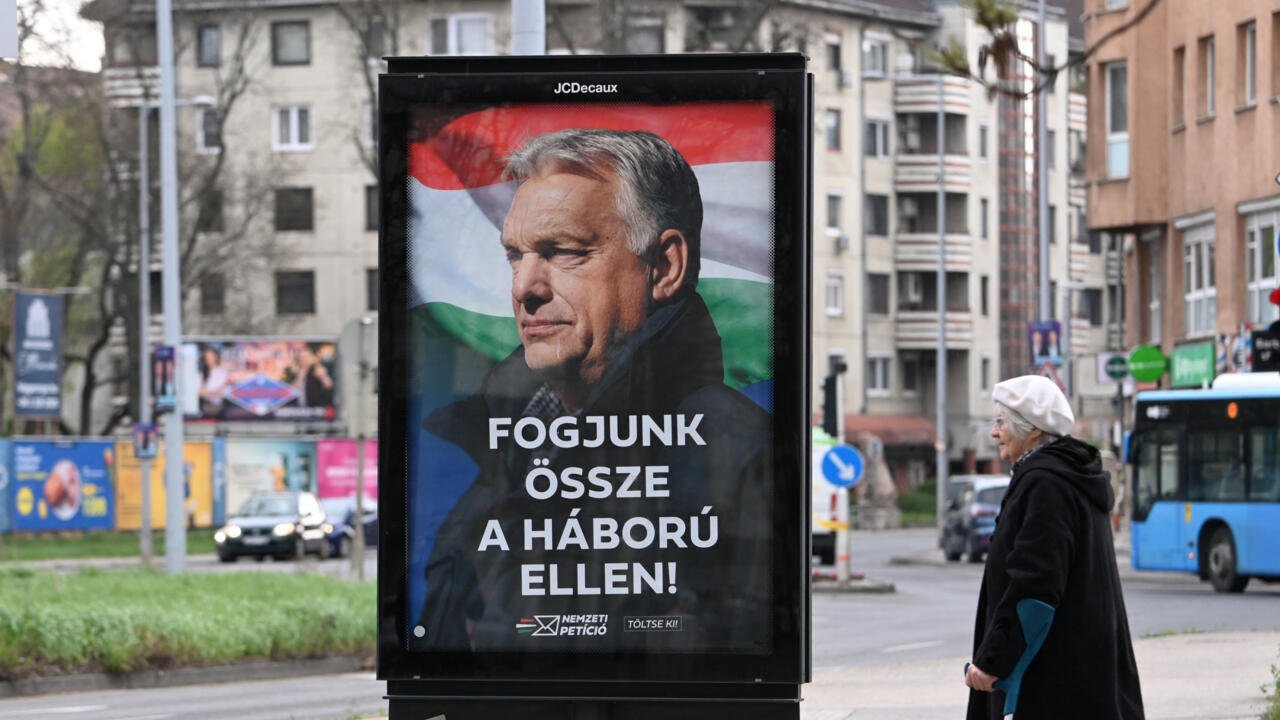
Orban’s influence extends to most media outlets in Hungary, either directly or indirectly. State media acts largely as a government spokesperson, while a myriad of private channels is controlled by Orban’s close associates, leaving limited space for opposing views. The vast majority of independent media has been stifled, and his extensive propaganda machine isn’t shy about utilizing public funds to power his campaign. This includes funding billboards with taxpayer money and mobilizing voters through his party’s vast patronage networks.
The looming question remains: will Orban’s established political resources, such as the biased electoral system, media dominance, and patronage networks, suffice to secure his continued rule amid increasing voter concerns over inflation, corruption, and deteriorating public services? Notably, issues like migration, EU relations, and LGBTQ+ rights—frequent targets of Fidesz’s campaigns—are becoming less relevant to the electorate.
The Impact of Anti-Kyiv Rhetoric
Throughout the campaign, Orban has intensified his anti-Ukraine narrative, alleging that Kyiv is attempting to embroil Hungary in the ongoing war. Tensions escalated after the Russian oil shipments through the Druzhba pipeline, which passes through Ukraine to Hungary, were interrupted in late January. Kyiv attributed the disruptions to Russian attacks, while Budapest accused Ukraine of stalling on repairs. As a consequence, Orban blocked a €90 billion EU loan to Ukraine. However, after four years of Russia’s invasion, such rhetoric now garners less traction among Hungarian voters.
The Rising Opposition
Against this backdrop, Magyar’s popularity has surged, making him Orban’s most formidable challenger yet. A recent documentary on Magyar achieved remarkable success, selling 300,000 tickets and amassing over 3.3 million views on YouTube, signaling a potential shift in public sentiment.
Potential Challenges Post-Election
If Magyar emerges victorious, he may face formidable challenges from Orban’s camp. These could include recount requests in specific districts, fraud allegations, and legal disputes—tactics reminiscent of those employed in the US following the 2020 election. According to Hungarian researcher Tibor Dessewffy, “Hungary’s institutional architecture has numerous tools for implementing such strategies,” with a politically compliant Constitutional Court and loyalists in crucial positions.
Gradvohl warns that Orban might declare a “super state of emergency” to obstruct any transfer of power. “It’s important to understand that we’re dealing with people so dishonest that my imagination isn’t wild enough to guess what they might next conjure up,” he noted.
International Interference and Local Sovereignty
As the campaigning reaches its climax, US Vice President JD Vance has arrived in Budapest to express “full and total support” for Orban, an action that Magyar swiftly criticized, asserting, “This is our country. Hungarian history is not written in Washington, nor in Moscow, nor in Brussels—it is written in the streets and squares of Hungary.”
Conclusion
The impending Hungarian elections are set against a backdrop of a polarized political landscape, characterized by a unique electoral framework, media control, and rising opposition. As voters prepare to make their voices heard, it remains to be seen whether Orban’s strategies will be enough to maintain his grip on power.
Key Takeaways
- Orban’s electoral tactics leverage a mixed system favoring his party’s dominance.
- Media control significantly impacts the dissemination of information in Hungary.
- Rising opposition figures like Peter Magyar signal a shift in the political landscape.
- Concerns regarding integrity in the election process could arise post-vote.