

Myanmar’s Election Amid Ongoing Conflict: A Complex Landscape
This article delves into the challenging situation in Myanmar as voters head to the polls amidst a backdrop of civil unrest and military rule. Critics argue that the election is a tactic by the military to legitimize its governance after the ousting of Nobel Laureate Aung San Suu Kyi’s administration nearly five years ago. With civil war raging, the election’s viability is under serious question.
The Political Context
On Sunday, voters in certain regions of Myanmar will participate in an election seen by many as an attempt by the military to affirm its authority. The country is currently grappling with a civil war as ethnic armed groups and opposition militias engage in fierce combat with the military for control over vast areas, ranging from the borders with Bangladesh and India in the west to the edges with China and Thailand in the north and east.
Electoral Process Under Duress
In central Sagaing, only one-third of the township regions will vote on Sunday. The remainder will face elections in the coming months, with some areas completely excluded from the process due to ongoing violence. Reports indicate a rise in armed conflict, including aerial assaults and arson, as the military seeks to solidify its dominance in the region.
“The military is deploying troops and burning villages under the guise of ‘territorial dominance’,” shared Esther J, a local journalist. “People here are saying this is being done for the election.”
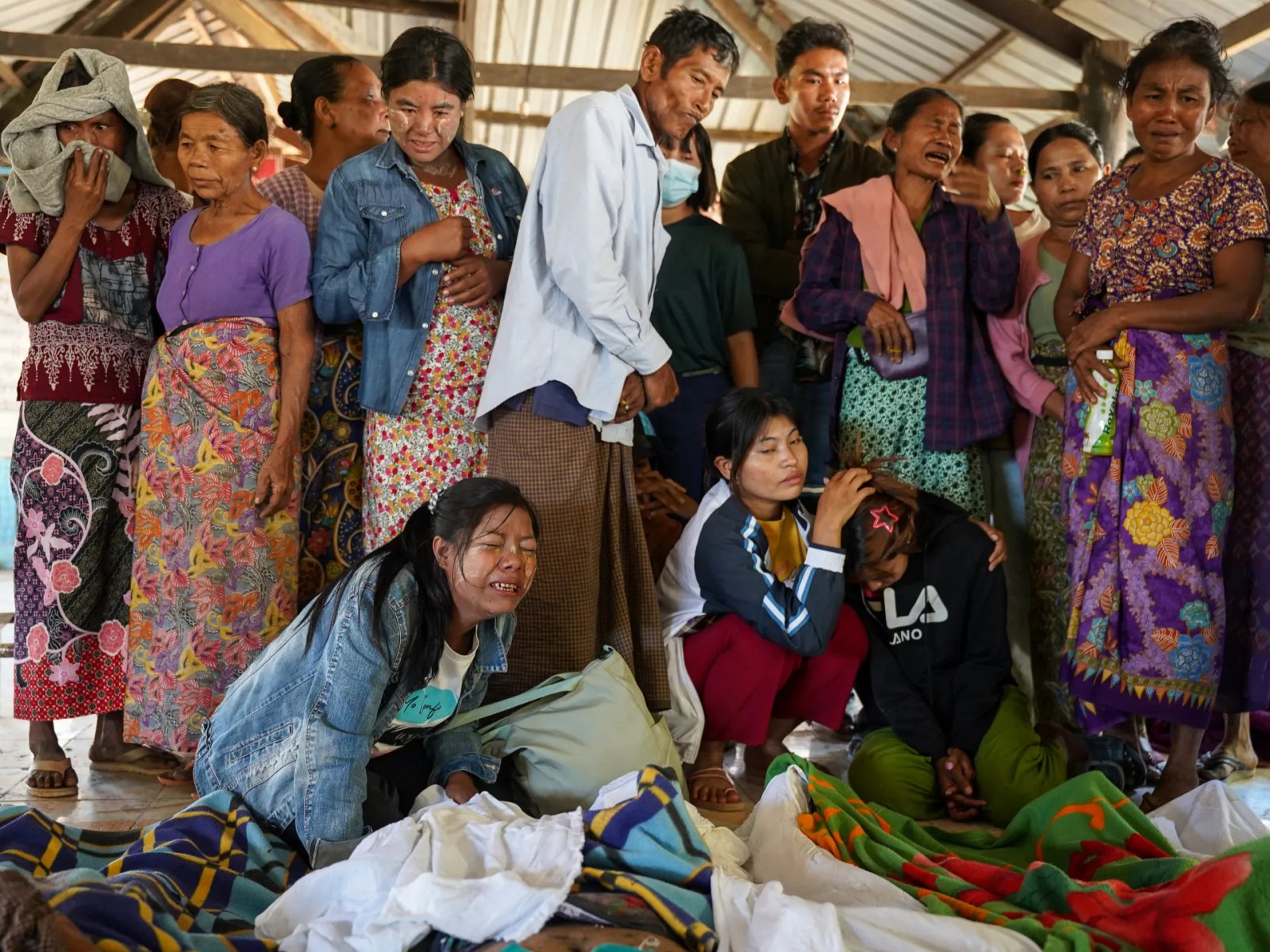
Much of the region is devoid of any electoral activity. “No one is campaigning, organizing, or encouraging people to vote,” Esther added. Nationwide, elections have been scrapped in 56 of the 330 townships, with additional cancellations anticipated as the military continues to confront opposition forces. In the wake of the 2021 coup, around 90,000 people have lost their lives, and over 3.5 million have been displaced, sending nearly half of Myanmar’s population of 55 million into need of humanitarian aid.
Shifts in the Battlefield
During the previous year, the Myanmar military faced significant setbacks. An organized initiative by the Three Brotherhood Alliance—a coalition of ethnic armed groups and opposition militias—captured substantial territories, nearly pushing the military out of Rakhine state and taking control of a key military base in Lashio, located about 120 kilometers from the Chinese border.
This offensive, named Operation 1027, posed a critical challenge to the military’s authority since the coup. However, the tide began to turn this year, primarily due to China’s involvement.
China’s Role in the Conflict
In April, China facilitated a pivotal agreement, resulting in the Myanmar National Democratic Alliance Army surrendering the strategic city of Lashio without conflict. Consequently, the military regained control over various towns in northern and central Myanmar. China also brokered another arrangement for the Ta’ang National Liberation Army to retreat from key gold mining regions.
“The Myanmar military is certainly experiencing a resurgence,” commented Morgan Michaels, a research fellow at the International Institute for Strategic Studies (IISS). “If this trend continues, they may regain a dominant position within a year or two.” This resurgence can be attributed to the military’s conscription efforts, enhancements to its drone capabilities, and more effective command personnel. Since introducing mandatory military service in February 2024, the military has reportedly enlisted between 70,000 to 80,000 new recruits.
The Impact of Technology and Disunity
“The conscription drive has been unexpectedly effective,” remarked Min Zaw Oo, executive director at the Myanmar Institute for Peace and Security.
Many recruits have specialized skills, serving as snipers and drone operators. This strengthened military presence has resulted in a significant uptick in air and drone assaults—ACLED documented approximately 2,602 airstrikes this year, leading to nearly 2,000 fatalities, marking the highest figures since the coup.
China’s involvement extends beyond ceasefire negotiations; it has exerted influence over the powerful United Wa State Army to reduce arms supplies to rival factions, causing supply shortages among the opposition. Additionally, divisions among opposition forces have become more pronounced, with their unity waning since the coup.
China’s Strategic Interests
Experts note that China’s actions are motivated by concerns over potential instability spilling into its territory. With the situation described as chaotic, Beijing aims to maintain stability to safeguard vital trade routes, particularly the China-Myanmar Economic Corridor that connects Yunnan province with the Indian Ocean.
China’s current approach reflects a pragmatic understanding that, despite its discontent with the military, it sees limited options for resolution. Notably, Chinese President Xi Jinping has met with military leader Min Aung Hlaing twice this year—a shift indicating a willingness to help restore order.
Military Gains and War Continuation
Despite recent territorial recaptures, the military’s achievements appear modest. In northern Shan state, only about 11.3% of lost territory has been reclaimed. Ongoing battles, particularly in Rakhine state, pose continuous challenges. The Arakan Army is expanding its influence beyond state borders, while the military struggles to exert control over contested regions.
Analysts suggest that while the military feels fortified to conduct elections, the overall conflict remains unresolved. Khin Zaw Win, an analyst based in Yangon, expresses skepticism regarding the elections’ impact on ongoing hostilities, implying that a complete military victory may be an unrealistic military objective.
While the opposition parties are largely barred from participating and Aung San Suu Kyi remains detained, there are hopes that China’s mediation could pave the way for a negotiated end to the fighting.
Conclusion
As Myanmar prepares for an election amid profound conflict, its outcomes appear clouded by ongoing instability and humanitarian crises. The situation is precarious, with implications not just for Myanmar’s future governance, but also for regional stability and international relations.
- The election is perceived by many as a strategy by the military to legitimize its authority.
- Significant areas of Myanmar remain embroiled in civil unrest, with 56 townships canceling voting.
- China’s involvement impacts the conflict, reflecting its concerns over stability and trade routes.
- The military’s recent territorial gains are modest, and the conflict shows no signs of resolution.