

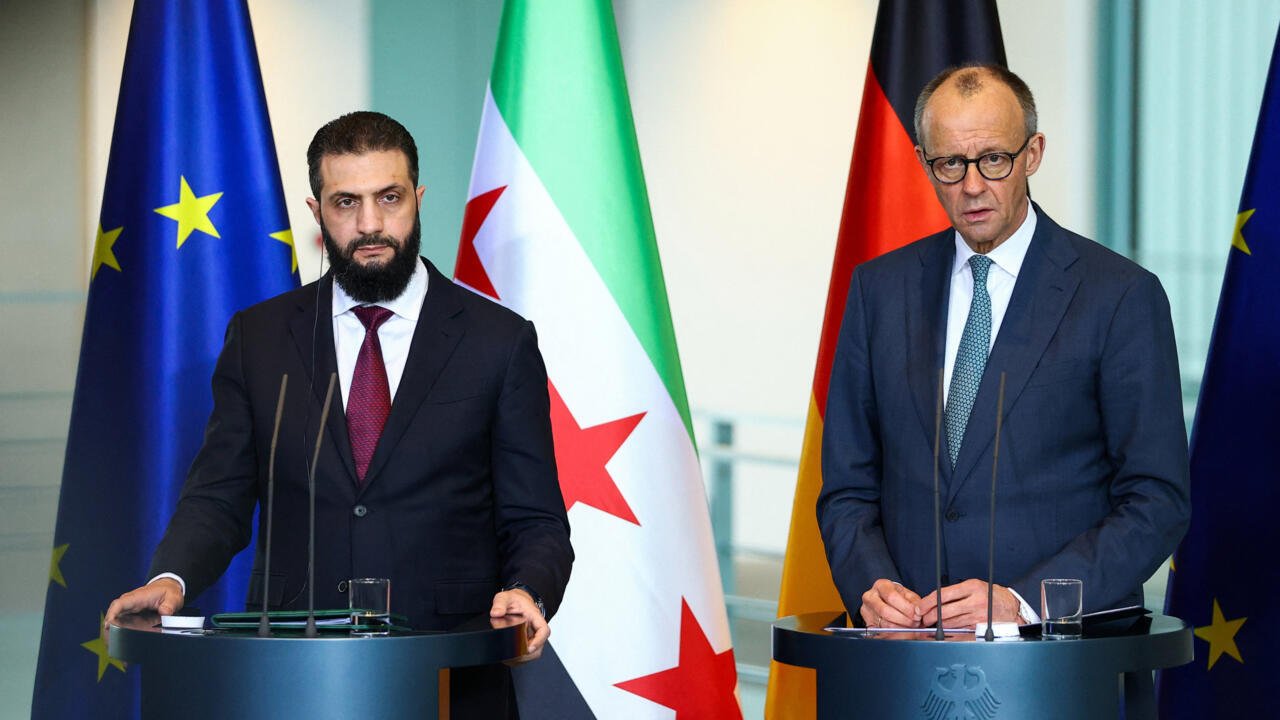
Efforts to Facilitate Syrian Returns: Chancellor Merz and President Sharaa
In a significant diplomatic meeting, Chancellor Friedrich Merz of Germany and Syrian President Ahmed al-Sharaa discussed their shared goal of facilitating the return of a majority of Syrians currently residing in Germany. This discussion comes as Syria continues to recover from years of conflict, and Germany, home to the largest Syrian community in the European Union, seeks to play a constructive role in this process.
Background on the Syrian Diaspora in Germany
Germany is host to over a million Syrians, a significant number of whom arrived during the migrant surge experienced between 2015 and 2016. After their meeting in Berlin, Merz revealed that he and Sharaa are committed to collaborating on initiatives that would support the safe return of Syrians to their homeland. The Chancellor highlighted that their agreement aims for 80% of the Syrian community in Germany to return within the next three years.
Sharaa’s Vision for ‘Circular Migration’
During his first visit to Germany since assuming leadership after the ousting of Bashar al-Assad in late 2024, Sharaa expressed his intent to collaborate with Germany on establishing a ‘circular migration model.’ This approach, according to Sharaa, would allow Syrians the opportunity to help rebuild their country while also preserving their lives and stability in Germany, should they choose to remain there.
Reconstruction and Investment Opportunities in Syria
Sharaa highlighted the extensive destruction that Syria has faced over the years, emphasizing the urgent need for reconstruction. He noted that the country has potential investment opportunities across various sectors, including energy, transportation, and tourism, and called Syria a land rich in human resources. Following the discussions, Merz announced plans for a German delegation to visit Syria soon to evaluate how Germany could assist in the rebuilding efforts.
Concerns Over the Syrian Situation
While Chancellor Merz expressed Germany’s willingness to support Syria’s recovery, he also underscored that future collaborative efforts would hinge on establishing a government based on the rule of law. The meeting, however, has drawn criticism from human rights advocates who have raised concerns about Sharaa’s past affiliations and the ongoing instability in Syria.
Mixed Reactions to Sharaa’s Reception in Germany
Protests took place during Sharaa’s visit, with demonstrators showcasing Kurdish flags and signs that pointed to his history as an Islamist militant. Conversely, some members of the Syrian community in Germany welcomed him, waving the new revolutionary flag of Syria. The German Green Party’s foreign affairs spokesperson, Luise Amtsberg, cautioned against what she termed the “premature normalization” of Sharaa’s government, suggesting that the current focus on repatriation overlooks critical ground realities.
Potential for Continuing Violence and Instability
Despite Sharaa’s efforts to establish international relations, sectarian violence continues to plague Syria, compounded by the operations of the Islamic State group. Since Sharaa’s ascendance to power, there have been ongoing conflicts, including military actions by Israel in the region. It is notable that Sharaa’s planned trip to Germany was delayed earlier this year due to escalations between government forces and Kurdish-led factions.
Expectations from German Authorities
Organizations representing the Kurdish community in Germany have expressed that Sharaa is accountable for numerous human rights abuses. Sophie Bischoff, head of the German-Syrian NGO Adopt A Revolution, emphasized that any support from the German government should be conditional and warned of the resurgence of authoritarian tendencies in Syria.
Conclusion
The discussions between Chancellor Merz and President Sharaa indicate a significant pivot in Germany’s approach towards Syria and the Syrian diaspora. As both leaders look to the future, the complexities of rebuilding and ensuring a stable environment in Syria must be addressed collaboratively and cautiously.
Key Takeaways
- Chancellor Merz and President Sharaa aim for 80% of Syrians in Germany to return home within three years.
- Sharaa proposes a ‘circular migration model’ to enable reconstruction participation while maintaining stability for those who stay.
- Concerns arise regarding human rights and the ongoing violence in Syria, with calls for conditional support from Germany.
- Investment opportunities were highlighted in various sectors as part of rebuilding efforts in Syria.