

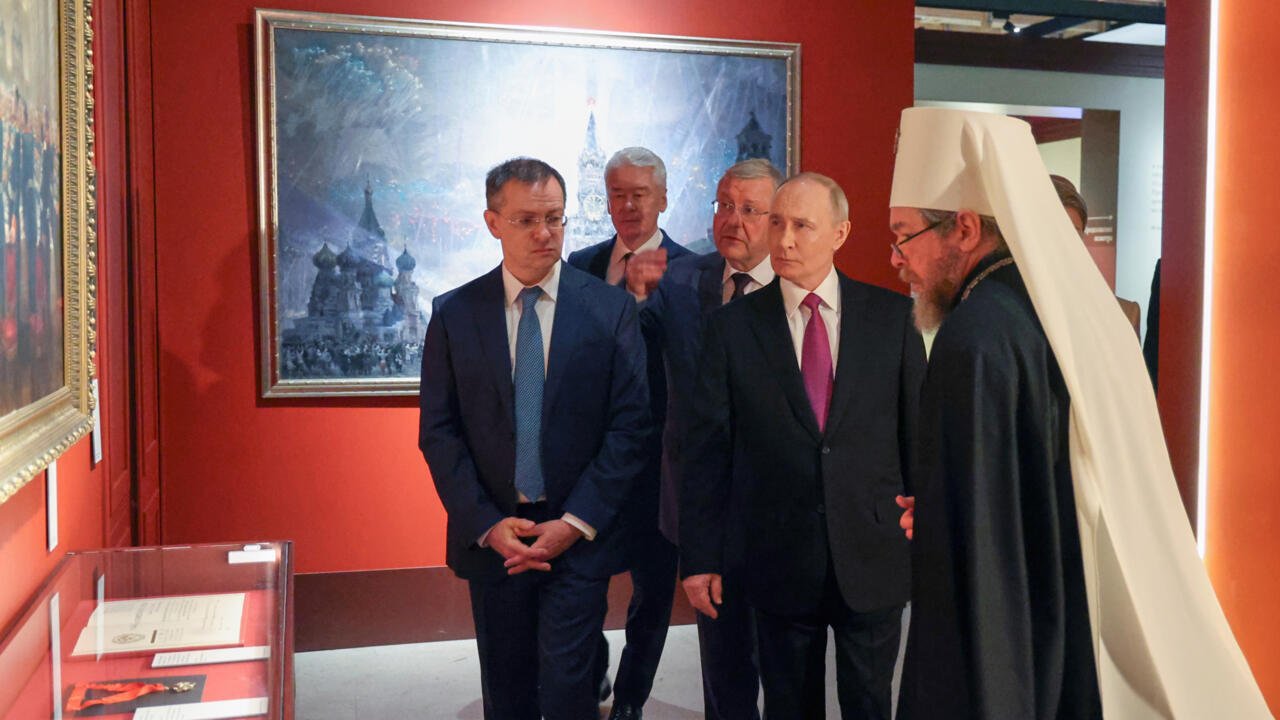
The Role of Vladimir Medinsky in Russian Culture and History
Vladimir Medinsky, who as a child in Smila, Ukraine, crafted paper soldiers and orchestrated imaginary battles, has evolved into a pivotal figure in Russia’s approach to culture and historical narrative. After being away from the negotiation table, Medinsky has returned, leading Moscow’s delegation in Geneva as the conflict in Ukraine continues. His earlier involvement in peace talks marked the beginning of a protracted war that has now spanned nearly four years.
From Toy Soldier to Political Strategist
Medinsky’s unique upbringing influenced his later role in national affairs. In 2016, he nostalgically recounted how he and his friends engaged in “toy battles,” a reflection of his childhood fascination with strategy and conflict. Now, he embodies those childhood interests on a far greater scale, stepping back into negotiations to represent Russia’s stance and ambitions on the global stage.
Controversial Figure in Peace Talks
His return to the negotiation sphere has not been without contention. Ukrainian negotiators have previously criticized Medinsky for his tendency to divert discussions into lengthy lectures centered on his interpretations of history and nationalism. After peace talks resumed in Istanbul last year, Medinsky’s comments expressed a readiness to prolong the conflict, highlighting Russia’s historical willingness to engage in prolonged warfare.
“We don’t want war, but we are ready to fight for a year, two, three – however long it takes,” he stated, evoking historical references that seem to shape the Kremlin’s approach to modern conflicts.
The Political Ideology Behind the Strategy
Maria Falina, an expert in modern Eastern European history, explains that Medinsky’s leadership often signals a shift towards a more politically charged narrative in negotiations. When he heads the delegation, the focus tends to be on ideological positioning and affirming Russia’s role in global power dynamics. Conversely, military leaders tend to steer discussions towards tangible matters like territory and security.
A Embedded Historical Perspective
Growing up with a military background, Medinsky initially pursued journalism instead of a military career. His fascination with history, particularly military history, has profoundly influenced his political trajectory. Notable for his contributions to literature, including a series aimed at countering foreign misconceptions about Russia, his academic work has sparked debates, including allegations of plagiarism in his doctoral thesis.
Cultural Crusader
When appointed as Minister of Culture in 2012, Medinsky quickly consolidated his influence to promote a version of history that fosters national pride. His initiatives spanned various cultural realms aimed at reinforcing Russian patriotism, regardless of historical context. Falina notes that his agenda utilized history as a tool for social cohesion, cultivating a narrative that centers Russia’s significance in global affairs.
Revisionism and Controversy
Throughout his term, Medinsky has faced pushbacks regarding his approach to historical narratives. For instance, criticism arose when declassified investigations questioned the veracity of celebrated Soviet military contributions during the Second World War. Medinsky argued for the preservation of the myth, highlighting a penchant for glorifying Russia’s military past, irrespective of historical accuracy.
Education and National Identity
Medinsky’s influence is starkly visible in the launching of a controversial history textbook that has been circulated in Russian schools, including those in occupied Ukrainian territories. Co-authored by him, the book has faced heavy criticism for its heavily biased recounting of 20th-century Russian history, depicting controversial figures like Joseph Stalin favorably while framing the current conflict as a continuation of historic battles against fascism.
Conclusion
Vladimir Medinsky’s journey from a boy playing with toy soldiers to a prominent figure shaping Russia’s cultural and historical narrative underscores the complex interplay between history and national identity in contemporary Russia. His dual role as negotiator and cultural steward reflects the ongoing struggle over how history is interpreted and presented in the face of national conflict.
- Medinsky’s childhood influenced his strategic mindset in negotiations.
- His return to the negotiation table indicates a shift towards more ideologically charged discussions.
- Medinsky advocates for a version of history that supports Russian nationalism.
- The controversial history textbook reflects ongoing debates about Russia’s past and its portrayal in education.