

Khaleda Zia Remembered: A Nation Mourns Its First Female Prime Minister
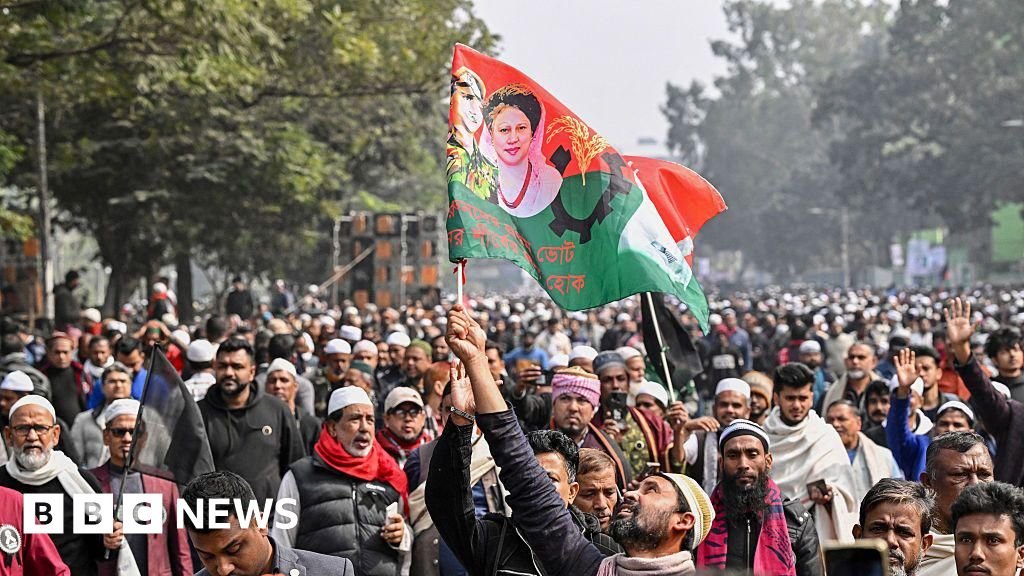
On Wednesday, a sea of mourners filled the streets of Dhaka as they united to honor Khaleda Zia, the first female Prime Minister of Bangladesh, who passed away from a prolonged illness at the age of 80. Her death has left a profound impact on the nation, prompting many to travel from across Bangladesh to pay their final respects.
The Farewell Procession
The streets were lined with supporters holding flags emblazoned with Zia’s image as a motorcade carrying her casket, draped in the national flag, made its way near the parliament building. In a poignant moment, flags flew at half-mast, and a heavy security presence surrounded the gathering.
“I’ve come this far just to say goodbye. I know I won’t be able to see her face, but at least I could see the vehicle carrying her for the last rites,” shared Setara Sultana, an activist from Zia’s Bangladesh Nationalist Party (BNP). Another mourned, Sharmina Siraj, reflected on Zia’s legacy, stating that the stipends for women’s education she instituted had significantly impacted her daughters.
Notable figures attended the funeral, including India’s External Affairs Minister, S Jaishankar, and the Speaker of Pakistan’s National Assembly, Sardar Ayaz Sadiq, highlighting Zia’s influence beyond her home country.
A Journey of Leadership
The state funeral marks the end of a remarkable journey for Khaleda Zia, who transitioned from being a homemaker to a pioneering political figure. She will be laid to rest beside her husband, Ziaur Rahman, who was assassinated while serving as president in 1981, which thrust her into the national spotlight.
Zia emerged as a formidable leader during the country’s first elections in two decades and became known as an “uncompromising leader” for her refusal to engage in a controversial election under military rule in the 1980s. Alongside her rival, Sheikh Hasina, she fought for democracy and resilience against military dictatorship, facing numerous arrests and challenges along the way.
A Lasting Legacy
Despite years of opposition and setbacks, Zia earned enduring admiration from her supporters. Figures such as economist Dr. Debapriya Bhattacharya noted that she left a significant impression as a leader who valued informed decision-making and innovation.
In her later years, Zia’s health deteriorated, yet she aspired to run for parliament in the upcoming elections in February 2026, signaling her party’s ambition to return to power. Recently, her son, Tarique Rahman, returned to Bangladesh from self-imposed exile, further solidifying the family’s ongoing political legacy.
Following his mother’s passing, Rahman expressed that “the country mourns the loss of a guiding presence that shaped its democratic aspirations.” The turnout at Zia’s funeral, with many attendees being those who may not have supported her party, speaks volumes about her widespread popularity and impact across the nation.
Conclusion
Khaleda Zia’s passing marks not just a personal loss for her family and party but also a significant moment in Bangladesh’s political landscape. As the nation reflects on her contributions, her legacy as a resilient leader advocating for democracy remains firmly etched in the heart of the country.
- Khaleda Zia passed away at 80, leaving a rich legacy as Bangladesh’s first female Prime Minister.
- Hundreds of thousands gathered to pay their respects, highlighting her enduring popularity.
- Zia will be buried next to her husband, Ziaur Rahman, who was assassinated in 1981.
- Her impact on women’s education and commitment to democracy remain significant elements of her legacy.