

Remarkable Discovery of a Large Roman Villa in Wales
Archaeologists have made an astonishing discovery in Wales, unveiling the largest Roman villa ever found in the region. This exciting find has been described as “Port Talbot’s Pompeii,” hinting at its potential significance. The excavation, led by Dr. Alex Langlands, reveals not only the structure but also offers deep insights into the rich history of the area.
Unearthing a Hidden Gem
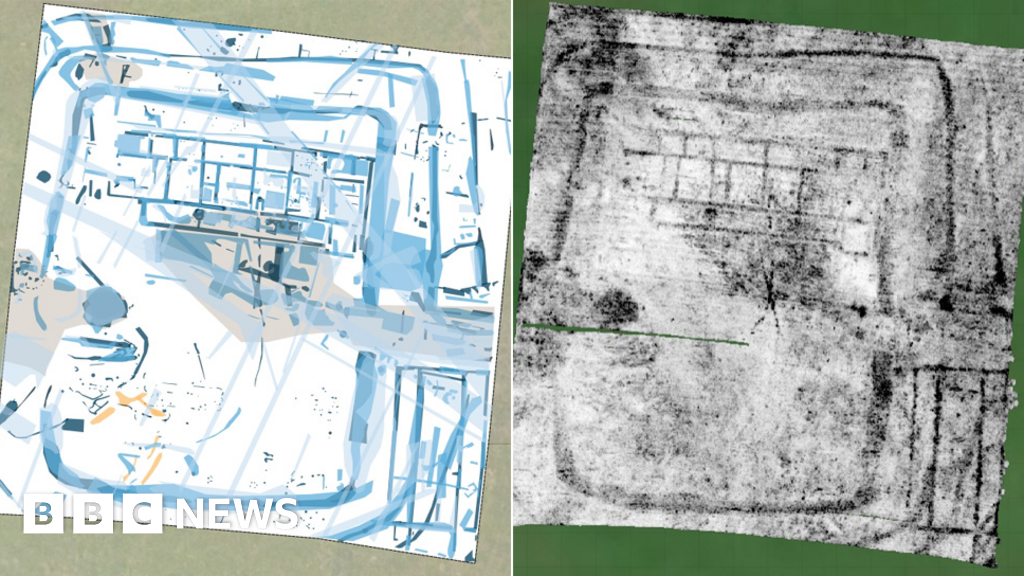
Utilizing advanced ground-penetrating radar at Margam Country Park, researchers identified a substantial villa nestled within a defensive enclosure. The site, located in a historically preserved deer park, has remained undisturbed by plowing or construction, leading to remarkable preservation of the villa’s remains, which lie less than a meter below the ground.
The Discovery Process
The initiative to scan the park, a popular destination in South Wales, was part of a larger educational project involving local school children and the wider community, aimed at exploring the area’s rich heritage. The team at Swansea University, in collaboration with the council and Margam Abbey Church, utilized sophisticated scanning technology to map potential archaeological features beneath the surface.
An Architectural Marvel
Dr. Langlands, co-director of Swansea University’s Centre for Heritage Research and Training, described the villa as a “majestic and impressive” structure likely adorned with decorative statues and mosaic flooring. Featuring a corridor with two wings and a veranda, the villa spans approximately 43 meters (141 feet) in length and consists of six main rooms in the front section, extending to eight additional rooms at the back.
Significance of the Discovery
This discovery significantly changes our perception of South Wales during the Roman period. Historically, the region has been viewed as a frontier area, but this find suggests that it housed establishments as sophisticated and prestigious as those in southern England’s agricultural heartland. Langlands emphasized that Margam could have been one of Wales’ key power centers, revealing its historical importance.
Cautious Optimism for Future Excavations
Christian Bird from TerraDat, the firm responsible for the surveys, noted that the imaging was strikingly clear, mapping the villa and the surrounding features in 3D. Among the structures identified is a large aisled building, believed to have functioned either as a barn or a gathering hall.
Due to concerns about potential vandalism from metal detector enthusiasts, the villa’s precise location is being kept confidential. Langlands expressed a commitment to the site’s conservation, with further surveys and excavation planned as funding becomes available. He playfully referred to the discovery as having the potential to be “Port Talbot’s Pompeii,” highlighting its superb levels of preservation.
Community Excitement and Future Involvement
An open day at Margam Abbey Church on January 17 will provide further insights into the discovery. Local residents, including Margaret Jones, a retired teacher deeply interested in history, expressed excitement about finding such an extraordinary site beneath their feet, adding that it could greatly enhance community pride and interest in local heritage.
Harriet Eaton, the Heritage Education Officer for Neath Port Talbot council, emphasized the incredible nature of this discovery, calling for community excavation opportunities to foster hands-on connections with history. The villa’s discovery significantly fills gaps in knowledge about the Roman period in Margam, according to park manager Michael Wynne, contributing to a broader understanding of Welsh history.
Key Takeaways
- The largest Roman villa in Wales has been discovered in Margam Country Park.
- Preserved remains beneath the surface provide rich insights into local history.
- Future excavations are planned, focused on conservation and education.
- The find emphasizes Margam’s importance during the Roman period, reshaping historical perspectives.
Conclusion
This remarkable discovery of a Roman villa in Wales not only illuminates the region’s past but also serves as a source of pride for the local community, potentially transforming Margam into an important historical site. As further explorations unfold, this find is set to rewrite narratives about the area and offer a deeper understanding of life during the Roman era.