

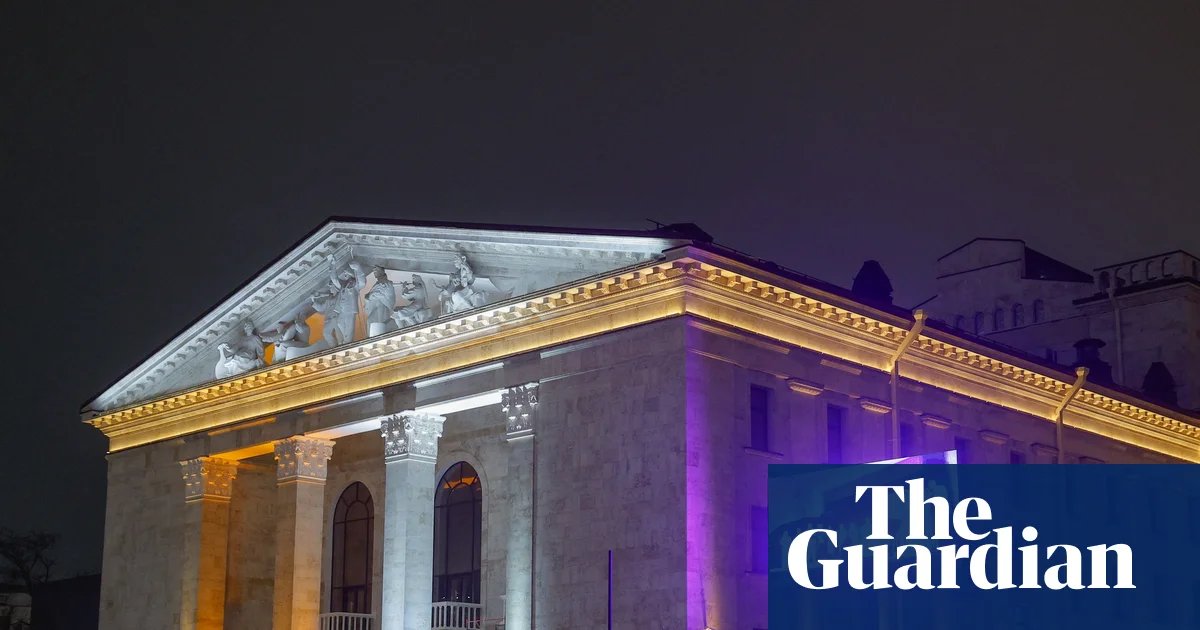
Reopening of Mariupol Drama Theatre: A Controversial Revival
The Mariupol Drama Theatre, which suffered devastating destruction in a Russian airstrike in 2022 while many civilians sought refuge in its basement, is set to reopen. The Russian occupation authorities celebrate this reconstruction as a symbol of resilience, yet many former actors denounce the event as “dancing on bones.” As the Kremlin uses the theatre’s revival to showcase its influence in occupied Ukraine, the backdrop includes the arrests and exile of dissenters and the appropriation of properties from thousands of Ukrainians.
New Beginning Amid Controversy
Scheduled to reopen by the end of the month, the theatre will present a performance of The Scarlet Flower, a Russian fairytale, nearly two years after its near-total reconstruction. The theatre released a statement expressing optimism: “The theatre is being reborn along with Mariupol. Russian and Soviet classics are making a return to the stage.” However, not everyone is celebrating this development.
A Call for Remembrance
Evgeny Sosnovsky, a photographer from Mariupol who has worked closely with the theatre but relocated to Kyiv following the Russian takeover, expressed deep skepticism: “Cynicism is the only word that comes to mind. This site should be a memorial for those who lost their lives during the city’s capture, not an entertainment venue.”
The Impact of the Airstrike
The tragic strike on the theatre has become one of the most infamous examples of Russia’s military aggression in Ukraine. The building was targeted despite the word “CHILDREN” prominently displayed in large letters outside. The death toll from this attack is confirmed to be at least a dozen, but estimates suggest the actual number could be significantly higher.
Russia claims the damage stemmed from an explosion inside the theatre rather than an airstrike, yet several independent investigations have indicated otherwise. Amnesty International labeled the incident as likely a deliberate attack against civilians, urging a thorough investigation as a potential war crime.
Voices from the Past
“Having entertainment, songs, and dances on top of all the bones? I fear that the souls of those who perished will hinder any performance here,” remarked Vira Lebedynska, a former actor at the theatre.
Lebedynska, now residing with a collective of former Mariupol actors in western Ukraine’s Uzhhorod, has been part of a production called Mariupol Drama, inspired by the events surrounding the theatre during the siege. This play has traveled across Europe in the past year.
Initially, performing was emotionally challenging for her, but she soon realized it’s her duty to share their story. “I wondered why I had to relive all these memories, but I understood it’s essential to tell the world what happened at the theatre,” she explained. Yet, other actors remaining in Mariupol are engaging with the new theatre, choosing to separate their passion for acting from the politics surrounding their environment.
Leadership Changes and New Beginnings
The former theatre director has remained in Mariupol but has been reassigned to lead the orchestra. Meanwhile, Russian authorities have named Igor Solonin, who previously served as the deputy director of the Donetsk Circus, as the new head of the theatre. Solonin has echoed statements claiming the building was destroyed by an internal explosion rather than an airstrike, despite testimonies from attendees that contradict this narrative.
Property Rights and Personal Stories
As part of a significant reconstruction drive in Mariupol, Russian President Vladimir Putin recently signed a decree enabling officials in occupied areas to confiscate properties abandoned by their owners due to the war. The decree allows regional authorities to claim homes deemed ownerless, with over 12,000 apartments already categorised as such by Russian-installed officials.
Several former Mariupol residents have reported their properties confiscated or threatened with nationalization. One resident, Volodymyr, said that his apartment, which was destroyed during the conflict, had been rebuilt by Russian authorities. He found notification on his door warning that he must confirm his ownership or face nationalization of the flat, with the only path forward being to travel back to Mariupol and accept Russian citizenship.
Emotional Losses
Sosnovsky discovered that his apartment had also been listed as ownerless, leading him to resign himself to losing it. “I know I will never return to Mariupol. In my lifetime, it’s unlikely it will return to Ukraine,” he stated. “My wife and I are trying to start anew in Kyiv, but we lack any support from the state.”
Another woman from Mariupol recounted her dreams for her recently purchased flat, which she envisioned renovating just before the invasion. Although her property survived the fighting with minimal damage, she faced challenges transferring ownership to her father, who remains in occupied territory. “There seems to be no way to proceed unless I go back and take Russian citizenship,” she lamented.
Conclusion: A City in Transition
The reopening of the Mariupol Drama Theatre serves as a focal point for contrasting narratives about resilience and loss. As the city continues to emerge from the shadows of war, the stories of its residents reflect a complex tapestry of grief, hope, and the struggle for justice.
- The Mariupol Drama Theatre is reopening, stirring mixed emotions among the former actors and the community.
- Many residents face property confiscation under new Russian policies, leading to feelings of displacement and loss.
- Former actors are navigating personal and political challenges while telling the story of their city through art.
- The airstrike on the theatre remains a symbol of the broader tragedy occurring in Mariupol and beyond.