

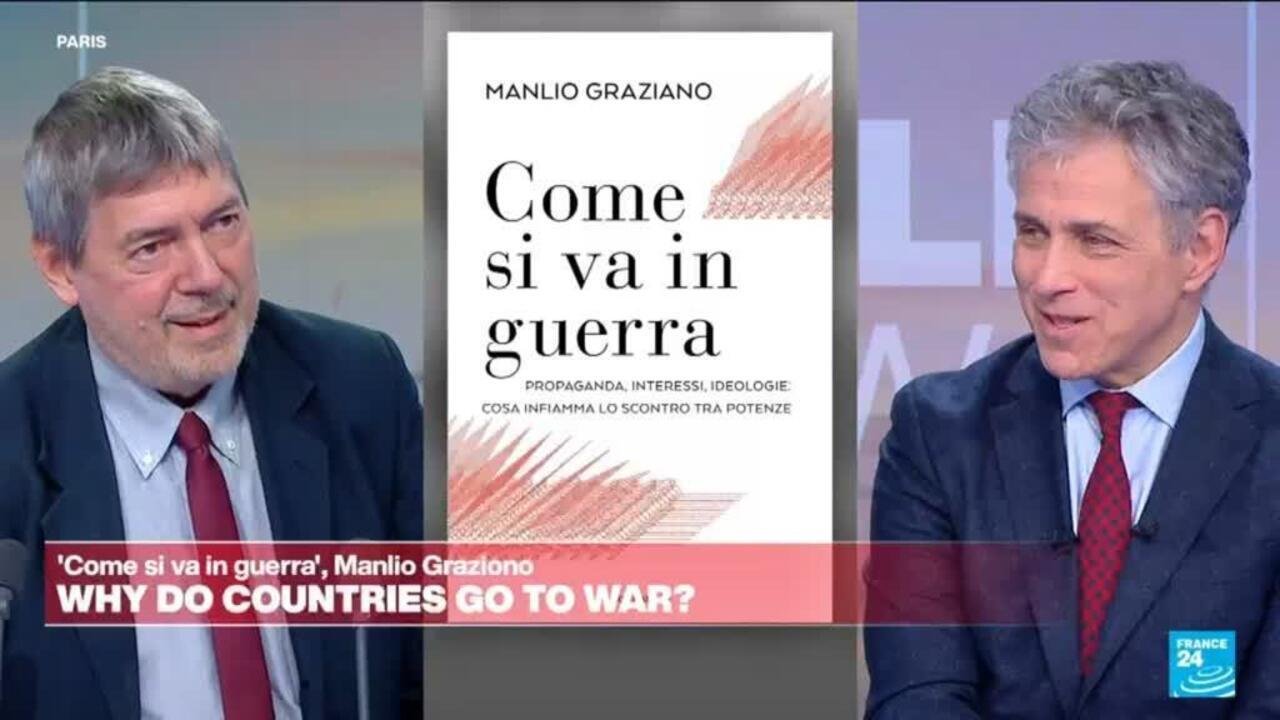
The Shift in Global Power Dynamics: A Conversation with Manlio Graziano
In this insightful discussion, François Picard chats with Manlio Graziano, an accomplished author and professor of Geopolitics at the American Graduate School of International Relations & Diplomacy. Graziano explores the concept of a transforming world order, asserting that while the United States remains a superpower, it no longer embodies the title of “leader of the free world.” Over the last fifty years, America has grappled with the limits of its global influence, a realization that has been influenced by several strategic setbacks, from Vietnam to Iraq and Afghanistan. Today, this decline in authority reveals itself as a strategic disconnect: Europe finds itself in a precarious position where it can neither fully depend on the US nor completely distance itself from American influence.
The Evolving Role of the United States
Graziano emphasizes that the traditional notion of American exceptionalism is fading. The US, once seen as an uncontested global leader, is now navigating an environment where its influence is being challenged by various emerging powers. This shift has profound implications for international relations and governance.
The Impact of Historical Conflicts
The historical context is crucial to understanding the current dynamics. Graziano points to significant military engagements, including Vietnam, Iraq, and Afghanistan, as pivotal moments that have shaped this view. Each of these conflicts exposed the limitations of US military power and strategy, leading to a re-evaluation of its role on the global stage.
The European Perspective
As Europe grapples with its relationship with the US, Graziano highlights a unique dilemma. The continent is caught in a balancing act, unsure whether to lean on American power or forge a separate path that prioritizes its own interests. This ambiguity creates opportunities, but also risks, as Europe navigates its geopolitical landscape.
Strategic Incoherence and Global Relations
The concept of strategic incoherence is significant in this discussion. Graziano argues that the US’s waning influence has resulted in a fragmented approach to foreign policy, complicating alliances and diplomatic efforts. Countries around the world are reconsidering their partnerships as they face an uncertain global environment.
The Rise of Emerging Powers
Graziano also points to the emergence of other global powers that are reshaping the geopolitical landscape. Nations such as China and Russia are asserting their influence, creating a multipolar world where the US cannot solely dictate the terms of engagement.
Conclusion
As we navigate this evolving global order, it’s essential to understand the implications of these shifts. Graziano’s insights suggest that while the US will continue to hold significant power, it must adapt to a new reality where collaborative diplomacy and strategic partnerships are more crucial than ever.
- The US remains a superpower but lacks the traditional role of global leader.
- Historical conflicts have impacted America’s influence and strategic coherence.
- Europe faces challenges in balancing its relationship with the US and its own objectives.
- Emerging global powers are reshaping international relations, leading to a multipolar world.