

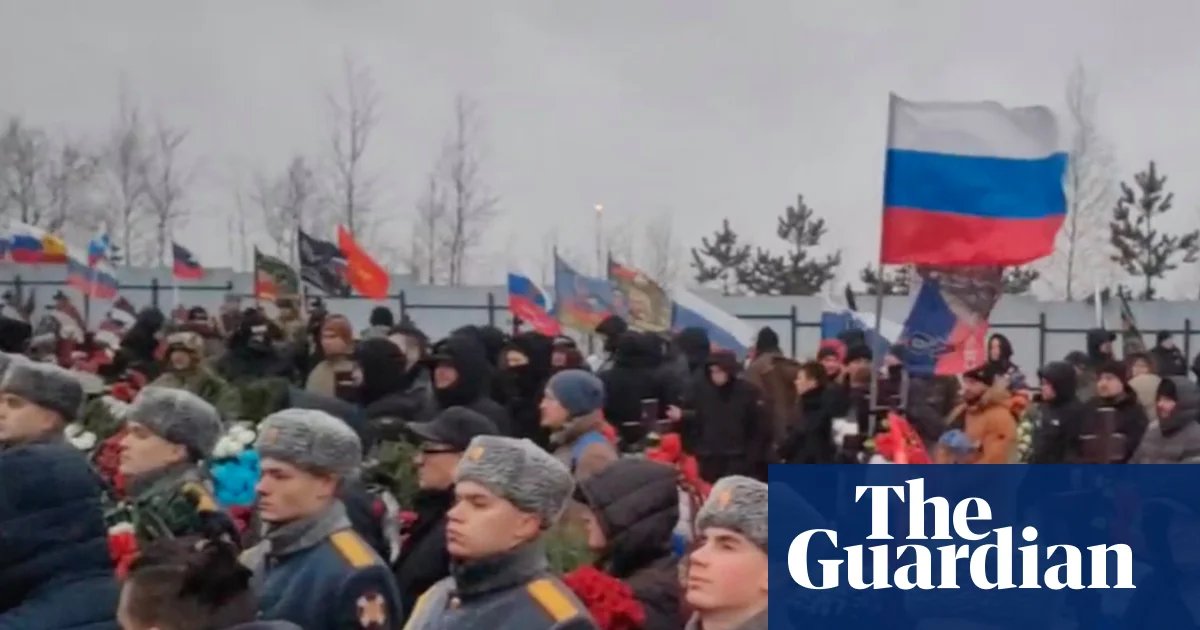
A Farewell to a Controversial Figure: Stanislav Orlov’s Final Tribute
In a somber gathering beneath the ornate frescoes and gleaming icons of Moscow’s Cathedral of Christ the Saviour, hundreds of mourners filled the lower hall to honor Stanislav Orlov, known by his callsign “Spaniard.” As priests led prayers for the deceased, the crowd, clad in dark winter jackets, transformed this sacred space, typically reserved for state rituals, into a site of farewell. With flares illuminating the scene, mourners shouted, “One for all, and all for one,” marking the end of an era for a figure steeped in controversy.
The Life and Legacy of Stanislav Orlov
Orlov was the founder of the far-right Española unit, comprised of football hooligans and neo-Nazi volunteers who aligned with Russia’s military efforts in Ukraine. His funeral was framed by Russian pro-war Telegram channels as the consecration of a battlefield commander, yet one crucial detail remained unaddressed: the mysterious circumstances surrounding his death.
Speculations Around His Death
Orlov’s passing, first reported online on December 9, sparked speculation and inquiry. Contrary to initial beliefs that he died in battle, reports surfaced suggesting he was ambushed and shot at his home in Crimea by Russian security forces. Recent footage released by Astra, an anti-war outlet, allegedly shows the moments leading up to his death, capturing armed servicemen approaching his residence followed by gunfire. Alarmingly, it was noted that an ambulance took six hours to arrive at the scene.
The Crackdown on Ultranationalist Groups
His death symbolizes the Kremlin’s intensified crackdown on rogue ultranationalist elements since the Wagner mutiny. While previously the state encouraged radical groups like Española for their ability to mobilize fervent fighters, the landscape began to shift significantly after Yevgeny Prigozhin’s failed rebellion in June 2023. Following Prigozhin’s death in a widely regarded Kremlin-led assassination, independent armed groups have faced systematic dismantling or incorporation into the regular military.
The Role of Española
Española was not only feared on the battlefield, having participated in fierce assaults in cities like Mariupol and Bakhmut, but it also carved out a cultural niche within Russian society. The group, drawing members from the nation’s prominent football clubs, engaged in successful publicity campaigns that resonated with broader social sentiments. Former athletes like Andrei Solomatin became leading figures within the unit, further intertwining sports with its militaristic ethos.
The Shifting Dynamics in Wartime Russia
With the Kremlin’s tightening grip post-Wagner rebellion, tolerance for irregular units such as Española evaporated. The group formally disbanded in October 2023, coinciding tragically with Orlov’s death just two months later. His demise not only underscored the Kremlin’s stance against uncontrollable radicals but also served as a stark warning to others.
The Response from Pro-war Figures
In the wake of Orlov’s death, the reaction from pro-war bloggers has been notably muted, hinting at a chilling effect on public discourse regarding his legacy. Española’s own statement on Telegram expressed a desire for clarity regarding the circumstances of Orlov’s passing but urged supporters to await official investigations before jumping to conclusions.
Concluding Insights
Orlov’s burial in such a revered location symbolizes a paradox within wartime Russia; zealots can receive reverence but pay a heavy price for transgressions against the state. As political analyst Andrei Kolesnikov articulates, the Kremlin’s approach reflects a careful balancing act—it allows the memory of figures like Prigozhin to persist but unequivocally discourages any aspirations for power among radical factions.
Key Takeaways
- Stanislav Orlov, founder of the far-right Española unit, was honored at a funeral that showcased both reverence and controversy.
- His death raises questions about the Kremlin’s ongoing crackdown on ultranationalist factions post-Wagner mutiny.
- Española served not just militarily but also culturally, integrating deeply into Russian sports and society.
- The muted response from pro-war commentators underscores the tensions and risks surrounding radical figures in Russia today.