

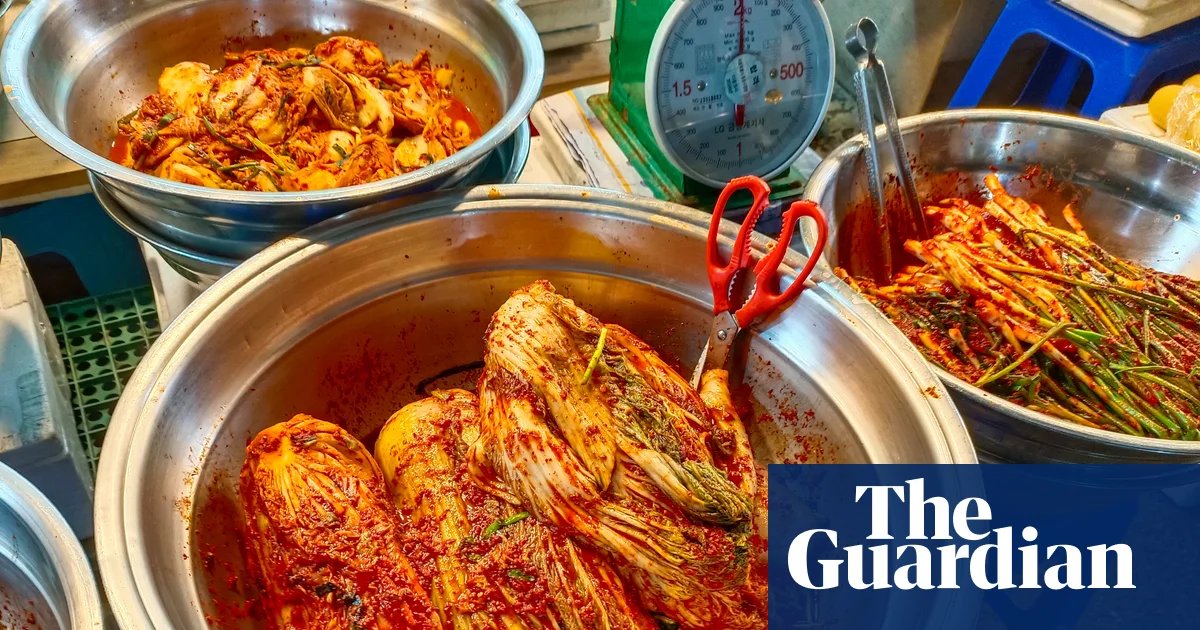
The Struggles of South Korean Kimchi Producers
The aroma of red chili powder fills the air at Kim Chieun’s kimchi factory in Incheon, located just west of Seoul. Within the factory walls, salted cabbage simmers in large metal containers, adhering to a time-honored process that Kim has perfected over the past three decades. However, overseeing production has become increasingly challenging as South Korea’s kimchi market faces tough competition from cheaper imports, particularly from China.
“Kimchi is now recognized globally as a Korean dish, yet we find it disheartening,” Kim explains, lamenting how many local eateries have turned to less expensive imported options. “This marketplace is slipping away from us.”
Currently, imported kimchi from China can be found in restaurants for as low as 1,700 won (approximately $1.15) per kilogram, while locally made alternatives are priced at around 3,600 won (about $2.45), significantly higher. In the first ten months of this year, South Korea has imported a staggering $159 million worth of kimchi, largely from China, while its exports stood at $137 million.
Understanding the Heart of Kimchi
Kimchi, a staple side dish accompanying nearly every Korean meal, encompasses far more than just the spicy cabbage that many internationally recognize. It encompasses over 150 varieties, incorporating ingredients such as radish, cucumber, and spring onions, all seasoned with a flavorful blend of chili powder, garlic, ginger, and often, fermented seafood paste. Each variant is influenced by regional climatic conditions and evolving palates.
The fermentation process also contributes to the health benefits attributed to kimchi, notably its wealth of beneficial lactic acid bacteria. Traditionally, families would prepare massive amounts of kimchi together during the kimjang season, a winter ritual acknowledged by UNESCO as an essential part of cultural heritage. Yet, consumption patterns are shifting.
Since the year 2000, the number of single-person households has surged by over threefold, now making up more than 36% of all households. As a result, fewer individuals are preparing kimchi at home. Instead, it’s increasingly common for consumers to purchase ready-made varieties or enjoy the dish at restaurants, where it is typically served at no extra charge.
This shift has led to a decline in overall kimchi consumption, even as the demand for commercially produced versions increases. Producers are becoming more reliant on larger buyers and restaurants for survival. “If you manage to avoid losses and stay afloat, it’s considered a success,” Kim remarks. “For many of us in the past ten years, we haven’t been able to make necessary investments.”
A Cultural Treasure Under Pressure
Market dynamics now dictate that pricing, rather than origin or production methods, takes precedence. Jeon Eun-hee, who has operated a kimchi factory in Hwaseong for nearly three decades, abandoned plans for expansion eight years ago due to the rising competition from Chinese imports. He voices a poignant question: “Can we really accept using imported kimchi when this food embodies our cultural spirit?”
The challenges for these producers have been intensified by climate change, which poses a threat to cabbage farming—the primary ingredient in kimchi. Disruption in traditional highland agricultural practices means that cabbage prices can spike, sometimes doubling year over year during peak seasons. Although government entities and producers are exploring climate-resilient cabbage varieties and advanced storage techniques, the effectiveness of these strategies in alleviating industry pressures remains uncertain.
Approximately 75% of South Korea’s kimchi manufacturers are small businesses, employing four or fewer individuals. Many adhere to labor-intensive production methods that struggle to compete against large-scale production from China. As the head of the Kimchi Association of Korea, Kim acknowledges the industry’s ongoing effort to adapt, albeit with limited resources.
To combat the crisis, the association has implemented a voucher system, incentivizing selected restaurants to return to Korean-made kimchi by offering them 1,280 won (around 87 cents) per kilogram. Additionally, there is an ongoing push for stricter scrutiny of imported kimchi pricing.
The Ministry of Agriculture in South Korea aims to bolster both the domestic market and export capacity to create a sustainable foundation for the kimchi industry. Measures include voluntary labeling to identify restaurants that serve Korean kimchi, agricultural support for growers, and research initiatives aimed at extending kimchi’s shelf life for export.
In Kim’s view, the unique taste of Korean kimchi remains its strongest advantage. “Korean kimchi has a distinctive flavor that simply cannot be replicated,” he asserts.
- The kimchi market in South Korea is facing increased pressure from cheaper imports, particularly from China.
- Consumer habits are changing, with a decline in home-prepared kimchi and a rise in demand for commercially manufactured varieties.
- Climate change poses significant challenges to cabbage farming, essential for kimchi production.
- The Korean kimchi industry is looking for innovative solutions and support to maintain its cultural significance and market competitiveness.