

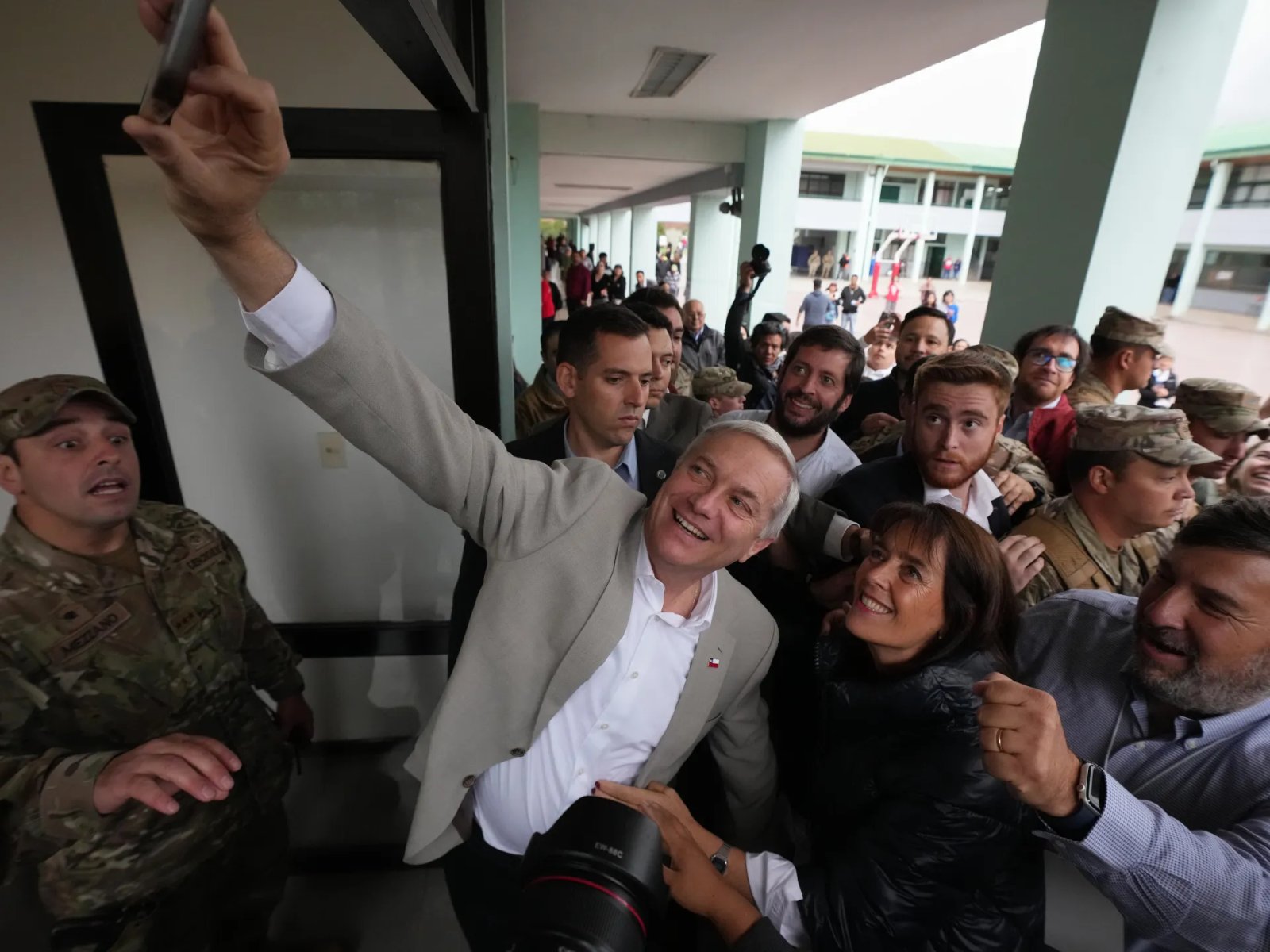
Jose Antonio Kast Elected as Chile’s 38th President
In a significant turn of events, far-right candidate Jose Antonio Kast has emerged victorious in the recent run-off election, becoming the 38th president of Chile. With nearly all votes counted, Kast garnered an impressive 58 percent, defeating Jeannette Jara, a former Labour Minister representing the centre-left coalition. This election marks a pivotal moment in Chilean politics, demonstrating a shift towards more conservative leadership.
Election Results and Reactions
Shortly after the polls closed, Jara and her coalition, Unity for Chile, conceded, recognizing Kast’s triumph. In a heartfelt message shared on social media, Jara expressed her best wishes for Kast, emphasizing the importance of unity in moving forward. “Democracy has spoken loud and clear. Together, we will keep striving for a better life in our country,” she stated.
Kast’s victory contributes to a broader trend in Latin America, where far-right leaders previously seen as political outsiders have risen to power, reminiscent of recent developments in countries like Argentina and Ecuador. For Kast, this win represents a significant comeback; at 59, he is celebrating his first successful presidential campaign after two previous attempts.
A Changing Political Landscape
Previously, he had suffered a substantial defeat against outgoing President Gabriel Boric in 2021, who managed to win by nearly 10 points. However, Boric’s popularity dwindled to approximately 30 percent by the conclusion of his four-year term, and he was ineligible to run again under Chilean law.
Kast capitalized on growing public dissatisfaction regarding rising crime rates, immigration issues, and a sluggish economy. His campaign promised a fresh approach to these pressing concerns, including aggressive measures on crime and immigration, akin to the policies of former U.S. President Donald Trump.
Security Measures and Controversial Views
He detailed his security framework, known as the “Implacable Plan,” which includes initiatives like harsher mandatory minimum sentences, increasing the number of violent offenders in maximum security prisons, and isolating cartel leaders to sever their external communications. “While criminals roam freely, honest Chileans are confined to their homes in fear,” Kast declared.
Kast also holds strong conservative views on social issues, notably opposing abortion in all circumstances, including cases of rape. However, his rigid policies have attracted criticism, particularly in light of his favorable remarks about Augusto Pinochet, Chile’s former military dictator, whose regime was marked by severe human rights violations.
Connections to Historical Figures
Despite Kast’s attempts to distance himself from the “far-right” label, he has openly defended Pinochet’s regime. His controversial comment, “If he were alive, he would vote for me,” underscored his complex relationship with Chile’s history. Furthermore, opponents have pointed out that his father was a member of the Nazi Party before immigrating to Chile.
Reporting from Santiago, journalist Lucia Newman noted the historic nature of Kast’s victory for Chile’s far-right. “This new conservative government is unprecedented since Chile returned to democracy in 1990,” she remarked, while noting Kast’s efforts to moderate his platform for the election.
International Reactions
Following Kast’s election, right-leaning leaders across the Americas expressed their congratulations via social media. Marco Rubio, the former U.S. Secretary of State, conveyed the United States’ eagerness to collaborate with Kast’s administration to bolster regional security and trade. Argentina’s libertarian leader, Javier Milei, hailed Kast’s victory as a significant win for his conservative movement, emphasizing the advancement of freedom in the region.
Ecuador’s President Daniel Noboa welcomed the dawn of a new era for both Chile and the Americas. This election cycle marked the first instance since 2012 that voting was compulsory in Chile, with approximately 15.7 million eligible voters participating.
Looking Ahead
Kast initially finished second in the first round of voting on November 16, earning 23.9 percent, while Jara claimed 26.8 percent. Despite this, he surged ahead in the run-off by unifying support from various right-leaning factions, resulting in a clear victory. Moving forward, Kast will need to navigate a fragmented National Congress that may limit some of his more extreme policies. His inauguration is set for March 11.
Conclusion
Jose Antonio Kast’s election signals a notable shift in Chilean politics, mirroring broader trends in the region. As he prepares to take office, the implications of his presidency will unfold against a backdrop of divided opinions, societal concerns, and historical complexities.
- Jose Antonio Kast has won Chile’s presidential election with 58 percent of the vote.
- This victory marks a significant shift toward far-right leadership in the region.
- Kast’s campaign promised aggressive policies on crime and immigration.
- He faces challenges in implementing his agenda due to a divided National Congress.