

Revolutionary Microelectrodes Could Transform Brain-Computer Interfaces
In an exciting advancement for neuroscience, researchers in China have developed groundbreaking microelectrodes that can flex and adjust with the movements of the brain. This innovation promises to enhance brain-computer interfaces, making them more effective and adaptable. The findings of this research were recently published in a study in the prestigious journal, Nature Electronics.
Inspired by Kirigami
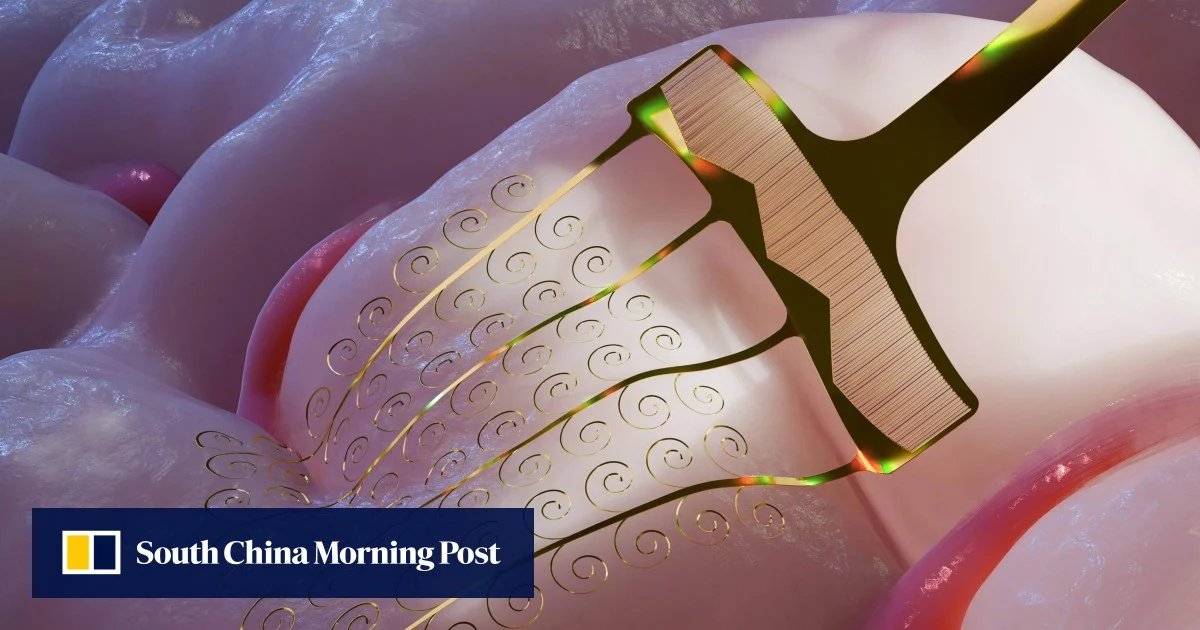
The team from the Chinese Academy of Sciences drew inspiration from the Japanese art of kirigami, which involves intricate designs created through cutting and folding paper. This artistic influence allowed them to create neuronal activity recorders that can move with the brain’s natural fluctuations.
Tackling a Key Challenge
One of the biggest hurdles in current brain-computer interface research, particularly in projects like Elon Musk’s Neuralink, is the issue of electrode displacement. The team’s innovative design aims to solve this challenge, ensuring that the electrodes remain stable and effective during brain activity.
Testing in Monkeys
The researchers implanted the soft microelectrode arrays in macaque monkeys, allowing these devices to move and flex in tandem with the brain tissue. This capability enabled the simultaneous recording of hundreds of neurons, significantly enhancing the potential for detailed neural analysis.
The Future of Brain-Computer Interfaces
The scientists stated, “The development of brain-computer interfaces requires implantable microelectrode arrays that can interface with numerous neurons across large spatial and temporal scales.” These devices provide a crucial link between brain activity and computers by utilizing electrodes to capture neural signals, which are then analyzed to enact commands, such as controlling robotic arms.
As technology continues to evolve, these advancements in microelectrode design may pave the way for more advanced brain-computer interfaces that can improve the quality of life for individuals with disabilities and expand the possibilities of human-computer interaction.
- Chinese scientists have developed flexible microelectrodes for brain-computer interfaces.
- The design is inspired by the Japanese art of kirigami.
- These electrodes can move with brain tissue, recording neural signals more effectively.
- This innovation may lead to significant advancements in neurotechnology and rehabilitation.