

Gaza University Students Return Amid Devastation
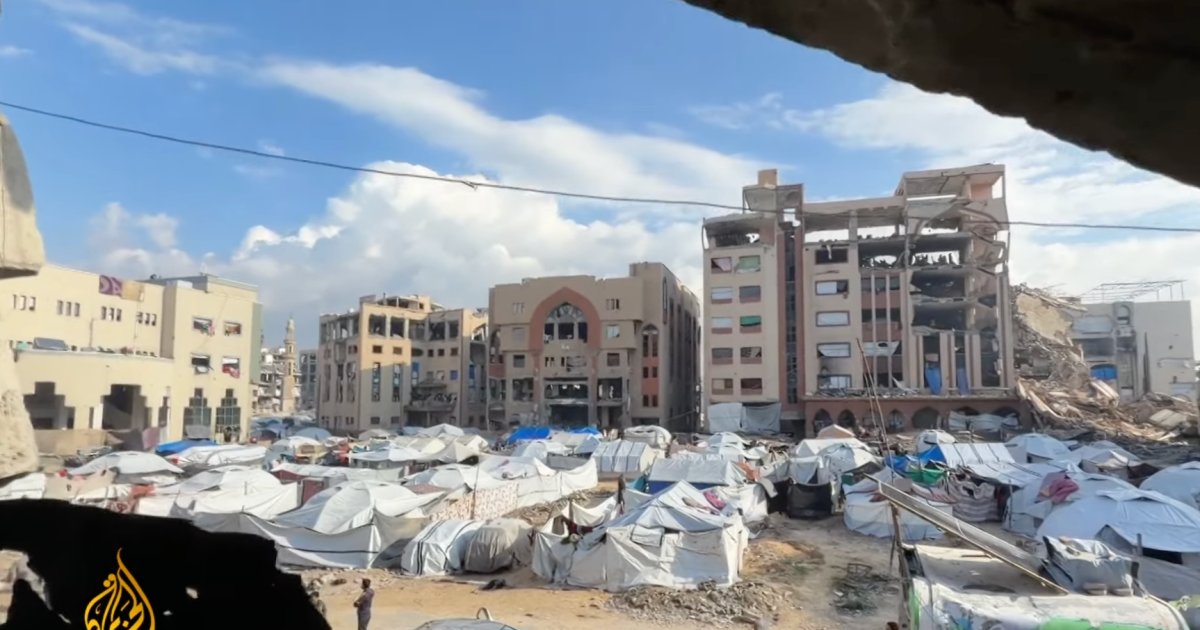
For the first time in two years, students at the Islamic University of Gaza are back in in-person classes, but their return comes with heavy heartache. The campus, once a vibrant center of education, has been transformed into a refuge for families displaced by relentless conflict in the region. This situation reflects a larger crisis of homelessness and the degradation of educational infrastructure that has plagued the besieged Palestinian enclave.
A Campus of Hope and Despair
Following a ceasefire in October, the university has opened its doors to approximately 500 families who have taken shelter on its grounds, now dotted with tents where classrooms once thrived. Atta Siam, one of the displaced individuals seeking refuge, expressed his sorrow, stating, “We came here after being displaced from Jabalia because we had nowhere else to go. But this place is for education; it’s not meant to be a shelter—it’s a place for our children to study.”
The resumption of classes has sparked hope for many students, even as they navigate challenges that starkly contrast with a traditional university experience. According to UNESCO, over 95% of higher education institutions in Gaza have suffered severe damage or complete destruction since the conflict escalated in October 2023.
Striving for Education Despite Adversities
Youmna Albaba, a first-year medical student, shared her desire for a fully equipped university setting. “I need a place where I can focus, that is fully qualified in every way,” she said. “But I haven’t found what I imagined here. Still, I have hope because we are building everything from scratch.”
What human rights advocates call “scholasticide” has left over 750,000 Palestinian students without access to schooling for two consecutive academic years, according to reports from local organizations.
Staggering statistics reveal the extent of this educational crisis: 494 schools and universities have been partially or entirely destroyed, and tragically, 12,800 students and 760 educators have lost their lives since the beginning of this conflict. The remaining bastion of higher education, Isra University, was leveled in January 2024.
Innovation Amidst Ruin
At the Islamic University, faculty members are resourcefully utilizing whatever remains. Dr. Adel Awadallah described covering bare walls with plastic sheets to maximize student accommodation. “We’ve borrowed motors to generate electricity to operate the university equipment,” he remarked. Currently, only four classrooms are operational, yet thousands of students are relying on these makeshift facilities to continue their education.
In a stark assessment, UN experts indicated that the ongoing destruction may be a systematic attempt to dismantle the very foundations of Palestinian society. “When schools are destroyed, so too are hopes and dreams,” they stated, decrying the systematic violence against educational infrastructure.
The implications of this destruction extend beyond mere physical loss, as families grapple with securing basic necessities like food and medicine, making it increasingly difficult to support children’s educational aspirations. Initiatives for remote learning, led by the Ministry of Education and UN agencies, have been thwarted by frequent power outages and internet disruptions.
Perseverance in the Face of Adversity
Yet, through the trauma of enduring two years of bombardment and the loss of loved ones, students remain determined. Many have identified returning to education as crucial to restoring some sense of normalcy and reclaiming their futures. Youmna Albaba echoed this sentiment, stating, “Despite all this, I am happy because I attend lectures in person. We are building everything from scratch.”
- Islamic University of Gaza reopens, becoming a shelter for displaced families.
- 95% of higher education institutions in Gaza have been severely impacted by recent conflicts.
- Over 750,000 Palestinian students have missed two years of academic instruction.
- Students remain hopeful and determined to reclaim their educational aspirations despite ongoing hardships.