

Investigating Links Between Bondi Beach Attackers and the Southern Philippines
The recent confirmation that Sajid and Naveed Akram, the alleged perpetrators of the Bondi Beach terror attack, had traveled to the southern Philippines weeks before the incident has raised significant questions. Why did they visit this region, and is there a connection to the ongoing issues of violent Islamist extremism there?
According to Philippine authorities, the father-son duo arrived in Manila on November 1 and subsequently traveled to Davao in Mindanao, a region renowned for decades of conflict involving Islamist separatists, insurgents, and warlords. The details surrounding their activities in southern Philippines are currently under investigation, and definitive conclusions are still forthcoming. Notably, they returned to Sydney on November 28.
Is the Southern Philippines a Terrorism Hotspot?
The Mindanao region, particularly southern Mindanao, has struggled with extremism for years, primarily due to the presence of Islamist separatist groups and varying conflicts. Groups like those linked to al-Qaida, Jemaah Islamiyah, and, more recently, the Islamic State, have found a foothold here. The political and historical tensions paired with the geographical landscape have allowed these groups to thrive. Yet, experts argue that while these groups have been significantly weakened in recent times, sporadic incidents of violence still occur.
A notable resurgence of violence was seen in 2017 when Islamic State-affiliated militants captured the city of Marawi, holding it for five months before the Philippine military regained control. This conflict drew foreign fighters and funding, resulting in numerous casualties, extensive damage, and displacing thousands. Mindanao is distinct in a predominantly Catholic nation, as it houses a substantial Muslim population seeking autonomy.
How Have Extremist Groups Operated in the Region for So Long?
Mindanao’s geography, characterized by thick forests, rugged mountains, and isolated islands, has created a suitable environment for guerrilla tactics and for foreign fighters seeking training with groups such as Abu Sayyaf and IS-affiliated factions. Furthermore, the region’s porous maritime borders have facilitated the smuggling of arms and the movement of militants from neighboring nations like Indonesia and Malaysia, along with sporadic links to the Middle East.
Despite a decline in extremist activities, remnants of the Islamic State can still be found mainly in and around Marawi. “Marawi continues to be a hub of jihadist support,” notes Todd Elliott, a terrorism and security analyst.
What Islamic Militant Groups Are Active in the Region?
Although many groups have been subdued, several militant organizations still operate within Mindanao. Abu Sayyaf, once infamous for its kidnappings and bombings, has seen much of its leadership neutralized, with many members surrendering. The Bangsamoro Islamic Freedom Fighters, a faction of the Moro Islamic Liberation Front, continues operating in Maguindanao, albeit weakened from various surrenders and military actions. The Moro Islamic Liberation Front itself has embraced a peace agreement that led to the establishment of the Bangsamoro Autonomous Region of Muslim Mindanao in 2019, formally renouncing terrorist activities.
Additionally, the Maute Group, associated with Daulah Islamiyah, has shrunk significantly, as authorities estimate their numbers are now manageable. A loose federation known as Isis-East Asia, which consists of groups that have pledged allegiance to IS, is thought to number between 300 and 500 fighters, including both locals and foreigners, who continue to execute sporadic attacks in Mindanao.
In December, authorities reported the elimination of Mohammad Usman Solaiman, who was identified as a senior leader and bomb expert of Daulah Islamiyah, in Maguindanao del Sur. His militant faction had previously claimed responsibility for multiple terrorist acts, including bus bombings in 2022.
What Attacks Have Taken Place in the Philippines and How Has the Government Responded?
Since the decline of IS and the onset of the COVID-19 pandemic, extremist attacks in the Philippines have sharply decreased, though isolated incidents persist.
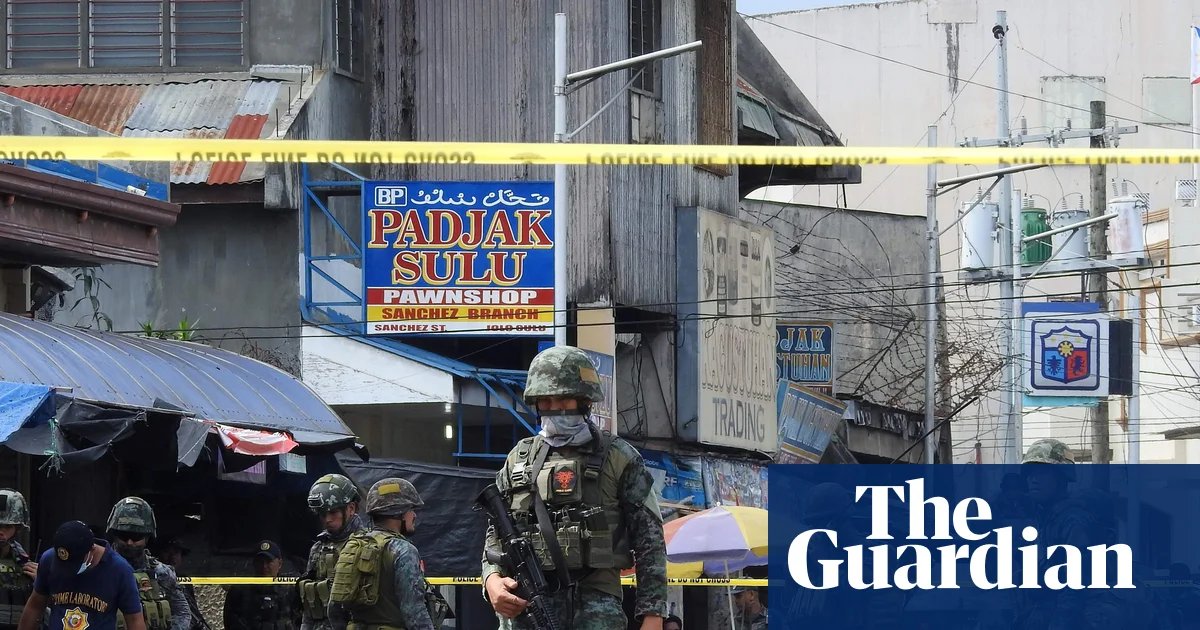
The most significant recent incident occurred in 2019, when twin bombings targeted a Catholic church in Jolo, Sulu province, resulting in 20 fatalities and injuring another 100 individuals. Following this, a bombing in Jolo’s cathedral and town plaza in 2020 left 14 dead, and another explosion during a mass at Mindanao University in December 2023 killed four.
In a concerted effort to combat extremism, the Philippine government enacted a stricter anti-terrorism law in 2020, enhancing their capability to tackle violent extremism. Numerous operations in the southern Philippines have led to the demise, arrest, or surrender of prominent Islamist radicals in recent years, significantly degrading their operational structures. Remaining groups are now fragmented and have substantially reduced capabilities.
- Authorities confirm links between Bondi Beach attackers and the southern Philippines.
- The Mindanao region has a long history of Islamist extremism, with sporadic violence persisting.
- While many militant groups have been weakened, some still maintain active operations.
- The Philippine government continues to enhance its anti-terrorism efforts to combat lingering threats.