

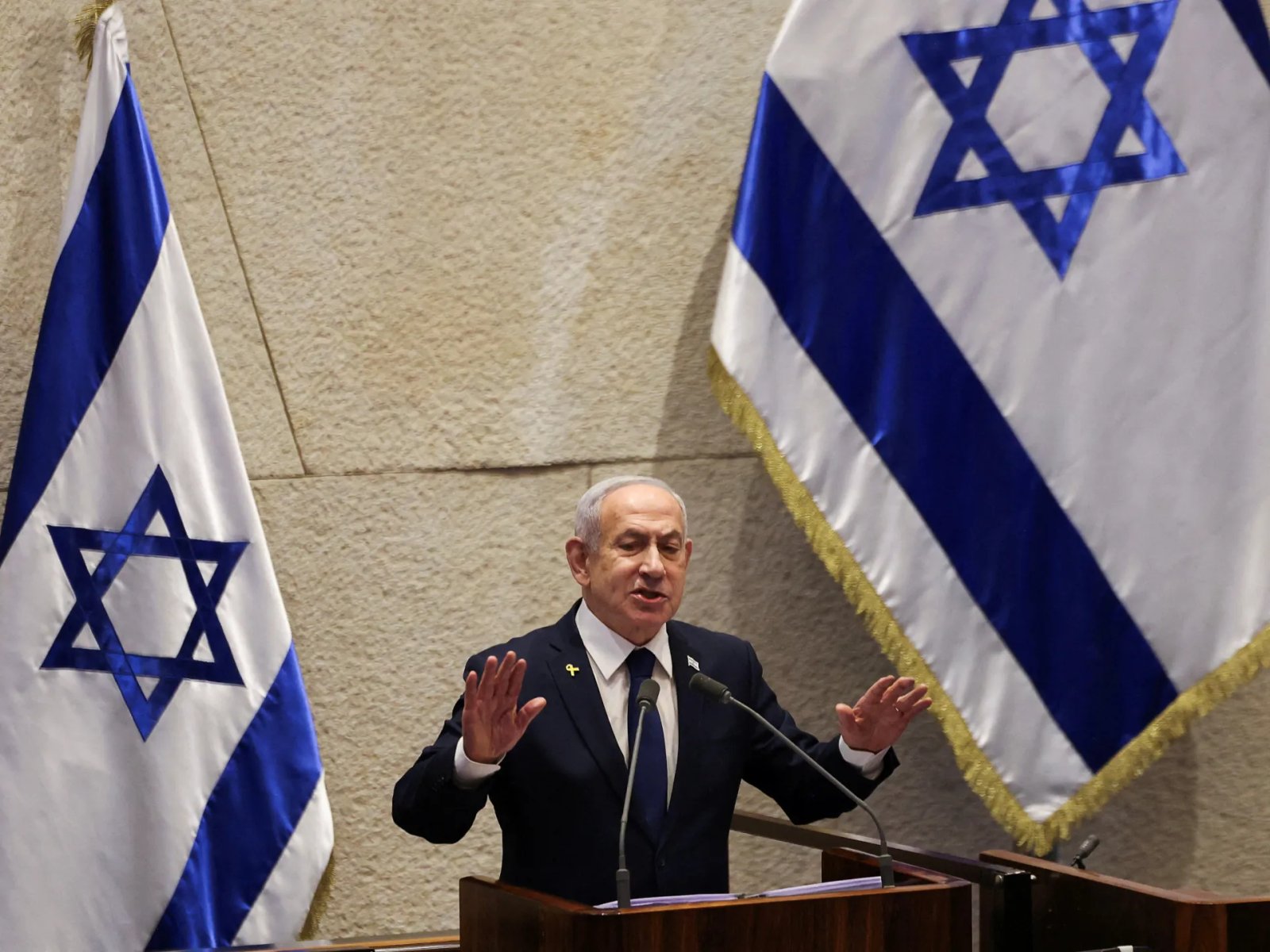
Israel’s Media Control: An Overview
The Israeli government is intensifying its grip on critical media outlets, striving for unprecedented control over how its actions are communicated to its citizens. Central to this effort is the controversial Al Jazeera Law, which empowers the government to shut down foreign media outlets on the grounds of national security. Recently, the Israeli parliament voted to extend this law for an additional two years, originally enacted during the military conflict in Gaza aimed primarily at curtailing Al Jazeera’s operations within Israel.
Government Actions Against Media Outlets
In addition to the Al Jazeera Law, the administration is also targeting the well-known Army Radio network, one of two public news organizations in Israel. Many on the right criticize Army Radio for its perceived bias against their viewpoints. Despite these moves, a significant portion of the Israeli population continues to depend on traditional news sources, with approximately half relying on broadcast news and nearly a third turning to radio stations for updates on current events.
The Impact of Media Tone
The nature of the media that is permitted to operate plays a crucial role in public perception. Analysts within Israel have pointed out that the selective coverage of Palestinian suffering during the conflict has contributed to ongoing violence and has maintained a narrative that supports continued government actions against Gaza and neighboring regions, including Syria, Yemen, and Lebanon.
Even with a media landscape seemingly tailored to favor the government, the far-right administration of Prime Minister Benjamin Netanyahu is seeking to sidestep legal constraints on its media influence, aiming to consolidate more control over the flow of information in Israel.
Government Justifications and Legislative Measures
The government perceives media criticism as excessive. Israeli officials have long voiced dissatisfaction with both domestic and international media portrayals of the conflict in Gaza. A new accusation surfaced in November, where the government held the media partly responsible for the Hamas-led attacks on October 7, 2023.
“If the media had not encouraged refusal to serve and reckless opposition to government reforms, there wouldn’t have been such a divide in the nation that allowed the enemy to take advantage,” communicated Communications Minister Shlomo Karhi while proposing a bill to expand government oversight of news outlets.
New Legislation on Media Control
Besides the Al Jazeera Law, three other legislative efforts are underway: a proposal to privatize the public broadcaster Kan, the initiative to dismantle Army Radio, and an effort to place the media regulator under government authority. Both Army Radio and Kan have been known for airing numerous reports that challenge the government’s narrative.
Recently, Kan conducted an interview with a former spokesperson for Netanyahu, who revealed that the Prime Minister had tasked him with devising tactics to avoid accountability regarding the events of October 7.
Changing Media Regulation
The Israeli government is also pushing for considerable changes to media regulation. In November, parliament advanced a bill aimed at replacing existing media regulatory bodies with a new authority that would be government-appointed, thereby possibly increasing state influence over the media landscape.
Moreover, a law has been enacted to formally ban foreign media outlets that the government finds objectionable. Initially enacted as emergency legislation in May 2024, this law facilitated the expulsion of Al Jazeera from Israel and was similarly employed against The Associated Press after accusations of sharing content with Al Jazeera. Under the established law, the communications minister, with the Prime Minister’s approval, may halt a foreign broadcaster’s operations if deemed a security risk, alongside the power to close their offices and confiscate their equipment.
Criticism of Recent Measures
These restrictions have not gone unnoticed. The International Federation of Journalists (IFJ) and the UK’s National Union of Journalists have condemned Israel’s actions against foreign media channels. IFJ General Secretary Anthony Bellanger remarked:
“Israel is openly waging a battle against media outlets, local and foreign, that challenge the government’s narrative. This is typical of authoritarian regimes and represents a serious threat to free speech and media freedom.”
The push to close Army Radio has also faced criticism; Israeli Attorney General Gali Baharav-Miara called the action unlawful and accused Netanyahu’s coalition of systematically undermining public broadcasting, placing its future in jeopardy.
Media’s Role in Public Perception
Contrary to the portrayal of oppositional media, Israeli outlets have often supported government perspectives regarding the conflict in Gaza, where thousands of Palestinian lives have been lost. The anguish experienced by Palestinians is seldom covered adequately, and when it is, it generally comes with justifications that align with official narratives.
As Israel has reportedly led to the deaths of over 270 journalists in Gaza, local media have largely excused or avoided revealing the extent of state violence, leading the public to remain oblivious to contradictions in governmental claims. For instance, when a strike by Iran was labeled a war crime, Israeli media echoed that sentiment, ignoring the accusations against Israel for allegedly dismantling Gaza’s healthcare infrastructure.
“The Israeli media’s goal is not to educate but to cultivate a public willing to support warfare and aggression,” journalist Orly Noy expressed, critiquing the selective presentation of events.
Conclusion
As the Israeli government consolidates control over media channels, it raises pressing concerns about the implications for free speech and the public’s right to information. This ongoing struggle highlights the critical need for independent journalism in the face of governmental oversight.
- Israel is intensifying its media control through laws targeting critical foreign outlets.
- The government claims media bias has harmed national security and public perception.
- Efforts to privatize public broadcasters and regulate media could limit press freedom.
- International bodies are expressing serious concerns about these media restrictions.