

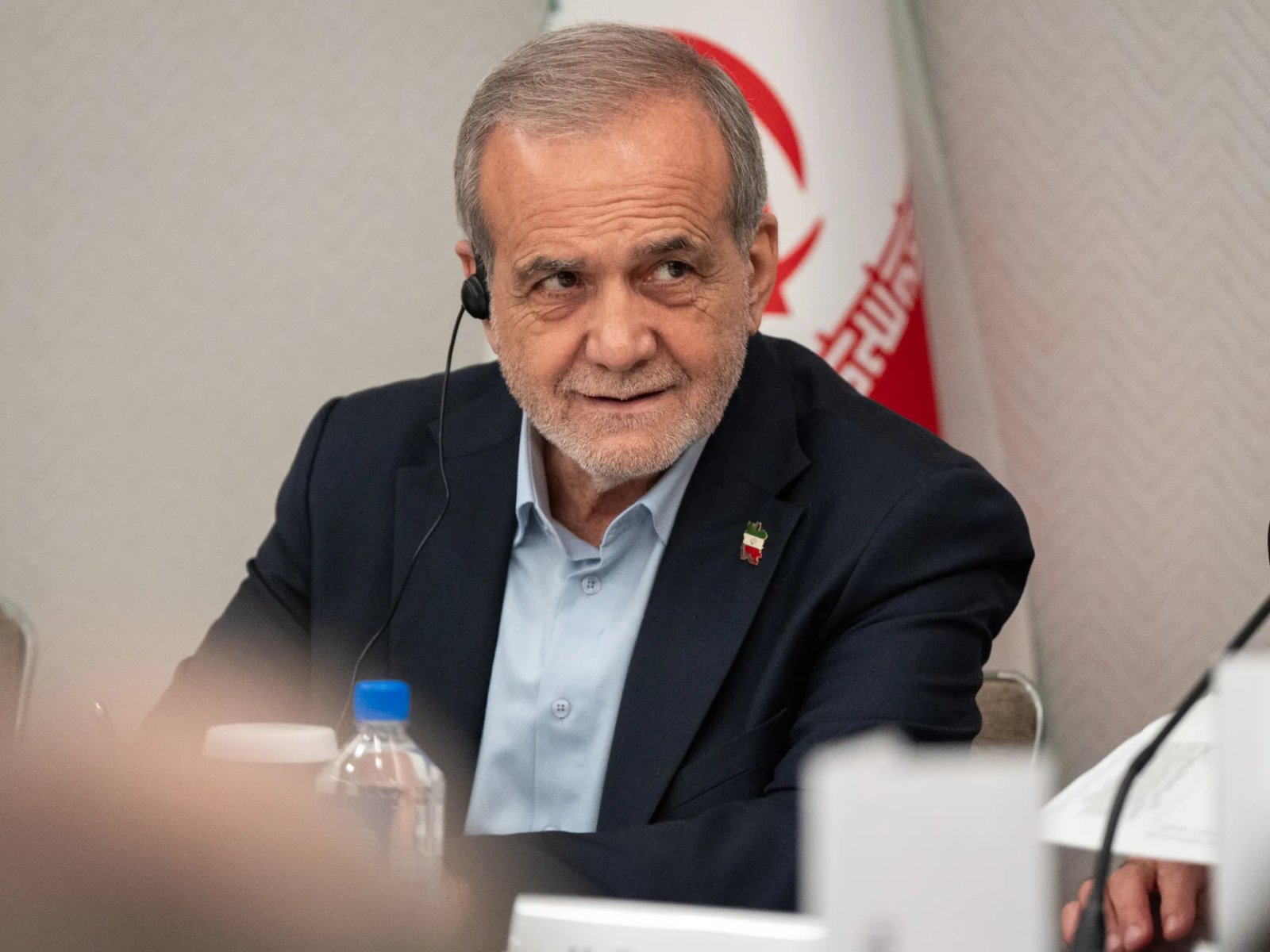
Iran’s President Warns of Stronger Response to Possible Attacks by US and Israel
In a recent declaration, Iranian President Masoud Pezeshkian asserted that the United States, Israel, and Europe are currently engaged in a “full-fledged war” against Iran. He emphasized that any future military actions by these nations would elicit a significantly stronger response from Tehran.
President Pezeshkian’s Stance on Ongoing Conflict
Pezeshkian made these comments during an interview with the official website of Supreme Leader Ayatollah Ali Khamenei, insisting that these nations aim to destabilize Iran. “In my opinion, we are in a full-fledged war with America, Israel, and Europe. They do not want our country to be self-sufficient,” he stated, reinforcing the notion that external pressures are hindering Iran’s progress.
This statement comes on the heels of a crucial meeting set between Israeli Prime Minister Benjamin Netanyahu and US President Donald Trump. Just six months prior, Israel and the US conducted strikes on Iranian sites, with renewed sanctions imposed by France, Germany, and the UK following allegations regarding Iran’s nuclear ambitions.
Military Preparedness and Warnings
Pezeshkian emphasized Iran’s military readiness, noting that despite facing numerous challenges, the country’s armed forces are currently in a better position than before the recent attacks. “Our dear military forces are doing their jobs with strength, and now, in terms of equipment and manpower, they are stronger than when they [Israel and the US] attacked,” he remarked. “So, if they want to attack, they will naturally face a more decisive response.”
Historical Context and Future Implications
The president compared the current state of conflict to previous wars, labeling this as more intricate and severe than the war with Iraq from 1980 to 1988. “This war is worse than Iraq’s war against us. If one understands it well, this war is far more complex and difficult than that war,” he noted, referencing the significant loss of life during the prolonged conflict.
While the US and its allies allege that Iran is pursuing nuclear weapons, Tehran has consistently denied these claims. The narrative escalated following a 12-day conflict in June, marked by an unprecedented Israeli assault on Iranian military and nuclear installations, resulting in substantial casualties and a subsequent US intervention.
Shifting Policies and Future Actions
Since assuming office again in January, President Trump has notably reintroduced his “maximum pressure” campaign against Iran, aimed at crippling the nation’s economy and diminishing its oil revenue. Reports indicate that during Netanyahu’s upcoming visit to Trump in Florida, discussions will likely lean towards advocating for intensified military actions against Iran, particularly targeting its missile program.
Conclusion
As tensions continue to rise between Iran and its perceived adversaries, Pezeshkian’s warnings serve as a reminder of the complexities surrounding regional stability and the potential for escalated military confrontation. The international community watches closely as these developments unfold, recognizing the potential implications for global security.
- Iran’s President Pezeshkian describes the conflict with the US, Israel, and Europe as a “full-fledged war.”
- He asserts that Iran’s military forces are now better prepared to respond decisively to any attacks.
- Ongoing tensions are exacerbated by renewed sanctions and military strikes directed at Iran.
- Future military actions, especially concerning Iran’s missile program, are under consideration in talks between US and Israeli leaders.