

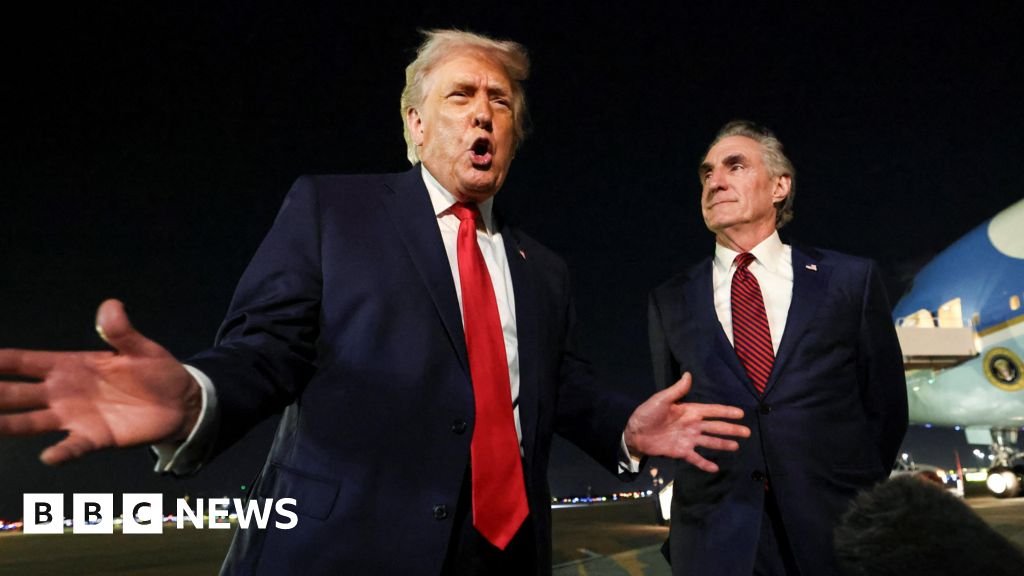
The Diplomatic Drama Over Greenland: Text Messages Unveiled
A recent leak of text messages between former US President Donald Trump and European leaders has unveiled surprising conversations regarding the ownership of Greenland. During an upcoming forum in Davos, Switzerland, Trump indicated that he intends to assert the US’s claim to Greenland. Traditionally, diplomatic communications occur behind closed doors, marked by secrecy and discretion. However, these disclosures challenge that norm. Let’s delve into the messages exchanged and the reactions from experts in diplomacy.
Messages Between Trump and Norwegian PM
The text messages between Trump and Norwegian Prime Minister Jonas Gahr Støre were released following a freedom of information request. The interaction unfolded on January 18th, with Støre expressing a desire for collaboration on pressing international issues, including Greenland.
Gahr Støre: “Dear Mr. President, dear Donald – regarding our communication across the Atlantic concerning Greenland, Gaza, Ukraine, and your recent tariff announcement. We recognize your position. However, we believe it’s essential to work together to de-escalate tensions amid the various challenges we face.”
Trump’s rather bold response acknowledged his discontent with Norway’s decision not to award him a Nobel Peace Prize. He then pivoted to assert the US’s claim over Greenland:
Trump: “Denmark cannot protect that land from Russia or China, and who claims ownership anyway? There are no formal documents validating it. The world isn’t secure unless we have complete control over Greenland.”
Insights from Experts
Oana Lungescu, a former NATO spokesperson, remarked on the shifting diplomatic norms, indicating that it isn’t solely a characteristic of Trump. The public release of private communications is a rare occurrence and reflects his unique approach to diplomacy, often termed “megaphone diplomacy.”
Cambridge University professor Mark Weller emphasized that high-level exchanges are usually scripted to avoid misunderstandings. Trump’s unconventional style stands out in stark contrast to the more reserved approach of leaders like Støre, highlighting a growing frustration with traditional diplomatic decorum.
Communications with French President Macron
In a separate exchange on January 19th, French President Emmanuel Macron reached out to Trump, expressing alignment on several global challenges except for Greenland:
Macron: “My friend, we are aligned regarding Syria and can accomplish significant things with Iran. However, I’m puzzled by your stance on Greenland. Let’s consider a G7 meeting after Davos, inviting relevant parties.”
Analysts warn that Macron’s private doubts about Trump’s intentions could prove detrimental publicly. The revelation of these texts underscores an erosion of traditional diplomacy, where private discussions may not remain confidential.
Message from NATO Secretary General
Another notable message came from NATO Secretary General Mark Rutte, who complimented Trump on his achievements in Syria and pledged to highlight his efforts:
Rutte: “Mr. President, what you accomplished in Syria is incredible. I will leverage my media appearances in Davos to highlight your efforts. I look forward to discussing Greenland and seeing you soon.”
Lungescu noted that Rutte’s messaging aligns with his public stance, contrasting with leaders who may behave differently in private and public. The exposure of such private messages could escalate rhetoric instead of fostering constructive dialogues.
The Future of Diplomacy
Experts like Marc Weller have expressed concerns that the trend of making private communications public could severely hinder effective crisis diplomacy, where confidentiality is crucial for timely and effective resolutions.
Conclusion
The release of these text messages reveals a fascinating, albeit concerning, shift in diplomatic communication. As private conversations increasingly find their way into the public sphere, the implications for global diplomacy may be profound and long-lasting.
Key Takeaways:
- Text exchanges between Trump and European leaders highlight a controversial claim over Greenland.
- Diplomatic norms are changing, allowing private communications to become public.
- Experts fear these trends may hinder effective diplomacy and escalate tensions.
- Traditional approaches to diplomacy may need to adapt in the current landscape.