

Desperate Pleas for Help Amid Flood Crisis in Indonesia’s Aceh
Residents in Indonesia’s Aceh province are raising white flags in a powerful call for international aid and solidarity following devastating floods.
In Indonesia’s westernmost province, Aceh, communities are desperately seeking assistance following a series of catastrophic floods that have left many in dire straits. The natural disaster, which was exacerbated by a rare cyclone in November, has resulted in over 1,000 fatalities and has displaced countless residents across Sumatra. Despite widespread devastation, many in Aceh continue to struggle with lack of access to essentials like clean water, food, electricity, and medical supplies.
Authorities Under Pressure
The gravity of the crisis is evident, as North Aceh’s governor, Ismail A. Jalil, recently broke down in tears during a public address, expressing frustration over the slow response from the central government. “Does the central government not know what we’re experiencing? I don’t understand,” he lamented, revealing the emotional toll of the crisis.
Despite the overwhelming need for aid, President Prabowo Subianto has rejected offers of foreign assistance, emphasizing that the situation is “under control.” He has maintained a stance against declaring the floods a national disaster, a move that would typically unlock emergency funds and facilitate more organized relief efforts. Critics argue that this administration appears increasingly disconnected from the harsh reality on the ground, a sentiment echoed by analysts who observe a pattern of disorganization in Prabowo’s presidency.
The People Take to the Streets
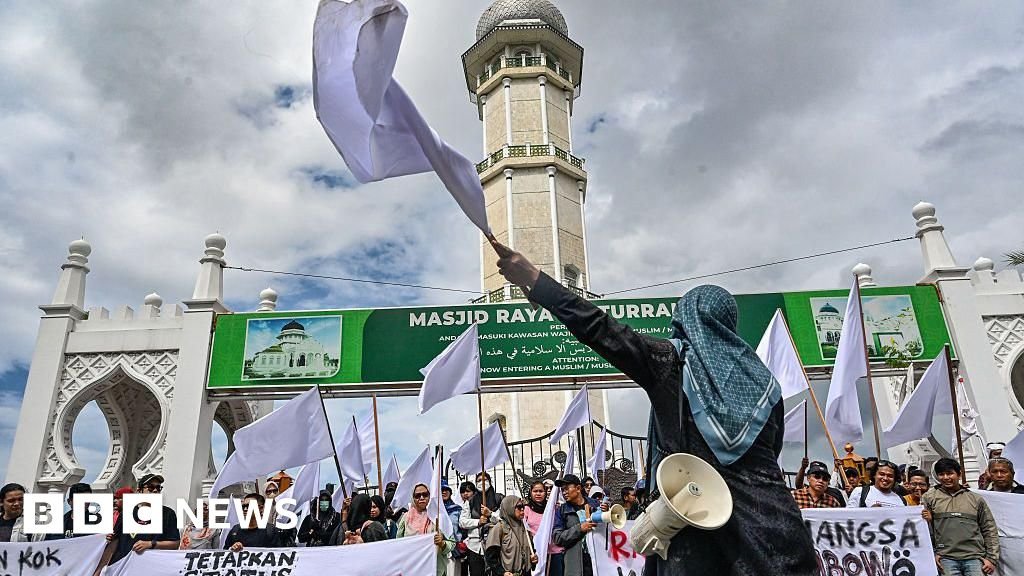
On a recent Thursday, concerned citizens gathered in Aceh’s capital, Banda Aceh, waving white flags and issuing urgent calls for the central government to accept international support. Among the demonstrators was a young girl holding a sign that poignantly stated, “I am just three years old, I want to grow up in a safe and sustainable world.”
Traditionally associated with surrender, these white flags have transformed into symbols of desperation and hope. Protesters like Husnul Khawatinnissa emphasized that the flags serve as an urgent appeal for outside help, shedding light on the dire conditions faced by their communities.
Reports indicate that entire villages have been decimated, and many are cut off from basic necessities. Survivors have described harrowing conditions, with some expressing fears of illness and starvation. “How long more do we have to wash ourselves in mud and floodwaters?” one demonstrator, Nurmi Ali, exclaimed, encapsulating the frustration and desperation felt by many.
Haunting Echoes of Past Disasters
The current crisis evokes painful memories for many in Aceh, recalling the catastrophic Boxing Day tsunami of 2004, which devastated the region and took around 230,000 lives across a dozen countries. Locals reminisce about how quickly aid arrived after that disaster, a stark contrast to the current situation where assistance has been slow and inadequate. In previous recovery efforts, international entities and private organizations provided significant support, allowing for a swift rebuilding process.
Rindu Majalina, who lost her home in the floods, expressed deep concern, stating, “Everyone took action and the community recovered quickly after the tsunami. What we’re suffering now is worse.” As she struggles to feed her family, she noted the lengths to which desperate residents are going to secure food supplies.
While some countries, including the UAE, have offered aid, their contributions have reportedly been turned away by local authorities following directives from the central government.
Political Implications and Future Outlook
Experts suggest that President Prabowo’s refusal to accept foreign aid is a move to assert authority and avoid scrutiny, a tactic that may have unintended political consequences. The administration focuses on maintaining an image of sovereignty rather than prioritizing effective crisis management, leading to accusations of indifference to the plight of flood survivors.
Critics argue that insufficient understanding of local conditions exacerbates the challenges faced by residents. For many, life has come to a halt; markets, schools, and businesses are shuttered, and families face an uncertain future. Rindu Majalina poignantly remarked, “It has been very painful and miserable… My children don’t know if they’ll ever be able to go back to school.”
- Residents of Aceh are raising white flags as a distress signal in response to a devastating flood crisis.
- President Prabowo Subianto has declined foreign aid, insisting the situation is manageable despite widespread criticism.
- The ongoing disaster evokes memories of the catastrophic 2004 tsunami, highlighting disparities in the response.
- The Acehnese people are facing profound struggles for basic necessities while calling for international support.