

The Truth Behind King Harold’s March to Hastings
Recent research challenges the long-held belief regarding King Harold’s legendary 200-mile trek across England to the Battle of Hastings in 1066, suggesting it may be nothing more than a myth. This battle, often regarded as one of the most significant in English history, was marked by Harold’s defeat at the hands of William the Conqueror, who became the first Franco-Norman king of England on October 14, 1066. Prior to this critical battle, Harold achieved a notable victory against the Norwegian King Harald Hardrada at Stamford Bridge before swiftly moving south to face the Norman forces.
Reevaluating Historical Narratives
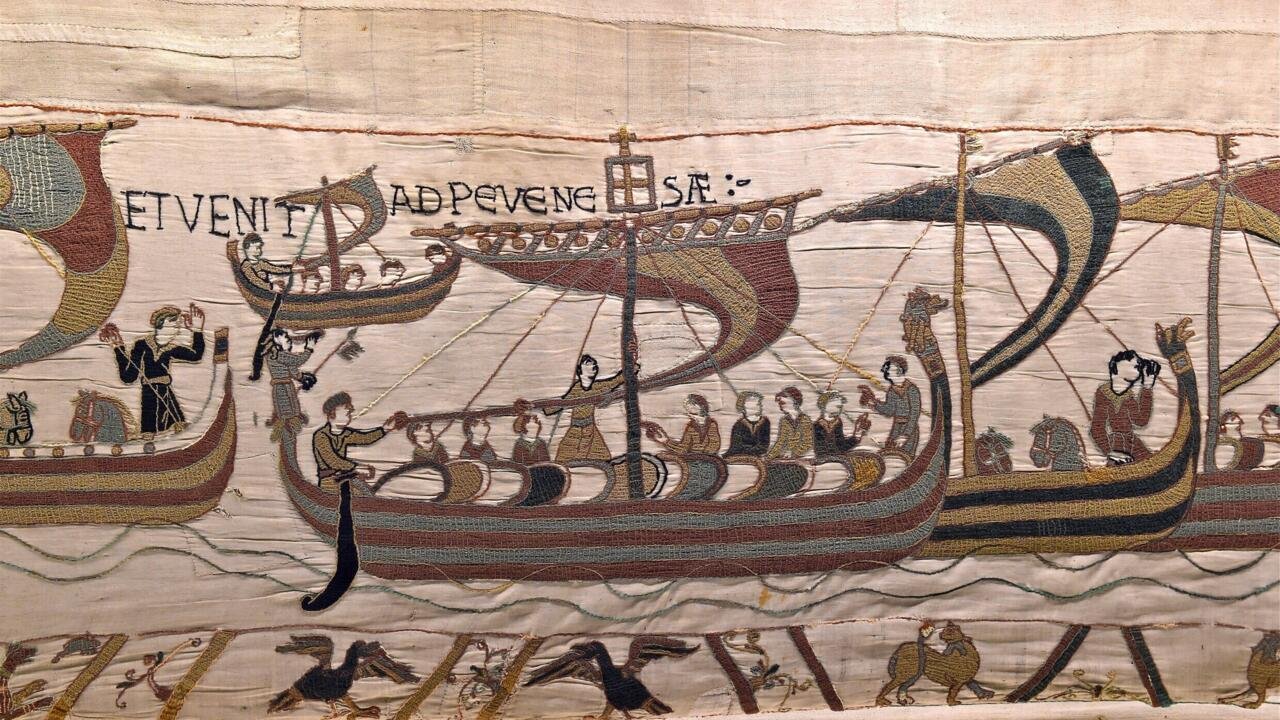
The Bayeux Tapestry, which vividly illustrates the events of this era, is set to be showcased in London from France. In anticipation of this significant exhibition in September 2026, researchers from the University of East Anglia (UEA) have put forth findings that challenge the traditional narrative of Harold’s march to battle. They assert that this well-known tale is based on a misunderstanding of the historical record.
The Role of the Anglo-Saxon Chronicle
The foundation of the commonly accepted story lies within the Anglo-Saxon Chronicle, a key document chronicling medieval English history. According to one historian’s interpretation, the Chronicle mentions that Harold’s ships “came home,” which for over a century has been interpreted to mean that the king sent his fleet away in September 1066.
New Insights from Research
However, Tom Licence, a medieval history and literature professor at UEA, discovered that these ships actually returned to their home base in London and remained operational. This indicates that Harold likely used these vessels during his journey, rather than embarking on a forced march across the entirety of England.
“I checked the evidence for him having sent the fleet home and found that it was just a misunderstanding. I went looking in the sources for evidence of a forced march and found there wasn’t any,” said Licence.
The Improbability of a Heroic March
Licence’s research further contends that the idea of Harold and his troops covering the vast distance of over 200 miles in just ten days is highly improbable. Early historical accounts suggest that Harold was able to send hundreds of ships to Hastings, indicating that he still had a substantial fleet at his disposal.
A Shift in Understanding
Ultimately, Licence posits that Harold’s campaign should not be viewed as a desperate sprint across England. Instead, it was a well-planned military operation that combined both land and naval strategies. He emphasizes that the narrative of a heroic march is not only misleading but a product of Victorian storytelling that has distorted our understanding of the events surrounding 1066.
Conclusion
This new perspective on King Harold’s actions before the Battle of Hastings reshapes the way we think about this pivotal moment in English history, urging us to reconsider the narratives we’ve accepted for generations.
Key Takeaways
- King Harold’s legendary 200-mile march may be a historical myth, not supported by new evidence.
- The Anglo-Saxon Chronicle’s account has been misinterpreted for over a century.
- Harold likely retained operational ships during his military movement, countering the narrative of a desperate march.
- The perception of a heroic march is a Victorian invention, shaping modern misunderstandings of the events of 1066.