

The Influence of Arabic Language Around the World
Arabic stands as one of the most widely spoken languages globally, boasting at least 400 million speakers. This includes around 200 million native speakers and an additional 200 to 250 million who speak it as a second language. Modern Standard Arabic (MSA) plays a crucial role as the formal mode of communication for government, education, and legal contexts, alongside its vital use in international and religious settings. Additionally, there are over 25 dialects that flourish primarily in the Middle East and North Africa.
World Arabic Language Day
Every year on December 18, the United Nations honors World Arabic Language Day, recognizing Arabic as “the pillar of the cultural diversity of humanity.” This date commemorates the 1973 decision by the UN General Assembly to adopt Arabic as one of its six official languages.
Arabic’s Influence on Other Languages
As the most spoken Semitic language, Arabic has profoundly influenced various societies and languages over the centuries. Linguists have observed that the presence of Arabic words in languages worldwide is a testament to rich cultural and historical interactions through trade, scholarship, and exchange. Languages like English, Spanish, French, and Turkish, among many others, have incorporated hundreds, if not thousands, of Arabic terms into their everyday lexicon.
A Natural Linguistic Phenomenon
Muntasir Al Hamad, a linguist and Arabic professor at Qatar University, clarifies that borrowing words from one language to another is quite common and has been happening for centuries. He emphasizes that Arabic is no exception, with its influence evident in vocabulary, science, and technology.
The Arabic Alphabet and Its Structure
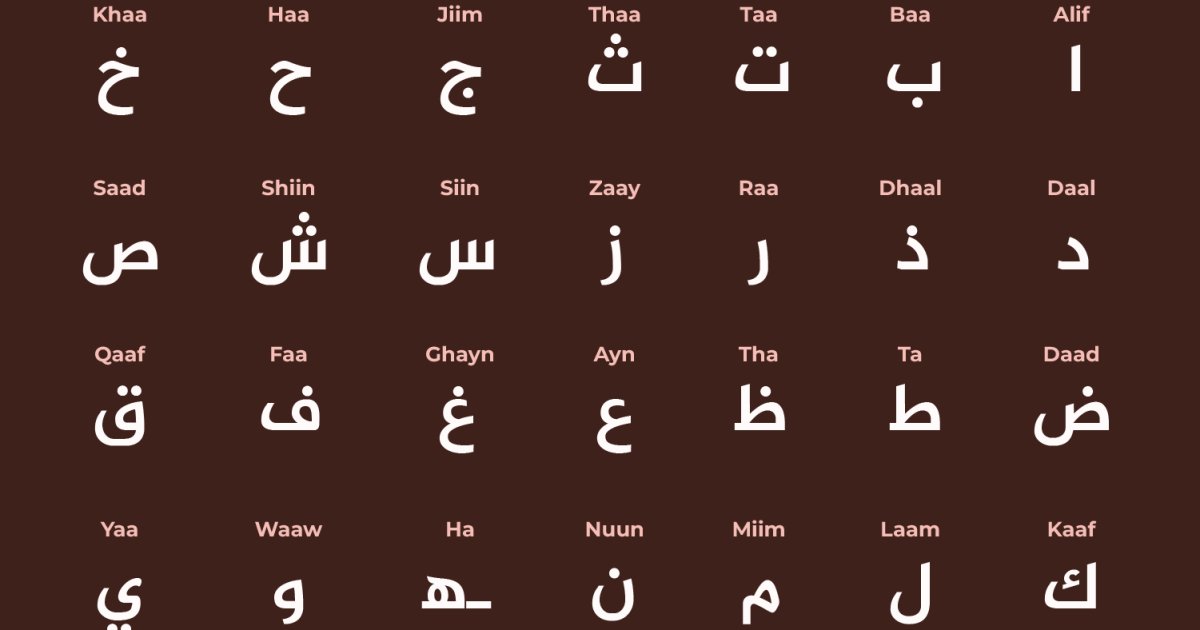
Arabic employs a unique alphabet consisting of 28 letters, written from right to left. The script is cursive, with letters morphing based on their placement within a word. Notably, short vowels are usually omitted in casual writing. These characteristics, along with the language’s extensive vocabulary, often lead to the misconception that Arabic is extremely challenging for non-native speakers.
Dispelling the Myths
Al Hamad suggests that this belief is misleading. He points out that, while the Arabic script may appear alien to some learners, it feels relatively familiar to speakers of languages such as Urdu and Farsi. Additionally, many Turkish speakers find themselves easily memorizing Arabic vocabulary due to the substantial number of Arabic words integrated into Turkish.
The Legacy of Arabic in Science and Mathematics
Arabic’s contribution to mathematics and science is significant. Over the years, numerous Arabic terms have been adopted into other languages, often in shorter or altered forms to the extent that their origins are frequently overlooked. For example, the word “algebra” is derived from the Arabic term “al-jabr,” which translates to “restoration” or “reunion.” This term originally appeared in a ninth-century text on solving equations authored by the scholar Muhammad ibn Musa al-Khwarizmi.
Evolution of Terms
Other words have undergone more dramatic transformations. The unit “carat,” used to assess the weight of gemstones, originates from the Arabic “qirat.” Al Hamad explains that such changes showcase how different languages adapt sounds that may be unfamiliar. Because the English language has a limited number of words commencing with the letter “Q,” terms like “qirat” have been modified to fit more common sounds like “C,” “G,” or “K,” resulting in forms like “carat.”
Everyday Vocabulary Adaptations
Everyday vocabulary also reflects this linguistic adaptation. The English word “giraffe,” for instance, traces its roots back to the Arabic “zarafa,” similarly altered to align with English phonetics. Meanwhile, words like “tariff,” derived from the Arabic “ta’rif,” which means “to notify” or “to announce,” entered the English language through trade-related interactions with other languages.
Conclusion
Arabic’s extensive reach and influence across various languages underscore its significance in global culture, science, and trade. Understanding its contributions not only enriches our appreciation of this pivotal language but also enhances our grasp of language evolution as a whole.
Key Takeaways
- Arabic is spoken by approximately 400 million people worldwide.
- Modern Standard Arabic serves as the formal language in many sectors.
- Arabic words have significantly influenced several languages, especially in science and mathematics.
- World Arabic Language Day is celebrated on December 18 each year.