

Broadcasting and Political Access: A Closer Look at Recent Controversies
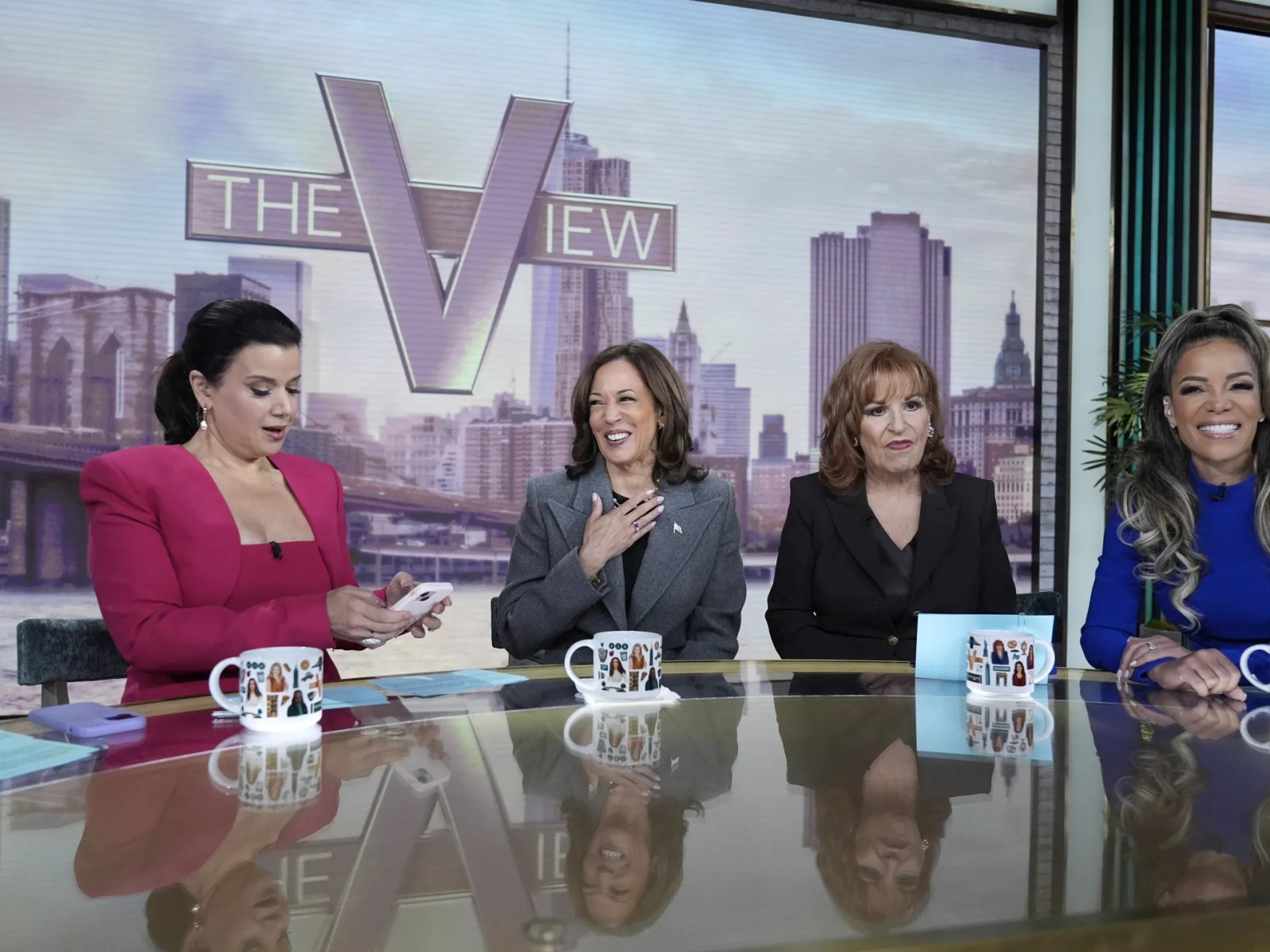
San Francisco, United States – During an episode of ABC’s popular daytime talk show, The View, in November 2024, host Sunny Hostin posed a pivotal question to Kamala Harris, then a Democratic presidential candidate. Asked if she would approach any issues differently from President Joe Biden, Harris replied, “There is not a thing that comes to mind.” Analysts saw this moment as a significant misstep, tightly binding her to the economic struggles voters experienced under Biden’s administration. Following her electoral defeat, Harris returned to The View a year later, expressing, “I realize now that I didn’t fully appreciate how much of an issue it was.” In her book, *107 Days*, she likened her response to “pulling the pin on a hand grenade.”
Controversial Appearances and Equal Access Issues
While Harris’s appearance may not have bolstered her electoral chances, Donald Trump, the Republican nominee, notably refrained from appearing on The View or similar platforms during his campaigns. U.S. broadcasting laws typically mandate equal airtime for political candidates; however, The View might qualify as an exception due to its potential classification as a “bona fide news show” that doesn’t require strict adherence to this rule.
In recent months, various late-night and daytime programs, including Saturday Night Live and Jimmy Kimmel Live, have drawn scrutiny from the Federal Communications Commission (FCC) for allegedly failing to deliver equal access and potentially presenting a partisan viewpoint. Critics argue that the FCC’s attempts to regulate these shows could threaten free speech, forming an environment akin to restrictions seen in countries like Hungary and Russia.
In late January, the FCC released a notice addressing concerns that interview segments on these shows may be exempt from equal opportunity rules. The commission emphasized that stations must ensure they are compliant with equal opportunity provisions.
However, this enforcement could become a “tool for harassment and intimidation,” warned Harold Field, senior vice president at Public Knowledge. With uncertainties surrounding these regulations, broadcasters may reconsider which points of view to represent, according to Seth Stern, chief of advocacy at the Freedom of Press Foundation.
Legal expert Gigi Sohn remarked on the potential for censorship emerging from these measures, stating, “I appreciate the principle behind the notice, but I am concerned about its practical implications.”
‘Standing Up for Principles Comes with a Cost’
The FCC’s notice draws from the Communications Act of 1934, which mandates that stations using public airwaves must provide equal opportunities for political candidates. This was notably enforced when John F. Kennedy appeared on the *Tonight Show* in 1959, where subsequent candidates were granted the same opportunities.
As media evolved, the distinctions between news and entertainment became increasingly blurred. The FCC previously deemed many talk shows exempt from strict equal time requirements, a classification some argue has been misapplied across the board.
“It’s evident that Jimmy Kimmel Live is not the same as *Meet the Press*,” argued Daniel Suhr, president of the Center for American Rights, highlighting a possible overreach in claims of exemption based on partisan motivations.
Concerns about the FCC’s notice also extend to implications for media freedom. Analysts suggest that such regulations could compel corporate broadcasters to self-censor as they seek to avoid conflict with regulators, leading to a chilling effect on content diversity.
Berkeley professor Davis warned, “Standing up for principle incurs financial costs,” emphasizing the pressure that big media corporations face regarding compliance and regulation.
Controlling the Narrative
While broadcasting licenses entail a responsibility to serve the public interest, the FCC has claimed that many shows lean towards partisan politics. Critics from various sectors argue that such measures serve not to inform, but to manipulate narratives.
Professor Susca noted similar patterns in other nations with weakened democratic processes, such as Hungary, where media consolidation led to a stark decline in journalistic independence and accountability.
Moreover, Seth Stern pointed out that although comparisons can be drawn to global cases of media control, Trump represents a distinctive challenge in a singular context.
Conservative analysts have increasingly accused mainstream media of bias, often prompting complaints about political coverage. For example, following Harris’s appearance on *Saturday Night Live*, the Center for American Rights requested equal airtime for Trump, demonstrating how these tensions manifest in real-time.
As audiences increasingly migrate to social media for news and entertainment, observers note the ongoing evolution of media consumption habits reinforces a possibility for a broader range of viewpoints to thrive.
Conclusion
The intersection of broadcasting, political campaigns, and regulations continues to raise critical discussions about media freedom, the provision of equal access, and the implications these debates hold for democratic practices. As viewers seek diverse perspectives, the effectiveness of traditional broadcasting in maintaining impartiality is put to the test.
- The FCC is reevaluating equal airtime rules for political candidates amid concerns over partisan biases.
- Harris’s cautious remarks during her appearance on The View linked her closely with the challenges faced during Biden’s presidency.
- Regulatory changes may pressure broadcasters to limit diverse viewpoints, inciting fears of censorship.
- As traditional media faces these challenges, the public increasingly turns to social media for news and entertainment.