

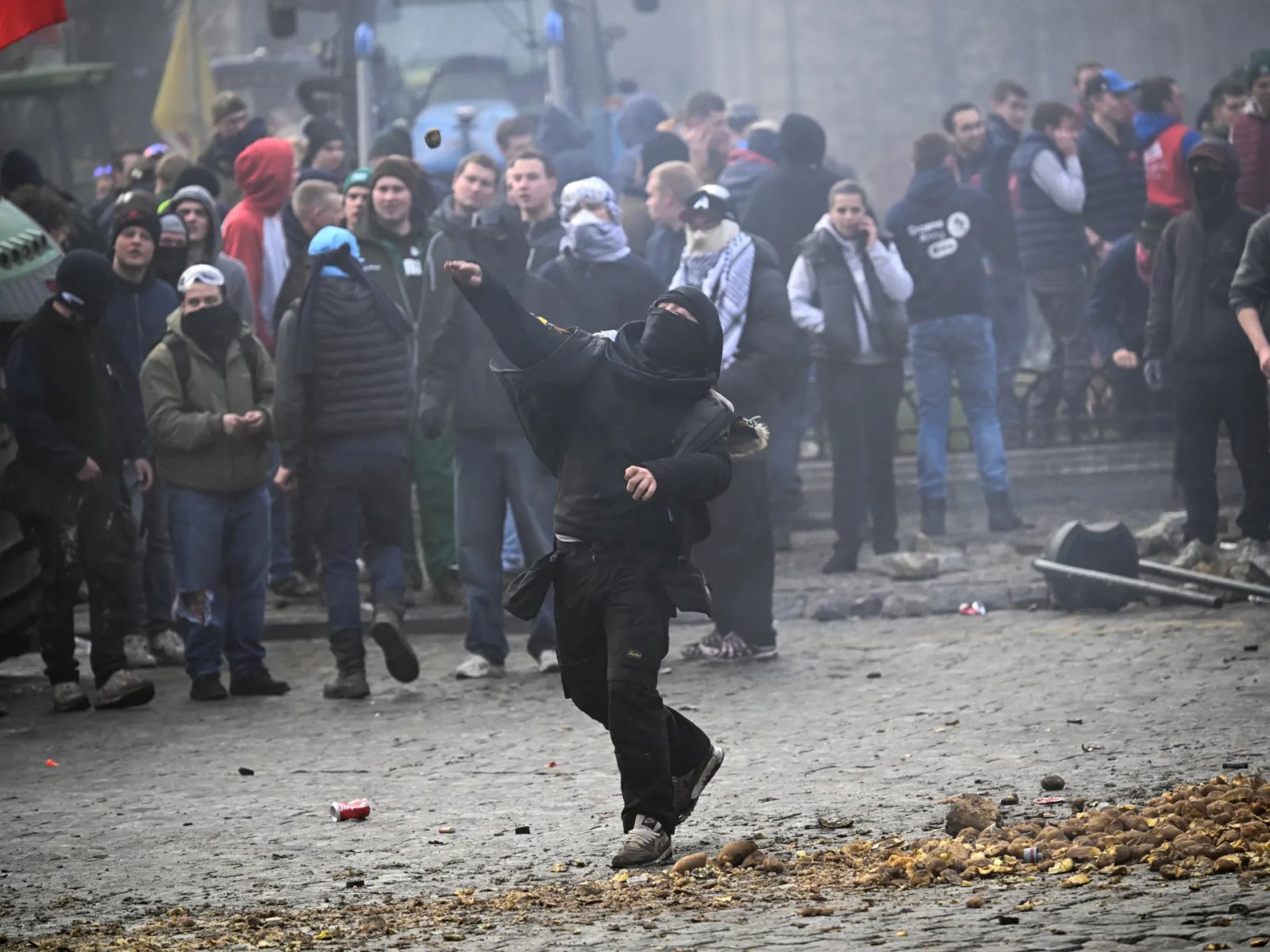
Farmers Protest Against EU-Mercosur Trade Pact
Recently, thousands of farmers took to the streets of Brussels to voice their concerns regarding a controversial trade agreement between the European Union and South American nations. This protest underscores fears that the deal could inundate Europe with cheaper agricultural products, threatening local livelihoods.
Brussels in Turmoil
On Thursday, as EU leaders gathered for a crucial summit to discuss the future of the Mercosur agreement, over 150 tractors converged on central Brussels, causing significant traffic disruption. Farm lobby Copa-Cogeca estimated that around 10,000 protesters would gather in the European quarter to express their discontent.
A Clash of Priorities
The juxtaposition of fervent protests on the streets and serious deliberations inside the summit created a charged atmosphere. While farmers rallied outside, EU leaders were focused on a vote to use approximately $200 billion in frozen Russian assets to support Ukraine over the next two years.
The Protests Heat Up
As tensions escalated, protesters threw potatoes and eggs at law enforcement, set off fireworks, and created traffic chaos. The authorities responded with tear gas and water cannons, implementing roadblocks and closing tunnels throughout the city. One notable sign read, “Why import sugar from the other side of the world when we produce the best right here?”
Voices from the Ground
Belgian dairy farmer Maxime Mabille expressed strong opposition to the trade deal, accusing EU Commission President Ursula von der Leyen of trying to push it through against popular sentiment. The sentiment among many demonstrators is that European farmers are being set to compete with cheaper imports from Brazil and neighboring countries, which often adhere to less stringent regulations concerning pesticides.
Ongoing Concerns and Opposition
Florian Poncelet from the Belgian farm union FJA emphasized the ongoing protests that have existed since 2024 across France, Belgium, and beyond, urging for acknowledgment of their concerns. Currently, countries like France and Italy are spearheading resistance, with President Emmanuel Macron stating, “we are not ready” to sign the deal in its current form.
A Divided EU
France has coordinated its opposition with Poland, Belgium, Austria, and Ireland, gathering enough votes in the European Council to potentially halt the agreement. In contrast, Germany and Spain are pushing hard for the pact’s approval. German Chancellor Friedrich Merz highlighted the urgency, insisting that decisive action is needed for the EU to maintain credibility in global trade, while Spanish Prime Minister Pedro Sanchez noted that the agreement would enhance Europe’s geopolitical standing.
A Long-Standing Negotiation
The Mercosur agreement, two and a half decades in the making, aims to create the world’s largest free-trade area, spanning 780 million people and accounting for a quarter of the global GDP. Proponents argue that this deal could serve as a counterbalance to China and boost European exports of various goods amidst rising tariffs from the US.
Looking Ahead
Despite temporary safeguards negotiated to limit sensitive imports, opposition has only grown. Von der Leyen is scheduled to travel to Brazil this weekend to potentially sign the deal, requiring support from at least two-thirds of EU member states. Brazilian President Luiz Inacio Lula da Silva issued a stark warning that if the deal fails, it will be a definitive “now or never” moment for future agreements under his administration.
Conclusion
The ongoing protests reflect deep-seated anxieties among European farmers regarding the implications of the EU-Mercosur trade agreement. As debates continue, the balance between global economic interests and local agricultural livelihoods remains a pressing issue.
Key Takeaways:
- Thousands of farmers protested in Brussels against the EU-Mercosur trade deal.
- The protests highlight fears of cheaper South American goods flooding the European market.
- Countries like France and Italy are currently leading the opposition to the agreement.
- The deal has potential implications for local farming production and regulations.