

Life Amid Strikes: Odesa’s Resilience
In the wake of ongoing conflict, the lives of families in Odesa, Ukraine, reveal a heart-wrenching yet resilient picture. This article explores the daily experiences of residents like Mariia, Eva, and Sergii, who navigate the challenges brought on by intensifying drone attacks while striving to maintain a sense of normalcy amidst the chaos.
A Glimpse from the 16th Floor
From her flat on the 16th floor, Mariia has a panoramic view of the Black Sea, which unfurls toward the horizon under the dimming light. “From up here, you can see and hear the drones approaching,” she remarks, as she stands beside a vast window that overlooks the bustling city. Observing the strikes below, she explains how they witness the flames erupting from buildings following the impact of these attacks.
Growing Up with the Threat
Her nine-year-old daughter, Eva, has accustomed herself to the fear and uncertainty that fill the skies over Odesa. With remarkable composure, she proudly displays a list of social media channels she consults when air raid alerts sound. “She understands whether an incoming threat is a real danger, which helps to calm her fears,” her father, Sergii, shares.
Odesa Under Siege
The full-scale invasion launched by Russia nearly four years ago has left no corner of Ukraine untouched. However, Odesa, Ukraine’s third-largest city, has experienced a significant increase in attacks in recent weeks. The assaults aimed at deconstructing both the economy and the spirit of its residents continue to escalate.
Mariia explains the increasing severity of the situation: “Moscow isn’t just targeting infrastructure; their drones, often the size of motorcycles, regularly collide with residential buildings, creating deadly consequences.” She recounts a moment months ago when Eva voiced her fears about drones approaching too quickly for them to find safety. “I assured her that we would hear the drone getting closer, signaling us to run,” Mariia says.
The Family’s Journey
Originally from Kherson, around 200 kilometers east of Odesa, the family fled their home when the invasion began in 2022. Mariia and Eva briefly sought refuge in Germany, but the longing for family unity drew them back to Ukraine, where they settled in Odesa. As the turbulence in the region heightens, Sergii grapples with the unsettling thought of needing to relocate once more. “For Russia, capturing Odesa is directly linked to the region’s infrastructure; they won’t relent,” he expresses with a sense of foreboding.
Odesa’s Economic Plight
Situated in southwestern Ukraine, Odesa was once a thriving hub before the war. Its three major ports now hold a crucial role, serving as the only deep-water port in the country. Last year, as land routes became obstructed, approximately 90% of Ukraine’s exports were transported via these waters. Yet, this significance also renders the region vulnerable.
Recently, President Vladimir Putin threatened to sever Ukraine’s maritime access as a retribution for Ukrainian attacks on Russian vessels circumventing sanctions. Consequently, the impact of these threats has become all too real. Ongoing aggressions have led to destruction of vital port infrastructure and caused considerable harm to international crews operating in the vicinity.
The Toll of the Attacks
Last year, Odesa saw a staggering 45% reduction in agricultural exports. Following a recent drone strike that ignited a ship and injured a crew member, regional official Oleh Kiper remarked that vessel operators must acknowledge the risks of entering a war zone, with insurance increasingly becoming a necessity. “People here will take refuge in shelters after a strike, but they soon relax, only to repeat the cycle,” states Maryna Averina from the State Emergency Service.
Though missile sounds have become a familiar backdrop, many residents exhibit a sense of carelessness towards their safety. Maryna noted instances of prolonged air raid alerts that extend for hours, leaving little choice but to endure the discomfort of waiting in shelters.
Surviving in Despair
As relentless drone and missile strikes continue, the ensuing power outages have left much of Odesa in darkness, further complicating daily life amid winter’s chill. In December alone, almost a million residents were left without power, with Oleh Kiper expressing the harsh reality of navigating winter without heating or electricity. “We were among the first to understand what it means to face such difficulties in this season,” he comments solemnly.
Drawing Strength from the Struggle
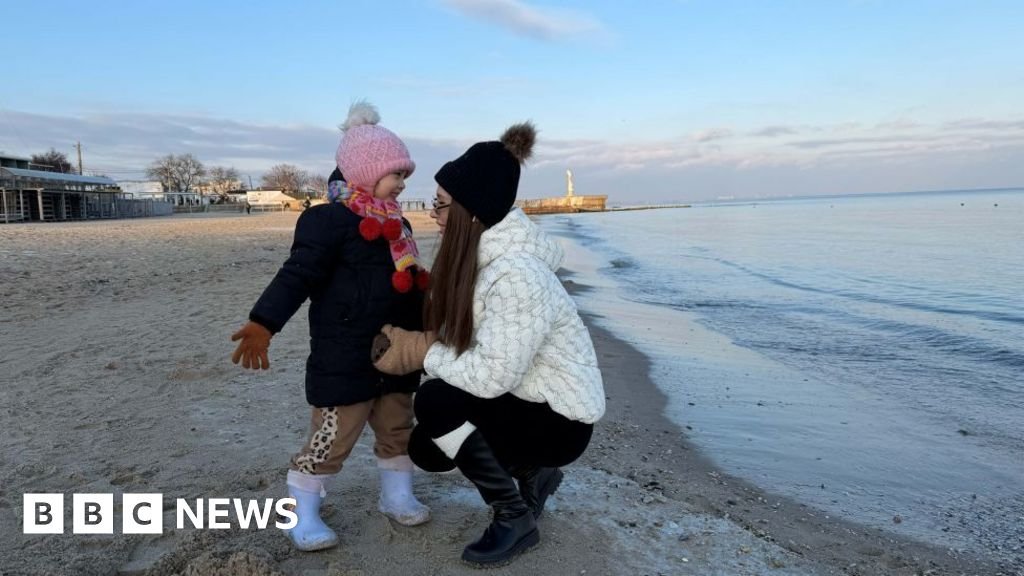
On a recent day with temperatures nearing -1°C, the situation remains dire. People like Ada, who walks the beach despite the sound of alarms overshadowing the sea’s tranquility, have adopted a mix of resilience and resignation. “I find this cold to be more frightening than the drone attacks,” she says. Meanwhile, Yana shares her family’s struggle with power cuts and the financial burden of running a generator as prices soar.
“We’re all helpless, caught in a conflict beyond our control. It’s as if the nation is being punished for an unseen fault,” she reflects, attempting to keep her child away from the frigid waters nearby.
Hope Amidst Historical Struggles
As the conflict wages on and the shadows of war loom larger, a local fisherman named Kostya exhibits a blend of bravado and concern. “I don’t suspect they will reach us here; the brave Ukrainians won’t allow it,” he affirms, despite acknowledging the painful nature of the ongoing struggle. Like many others, he grapples with accepting the reality of war’s presence in a territory once viewed as a peaceful neighbor.
Odesa holds deep historical significance, with its roots intertwined with the legacy of the Russian Empire. President Putin’s characterization of the city reinforces its position in this ongoing conflict. In response, local leaders are vigorously working to dismantle remnants of Russian influence, promoting efforts toward cultural decolonization and a notable shift toward Ukrainian identity in a predominantly Russian-speaking environment.
A Vision for a New Future
Oleh Kiper, the regional leader, is committed to severing ties with Russia’s imperial past by endorsing laws aimed at transforming Odesa’s landscape. From renaming streets to removing statues, the push for a national identity in Odesa represents a bold stance against historical narratives that threaten to overshadow its future.
Conclusion
The story of Odesa reflects a resilient community confronting the realities of war. While they endure the physical and emotional toll of ongoing attacks, the spirit of hope and determination prevails as the citizens work toward preserving their identity and future in the face of adversity.
- Odesa families navigate daily life amidst increased drone attacks.
- The region’s economic importance heightens vulnerability to strikes.
- The consequences of ongoing conflict lead to significant export declines.
- Local leaders are committed to reshaping Odesa’s identity amidst war.