

Political Landscape Shifts as Bangladesh Prepares for Elections
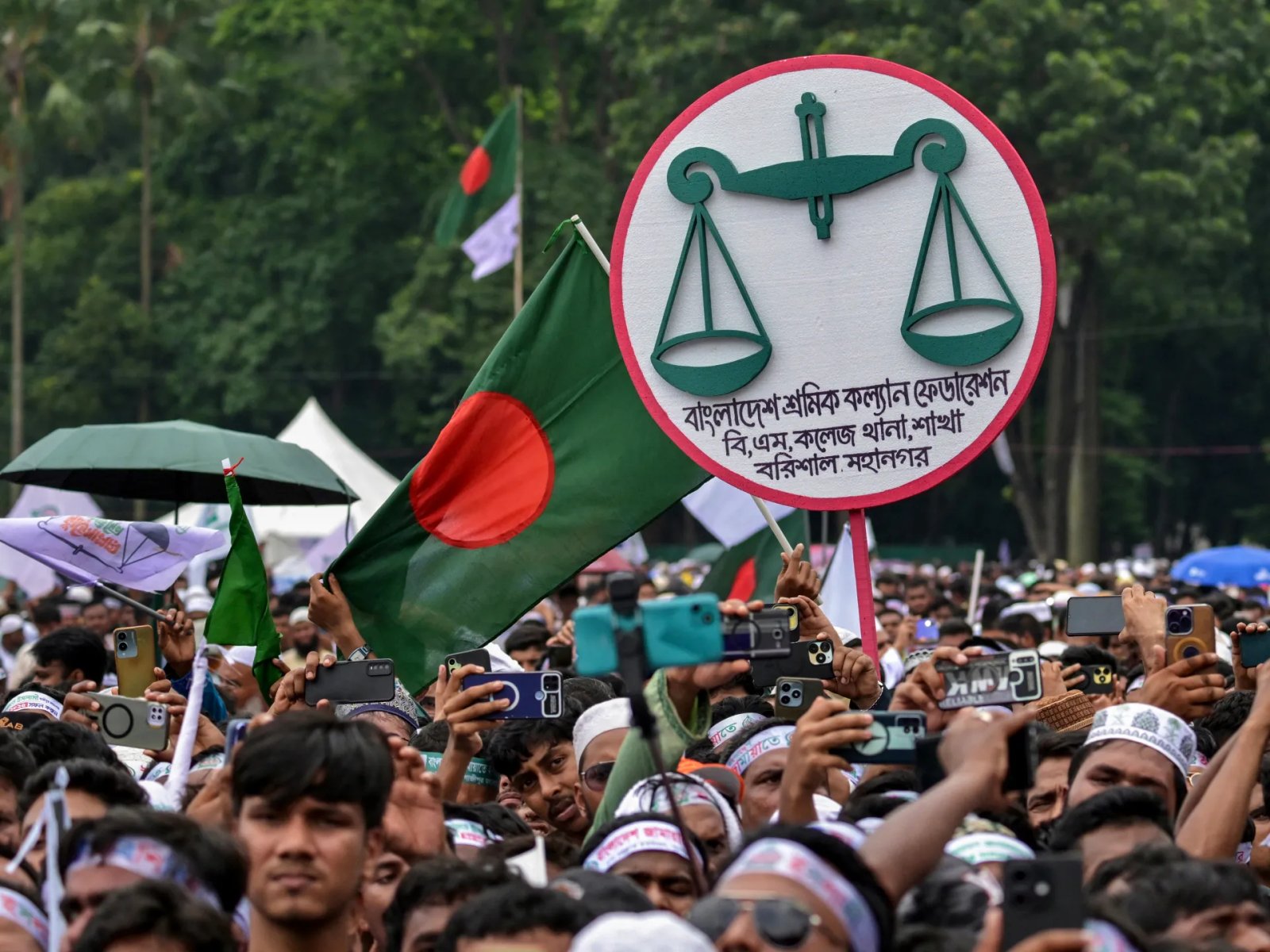
In Bangladesh, a significant political transformation is stirring as the nation gears up for its upcoming general election on February 12. Abdur Razzak, a 45-year-old banker from Faridpur, feels optimistic for the first time about his political party, Jamaat-e-Islami, taking a leading role in the government. This Islamist party, known simply as Jamaat, has garnered support from locals united behind its candidacy as part of an alliance amid rising political tensions following a recent student-led uprising.
Background on the Upcoming Election
The elections are pivotal, marking the first since the August 2024 protests that ousted the long-standing government of former Prime Minister Sheikh Hasina. The interim administration led by Nobel Peace Prize winner Muhammad Yunus has prohibited Hasina’s Awami League party from participating. Consequently, the electoral landscape has narrowed to a two-party contest primarily involving the Bangladesh Nationalist Party (BNP) and a coalition formed by Jamaat and the National Citizen Party (NCP).
Public Sentiment and Polling Insights
Recent opinion polls reveal a tightening race. Data from the International Republican Institute indicated BNP support at 33 percent, with Jamaat closely trailing at 29 percent. Another survey by leading Bangladeshi organizations showed BNP at 34.7 percent and Jamaat at 33.6 percent. This newfound competitiveness informs Razzak’s belief in a potential Jamaat victory, representing a significant turnaround for a party that has faced intense repression in previous years.
Historical Context and Party Development
Jamaat-e-Islami has a controversial history, having supported Pakistan during the Bangladesh Liberation War in 1971. The party faced severe repression during Hasina’s administration, with numerous leaders imprisoned or executed under the International Crimes Tribunal established by Hasina herself. Ironically, the tribunal recently sentenced Hasina to death for her role in the crackdown against the 2024 protests, which led to significant bloodshed. With Hasina currently in exile in India, the political environment presents Jamaat with an opportunity for resurgence.
Rebuilding a Political Identity
Razzak believes the public sympathy generated by Jamaat’s past struggles, alongside the party’s recent organizational successes after the lifting of the ban on it, could lead to electoral success. “People have experienced our hardships and are viewing us as honest representatives,” he expressed, underscoring a growing sentiment in favor of Jamaat’s re-emergence in the political arena.
Strategic Alliances and Future Prospects
With the BNP and Jamaat dominating the political scene, the latter aims to position itself as a credible alternative. Jamaat’s leadership asserts that their objective is to govern within Bangladesh’s secular framework, dismissing fears of implementing Sharia law. They emphasize a moderate approach and seek to broaden their appeal, even fielding a Hindu candidate in an effort to attract non-Muslim voters, which is a first for the party.
Concerns and Controversies
Despite gaining traction, concerns linger about Jamaat’s rise and potential ideological shifts it may promote. Political analysts note that while there is a growing interest in conservative political influences, many Bangladeshi voters remain skeptical about endorsing a fully Islamist government. The political landscape remains largely centered around pragmatic governance rather than religious ideology.
Implications for Bangladesh’s Foreign Relations
The results of the upcoming elections may also influence Bangladesh’s relationships with neighboring countries, primarily India and Pakistan. Analysts suggest that a Jamaat-led government may complicate relations with India, contrasting the more favorable ties expected under a BNP administration. The upcoming election stands as both a referendum on the party’s capacity for governance and a test of its appeal amid changing political sentiments.
Conclusion
As Bangladesh approaches a crucial electoral moment, the political dynamics exhibit signs of change that could reshape the country’s governance. Jamaat-e-Islami, with its renewed sense of purpose, aims to redefine its role within the broader political landscape. The election will likely not only determine the fate of various parties but will reveal the public’s desire for reform and effective governance.
Key Takeaways
- The February 12 elections mark a significant turning point in Bangladesh’s political landscape.
- Jamaat-e-Islami is gaining momentum amid rising support following past repression.
- The election results may reshape relationships with neighboring India and Pakistan.
- Public sentiment appears frustrated with traditional parties, signaling a desire for change.