

Challenges and Shifts in Yemen’s Political Landscape
The ongoing political turmoil in Yemen takes a complex shape as the Southern Transitional Council (STC) makes notable advances in the eastern governorates of Hadramout and al-Mahra. This month’s military maneuvers shed light on the multifaceted nature of the Yemen conflict, which has persisted for over a decade. The situation cannot merely be characterized as a struggle between the internationally recognized government and the Houthis; rather, it reveals a layered web of authority with various factions vying for control over security, resources, and representation.
The Rising Influence of the STC
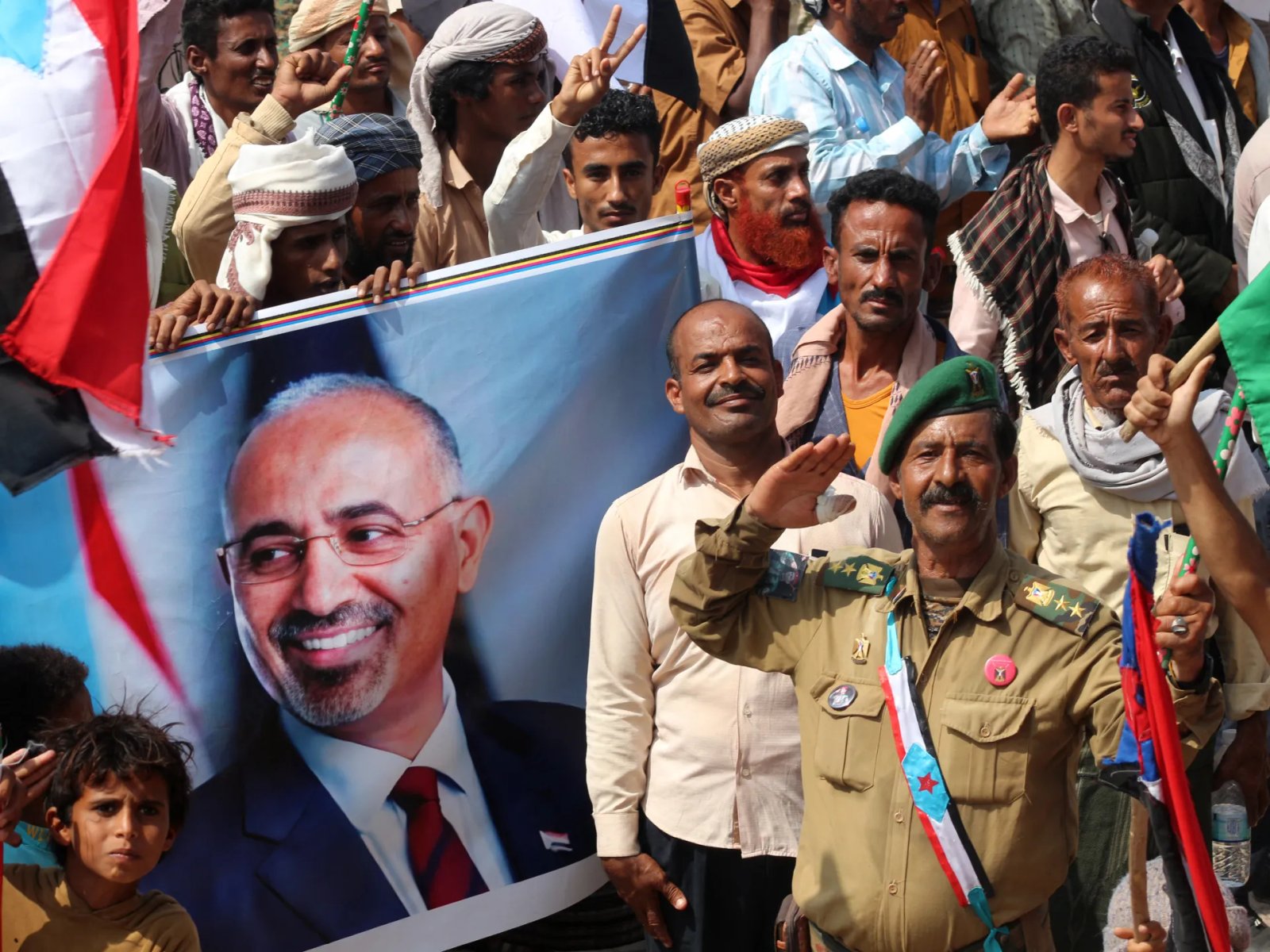
Central to these developments is the STC, which is backed by a significant regional power and has emerged as the most influential entity in southern Yemen and parts of the east. This situation arises amid the Yemeni government’s diminishing ability to enforce a unified administration across the country, compounded by a struggling economy.
Recently, the Yemeni government announced what appears to be the International Monetary Fund’s decision to halt its activities in Yemen. While the IMF has yet to comment publicly on this issue, President Rashad al-Alimi described the announcement as a crucial “wake-up call” and an early indicator of the costs arising from the STC’s military actions in Hadramout and al-Mahra.
Al-Alimi underscored that Yemen, already the poorest country in the region and heavily impacted by ongoing conflict, cannot tolerate any further escalation. He warned that the security instability in these eastern provinces threatens immediate impacts on the distribution of salaries, fuel, and essential services, as well as undermining trust among international donors.
To mitigate tensions, Al-Alimi has advocated for the withdrawal of external forces from Hadramout and al-Mahra, framing this move as vital for rebuilding trust with the international community.
An Evolving Power Dynamic
The STC’s ultimate aim is clear: the secession of territories in southern and eastern Yemen that formerly comprised the state of South Yemen prior to the 1990 unification. Its opposition to the Houthis, who dominate the capital Sanaa and much of the northwest, is evident. Interestingly, STC leader Aidarous al-Zubaidi holds a position on the government’s Presidential Leadership Council as one of its vice chairmen.
The STC and government forces clashed previously, notably in Aden and surrounding areas during 2018 and 2019. The current expansion towards the east focuses on government forces and their affiliates, highlighting the ongoing fractures within the anti-Houthi coalition and shifting the balance of power in favor of the STC.
This evolving scenario has birthed three significant trends: the fortification of STC forces with regional backing, the emergence of local and tribal actors keen on establishing their influence independent of the STC, and the government’s limited capacity to address these rival factions. This fragmentation manifests on multiple levels:
- Political Fragmentation: Multiple decision-making hubs within the anti-Houthi camp complicate security and administrative policy unification, undermining the concept of a central authority.
- Geographic Fragmentation: New frontlines have emerged, delineating control between the Houthis and STC forces, alongside contested territories held by local and tribal militias.
- Representative Fragmentation: Disputes are escalating regarding representation, diminishing the viability of a unified national framework for governance and resource management.
The Economic Fallout
The IMF’s suspension of activities carries not only financial repercussions but also suggests that the current security and institutional settings in Yemen are not conducive to sustainable support programs. The Yemeni state, already heavily reliant on limited resources and fragile external support, is acutely vulnerable to disruptions in key areas, leading to immediate adverse effects on livelihoods.
Recent military escalations will likely exacerbate the pressure on the national currency and the government’s capacity to fulfill its financial obligations while widening the gap in trust between the populace and the state. Alternative, non-institutional means of resource mobilization based on tribal loyalties are likely to gain traction.
The perception that Yemen has fragmented into “islands of influence” could tempt external actors to engage directly with local authorities, further undermining the government’s position rather than bolstering it. Al-Alimi’s call for foreign troop withdrawals from Hadramout and al-Mahra is a strategic effort to halt the decline in trust and restore the government’s perceived capability to manage the anti-Houthi coalition effectively.
Opportunities for the Houthis
The Houthis, who have held power in Sanaa since their coup in 2014, may find themselves unintentionally benefiting from the ongoing developments in Hadramout and al-Mahra. The fragmentation of their opposition weakens the anti-Houthi front, resulting in internal conflicts that distract rival factions from directly confronting the Houthis.
As confrontations escalate within the anti-Houthi camp, the perception of a united front diminishes, and discussions drift away from confronting the Houthis toward squabbles over power and resources. This dynamic allows the Houthis to frame their adversaries as actors driven by conflicting foreign agendas, contrasting their own self-portrayal as independent entities capable of strategic decisions.
The current discord improves the Houthis’ negotiating leverage, as a fragmented opposition only enhances their cohesive organizational and administrative stance. While the Houthis face their own socio-economic challenges, divisions among their foes grant them a respite to maintain their war economy and governing apparatus.
Emerging Risks
The trajectory of events in Yemen raises several intertwined risks. Domestically, the potential for frontlines to solidify into de facto borders could lead to extensive security vacuums and dwindling chances for a unifying social contract. Regionally, lawless areas along the borders with Saudi Arabia and Oman might expand, complicating border security management and fostering smuggling activities.
On the international stage, the growing need for global powers to engage with multiple factions in Yemen may prolong the crisis, increasing the likelihood of the conflict being internationalized amid competing interests over ports, resources, and shipping routes.
Ultimately, the scenario unfolding in Yemen is unlikely to yield a decisive victory for any faction, giving way instead to a mosaic of authorities reliant on external support, which will hinder the establishment of a stable state.
A Path Forward
Simply reducing tensions through piecemeal agreements regarding troop redeployments will not suffice. Moving forward demands a comprehensive strategy built upon three interconnected pillars:
- Redefining the National Project: Craft a vision for a state that ensures equitable partnerships for all Yemeni regions within a functional federal framework, redefining the political center as a guardian of rights and services.
- Establishing Security Frameworks: Prioritize the formation of local forces under a national umbrella, concentrating on professional development within a clear legal framework that facilitates the withdrawal of foreign troops.
- Negotiating an Economic Deal: Implement a transparent agreement on resource management in producing governorates, ensuring revenue distribution is equitable while linking international support to actionable reform plans.
If these measures are not taken, Yemen risks progressing toward further fragmentation, where the most organized armed groups advance while contested areas expand. Such a decline would spell disaster for the national economy, impacting millions of Yemenis and transforming the governance crisis into a prolonged state of instability with widespread ramifications.