

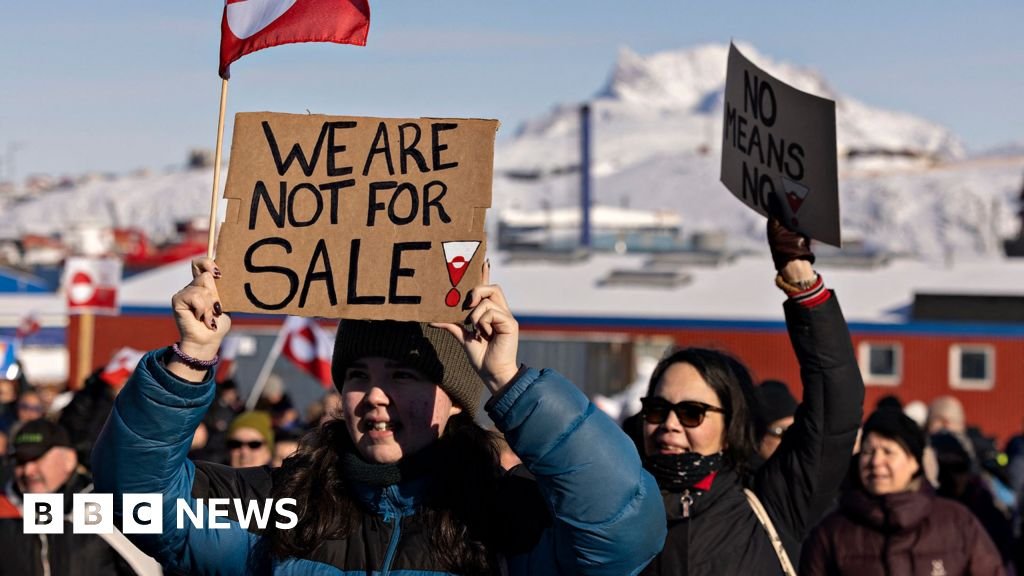
Greenland’s Future: A Controversial Topic for National Security
In recent discussions surrounding national security, Greenland has emerged as a focal point, particularly regarding its relationship with the United States. Former President Donald Trump and his advisors have stated the importance of Greenland’s integration into the U.S., igniting debates about sovereignty and international relationships.
Trump’s Position on Greenland
During a recent CNN interview, Stephen Miller, a significant aide to Trump, emphasized that Greenland should align with U.S. interests to bolster NATO and enhance Arctic security. When asked if the U.S. would consider using force to annex the territory from Denmark, Miller stated, “Nobody’s going to fight the U.S. over the future of Greenland.” This dismissal of conflict raised eyebrows, particularly among European leaders.
Reactions from Denmark and European Allies
Trump’s remarks sparked a strong response from Danish Prime Minister Mette Frederiksen, who expressed concern, asserting that any aggressive actions from the U.S. would jeopardize NATO’s stability. In a unified response, six European nations supported Denmark with a joint statement, reinforcing that:
- “Greenland belongs to its people, and only Denmark and Greenland can decide on matters concerning their relations.”
- The preservation of Arctic security should be a collective effort among NATO allies.
- All actions must adhere to the principles of the UN Charter, including sovereignty and territorial integrity.
The U.S.’s Interests in Greenland
In his interview, Miller reiterated the U.S. government’s official stance that Greenland should become a part of the United States. He questioned Denmark’s right to claim control over the area, positioning the U.S. as the dominant power within NATO. He asserted, “For the U.S. to secure the Arctic region, to protect and defend NATO, obviously Greenland should be part of the U.S.”
This situation follows the recent U.S. military actions in Venezuela, which heightened U.S. assertiveness in its geopolitical interests. After a controversial raid aimed at the Venezuelan President Nicolás Maduro, Trump suggested that the U.S. would “run” Venezuela for an unspecified duration, reflecting a return to an 1823 doctrine of U.S. influence in the Western Hemisphere. This context leads to unease over whether military force could be considered in Greenland’s situation.
The Greenland Perspective
As discussions about U.S. control of Greenland unfold, the island, which hosts a population of approximately 57,000, has maintained a degree of self-governance since 1979. Even though their defense and foreign policy are overseen by Denmark, a strong desire for eventual independence exists among many Greenlanders. However, surveys reveal significant opposition to becoming part of the U.S.
The debate has not only sparked political discourse but has also led to social media posts from Miller’s wife, displaying a map of Greenland overlaid with the American flag, accompanied by the word “SOON.” This image rekindled apprehensions regarding potential military intervention to solidify U.S. control over the island—an idea Trump has yet to fully dismiss.
Conclusion
The future of Greenland remains uncertain, interwoven with national security, international relations, and the interests of its people. As the conversation continues, the emphasis on collective action and respect for sovereignty will remain critical in shaping the path forward.
Key Takeaways
- Trump’s administration views Greenland as strategically important to U.S. national security and NATO interests.
- Denmark and its European allies firmly assert that Greenland’s fate should be decided by its people, not external forces.
- There is considerable opposition among Greenlanders concerning any potential annexation by the U.S.
- The discussions around Greenland are part of broader conversations on U.S. foreign policy and military engagement in sensitive regions.