

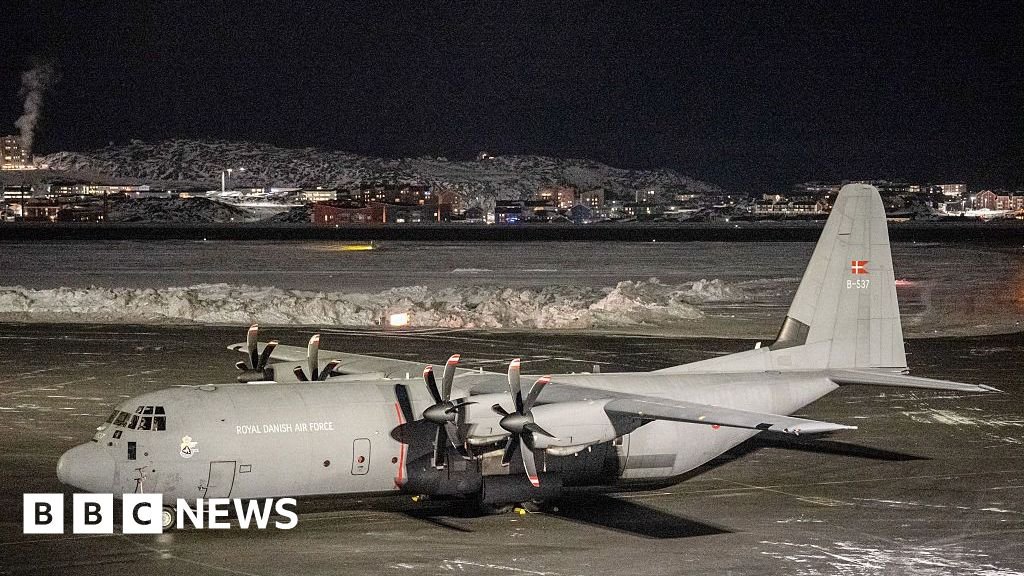
Nato Allies Enhance Military Presence in Greenland Amid Tensions
The recent deployment of European Nato forces to Greenland’s capital, Nuuk, marks a significant development in international relations concerning the Arctic region. This operation involves a coalition of troops from several European countries, including France, Germany, Sweden, Norway, and the UK, leading to questions about the strategic implications of this military presence.
Military Deployment Overview
Officials have announced that a French military unit, comprising 15 personnel, has arrived in Nuuk as part of a larger reconnaissance mission. This unprecedented movement is seen as a strong political statement, as noted by French special envoy Olivier Poivre d’Arvor, who remarked, “This is a first exercise… we’ll show the US that Nato is present.”
Context of Deployment
This troop deployment follows a high-profile meeting between Danish and Greenlandic foreign ministers with US Vice-President JD Vance. Danish Foreign Minister Lars Lokke Rasmussen described the discussions as constructive but highlighted a “fundamental disagreement” regarding the US’s interest in Greenland, notably President Trump’s controversial suggestion to purchase the territory.
Reactions from Global Leaders
Trump reiterated his assertion that Greenland is strategically vital for US national security and hinted at potential forceful measures if necessary. He stated, “The problem is there’s not a thing that Denmark can do about it if Russia or China wants to occupy Greenland, but there’s everything we can do.”
In contrast, Polish Prime Minister Donald Tusk expressed concerns about US military intervention in Greenland, labeling it a “political disaster,” and emphasizing that such actions could destabilize the region and threaten long-standing security agreements.
Meanwhile, Russia’s embassy in Belgium voiced apprehensions regarding the growing Nato military presence in the Arctic, criticizing it as an escalation under the guise of addressing perceived threats from Moscow and Beijing.
Operation Arctic Endurance
The ongoing European Nato deployment is part of Operation Arctic Endurance, although it consists of only a few dozen personnel at this stage. While the symbolic gesture is substantial, the actual duration of the troops’ stay in Greenland remains uncertain. On Thursday, Germany dispatched an A400M transport aircraft to Nuuk with a contingent of 13 soldiers; however, they are scheduled to depart by Saturday.
Strengthening Military Presence
Danish defense officials confirmed plans for an increased military presence in Greenland, aimed at reinforcing Nato’s influence in the Arctic for both European and transatlantic security. The US maintains a military base in Greenland, with approximately 150 personnel currently stationed there, and has the option to increase its presence under existing agreements with Denmark.
This Danish-led initiative signals to the Trump administration that European allies are equally committed to Arctic security. Swedish Prime Minister stated that army officers had already been sent to Nuuk, along with additional personnel from Norway and the UK.
Political Statements
Danish Prime Minister Mette Frederiksen asserted that the defense of Greenland is a shared concern among all Nato members, highlighting a unified stance in the face of external threats.
Danish Defence Minister Troels Lund Poulsen indicated intentions for a rotational military presence in Greenland, paving the way for a more established international military presence for exercises and training. Although the Danish government has disputed Trump’s rationale for wanting control over Greenland, Foreign Minister Rasmussen acknowledged some American security concerns while asserting that there is no immediate threat from Russia or China that cannot be managed.
Local Perspectives
Greenland’s leaders have voiced their position clearly. Prime Minister Jens-Frederik Nielsen stressed that his people prefer Denmark’s governance over a potential US takeover, stating emphatically, “Greenland does not want to be owned by the United States. Greenland does not want to be governed by the United States.” This sentiment underscores the complex geopolitical dynamics at play in the region.
Conclusion
The deployment of European Nato forces to Greenland serves as a powerful reminder of the intricate geopolitical issues facing the Arctic today. As nations navigate their interests in this vital region, the perspectives of Greenland’s residents will undoubtedly remain a critical factor in shaping these discussions.
- European Nato allies have deployed troops to Nuuk, Greenland, as part of a reconnaissance mission.
- The military presence is seen as a strong political statement amid US interests in the region.
- Local leaders in Greenland prioritize staying under Danish governance rather than aligning with the US.
- Operation Arctic Endurance aims to establish a more permanent international military presence in the Arctic.