

EU Secures Landmark Free Trade Agreement with South America
The European Union has successfully forged a free trade agreement with Brazil, Argentina, Paraguay, and Uruguay, marking a major milestone 25 years in the making. This ambitious pact with the Mercosur trading bloc is set to undergo approval from the European Parliament in the coming months, amidst some dissent from various farming groups across Europe.
Significance of the Agreement
Brazil’s President Luiz Inacio Lula da Silva celebrated the development as a “historic day for multilateralism,” following the conclusion of negotiations between the four South American nations in Brussels. This agreement emerges in a global context characterized by increasing tariffs from the United States and heightened geopolitical tensions, particularly related to Venezuela.
The EU has touted this deal as its largest free trade agreement to date, framing it as a “win-win” for all parties involved. However, there are concerns that the influx of lower-priced imports may negatively impact European farmers. “In a world facing rising protectionism and unilateralism, this agreement sends a clear message in favor of international trade as a catalyst for economic growth, benefiting both regions,” President Lula expressed on social media.
Reactions from Various Stakeholders
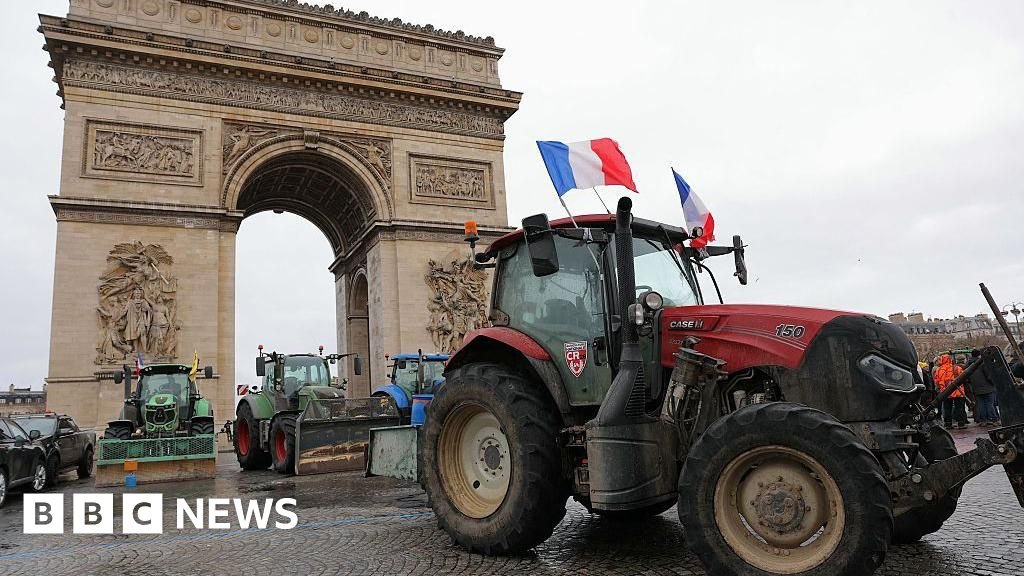
Ursula von der Leyen, President of the European Commission, emphasized that the deal would offer significant advantages to consumers and businesses on both sides. Nevertheless, farmers in Europe organized protests against the agreement, with demonstrations involving tractors taking place in France and Belgium. Judy Peeters, a spokesperson for a Belgian young farmers’ organization, articulated the frustrations by stating, “There is a lot of pain. There is a lot of anger.”
In response to farmer concerns, von der Leyen assured that the Commission has implemented “robust safeguards” within the agreement to protect their interests.
Environmental Commitments and Economic Benefits
Beyond enhancing trade and political relationships, the European Commission noted that this agreement aims to address climate change. It includes commitments to combat deforestation and ensure a consistent supply of essential raw materials, which are vital for the global transition to green energy.
The Commission anticipates that the agreement could save local businesses approximately €4 billion ($4.7 billion, £3.5 billion) annually in export duties. Moreover, the South American countries possess critical mineral resources such as gold and copper, essential for renewable energy and battery technologies.
Cecilia Malmström, a former European commissioner for trade who oversaw EU trade negotiations for five years, remarked that certain aspects of the trade agreement could be suspended if Mercosur nations do not adhere to their environmental commitments. “This agreement also carries a strong geopolitical message to powers that do not share our commitment to rule-based trade,” she stated.
Next Steps and Economic Outlook
On Friday afternoon, a solid majority of EU member states voiced their support for the free trade agreement, though it still requires ratification from the European Parliament before it can be implemented. Jack Allen-Reynolds, deputy chief Euro-zone economist for Capital Economics, indicated that the parliamentary vote may be closely contested. He raised concerns about the anticipated impact of the deal, noting that the Commission estimates a mere 0.05% increase in EU economic output. “Even if the agreement is executed, it may be macroeconomically insignificant,” he cautioned. “Moreover, since the implementation will occur over a span of 15 years, the advantages may not materialize until 2040.”
Conclusion
The free trade agreement between the EU and the Mercosur countries represents a significant step toward enhancing international trade relations. Despite opposition from some sectors, the deal incorporates important environmental safeguards and economic incentives that could have far-reaching effects over the coming years.
- The EU has finalized a free trade agreement with Brazil, Argentina, Paraguay, and Uruguay.
- Celebrated by leaders as a boost for multilateralism and international trade.
- Concerns from European farmers may impact the agreement’s acceptance.
- The deal includes commitments to fighting climate change and preserving critical natural resources.