

The New National Security Strategy: A Focus on Latin America
The recent “total and complete” ban on all sanctioned oil tankers entering and leaving Venezuela, alongside an unusual financial bailout for Argentina last October, underscores the growing significance Latin America holds for Donald Trump. The newly unveiled National Security Strategy reaffirms the U.S.’s intent to enhance its military presence and influence in the region. Released by the White House on December 4, this document encapsulates the administration’s global perspective. “My administration has acted with historic urgency and speed to restore American strength at home and abroad,” reads the president’s letter accompanying the 29-page report.
Reinvigorating Monroe’s Doctrine
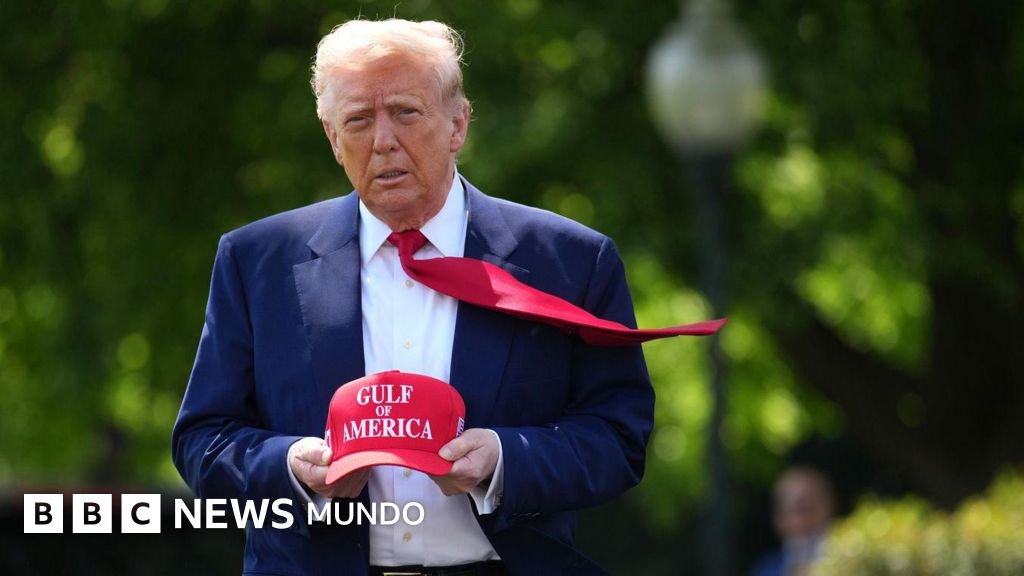
Under this fresh security framework, Trump aims to tackle illegal immigration, curb the advance of drug trafficking, and strengthen ties with ideological allies and trade partners in Latin America. This strategy harkens back to President James Monroe’s 1823 policy of “America for Americans,” wherein the U.S. asserted its intention to protect the region from external powers. “After years of neglect, the United States will reaffirm and implement the Monroe Doctrine to restore American preeminence in the Western Hemisphere,” states the new document, which describes this approach as the “Trump corollary to the Monroe Doctrine.” This term, coined as the “Donroe Doctrine”—a blend of Donald and Monroe—appeared on the cover of the New York Post in January and quickly gained traction among American analysts and international media. So, are we witnessing a reimagined Monroe Doctrine in the region? What are Trump’s concerns and interests in Latin America? How does he plan to expand his influence on the continent?
From Monroe to Trump
Trump recognizes that to solidify U.S. global power, he must first reaffirm its influence in Latin America. “The United States must be predominant in the Western Hemisphere as a condition for our security and prosperity, allowing us to assert ourselves confidently whenever and wherever necessary in the region,” states the report. According to Will Freeman, a researcher in Latin American Studies at the Council on Foreign Relations, Trump aims to give “a new twist to an old idea.” He describes it as an ideological justification for U.S. intervention or a hard stance in the region, explicitly focusing on immigration. “The document also references drug cartels and hostile foreign incursions, echoing the Monroe Doctrine in its original form,” Freeman adds.
Historic Context
The notion of a strategy inspired by Monroe’s doctrine is not a novel concept. In 1904, President Theodore Roosevelt introduced his own “Roosevelt Corollary” to the 19th-century doctrine. He argued that the U.S. should intervene in regional nations not maintaining their financial responsibilities or democratic governance. Nonetheless, the details of this “Trump corollary” remain somewhat vague. Analysts recommend not viewing it as a strategic plan, but rather a statement of principles. “Trump’s foreign policy lacks a consistent framework that merits being called a doctrine. He hasn’t provided any clear statements on how his actions align with his broader objectives,” Freeman observes.
Understanding Interests in Latin America
To Trump, the countries of Latin America are pivotal in addressing many of the challenges facing the United States, while also holding the potential for solutions. The report identifies “illegal and destabilizing migration” as a primary concern emanating from Latin America, noting that half of the immigrants in the U.S. originate from this region, especially Mexico. “This part of the world is crucial for his domestic policy goals,” Freeman notes. He also emphasizes the threat posed by drug cartels, given that nearly all cocaine consumed in the U.S. is sourced from three countries in the region: Colombia, Peru, and Bolivia.
Regional Security Dynamics
Bernabé Malacalza, author of “The 21st Century Crusades,” outlines that the new national security architecture suggests that the U.S. views the region as part of its internal security perimeter. “Latin America has become a priority for the United States, a position it hasn’t held before, driven by the need for hemispheric security,” states the professor from Torcuato Di Tella University.
Strategic Military Movements
The massive USS Gerald Ford aircraft carrier stationed in the Caribbean since November not only exerts pressure on the Venezuelan government but also reflects the U.S.’s updated security posture. According to the document, the White House is aiming for a “more suitable military presence” and “specific deployments” to control land borders and maritime routes. The U.S. is even open to “the use of lethal force to replace the failed law enforcement strategy of previous decades,” it mentions. “Force is the best deterrent,” asserts the White House, signaling a willingness to consider reprisals as part of its foreign policy. This administration seeks to revive the doctrine of “peace through strength,” a legacy of Ronald Reagan’s emphasis on military power as a guarantor of stability. Malacalza argues that this security policy towards Latin America does not foster a regional or hemispheric architecture but instead aims for countries to align with the U.S. and, ultimately, Trump.
Incentives for Cooperation
Conversely, the United States is offering a series of incentives for its allies. “We will reward and encourage governments, political parties, and movements in the region that broadly align with our principles and strategies,” the new strategy states. It suggests that U.S. policy should focus on supporting regional leaders and allies capable of promoting reasonable stability, aiding in curbing illegal migration and neutralizing drug cartels. This incentive policy was evident in October when Trump announced a $20 billion bailout for Argentina and signed agreements with the country and neighboring nations to reduce tariffs on exports.
Conclusively
However, analysts consulted emphasize that the so-called “Donroe Doctrine” primarily perceives the region as fraught with threats rather than opportunities. “There’s far more concern about preventing dangerous threats from Latin America from reaching the U.S. than about seizing the opportunities the region presents,” Freeman summarizes.
Key Takeaways
- The U.S. is refocusing its security strategy on Latin America, reviving elements of Monroe’s Doctrine.
- Trump aims to curb illegal immigration and drug trafficking while strengthening ties with ideological allies.
- Military presence and specific deployments are part of the updated strategy to control regional threats.
- The administration is offering incentives for cooperation from regional governments and leaders.