

The Rising Threat of the Shadow Fleet
The term “shadow fleet” refers to the network of oil tankers employed by Russia, Iran, and Venezuela to circumvent Western sanctions, primarily serving clients such as China and India. This clandestine fleet is experiencing rapid growth, raising alarms about potential military confrontations as nations ramp up efforts to counter these operations. Notably, Russia has begun to fly its own flag on some of these tankers, openly defying Europe.
The Expansion of the Shadow Fleet
In recent times, the aging oil tanker fleet, operating under dubious ownership and flags, has become a focal point for international scrutiny. There have been several maritime interdictions aimed at enforcing sanctions, accompanied by a recent US blockade targeting ships involved in illicit trade from Venezuela. Earlier this month, US special forces executed a daring operation to board the Skipper, a tanker suspected of smuggling oil for Iran’s Revolutionary Guards and Hezbollah.
Recent Operations
On Saturday, US forces intercepted another merchant vessel engaging in oil transport off the Venezuelan coast, even though it wasn’t listed among the sanctioned vessels. These actions followed incidents earlier this year when Estonia and France blocked vessels suspected of being linked to Russia’s shadow fleet. There have also been drone attacks by Ukrainian forces targeting these tankers accused of evading sanctions.
The Risk of Confrontation
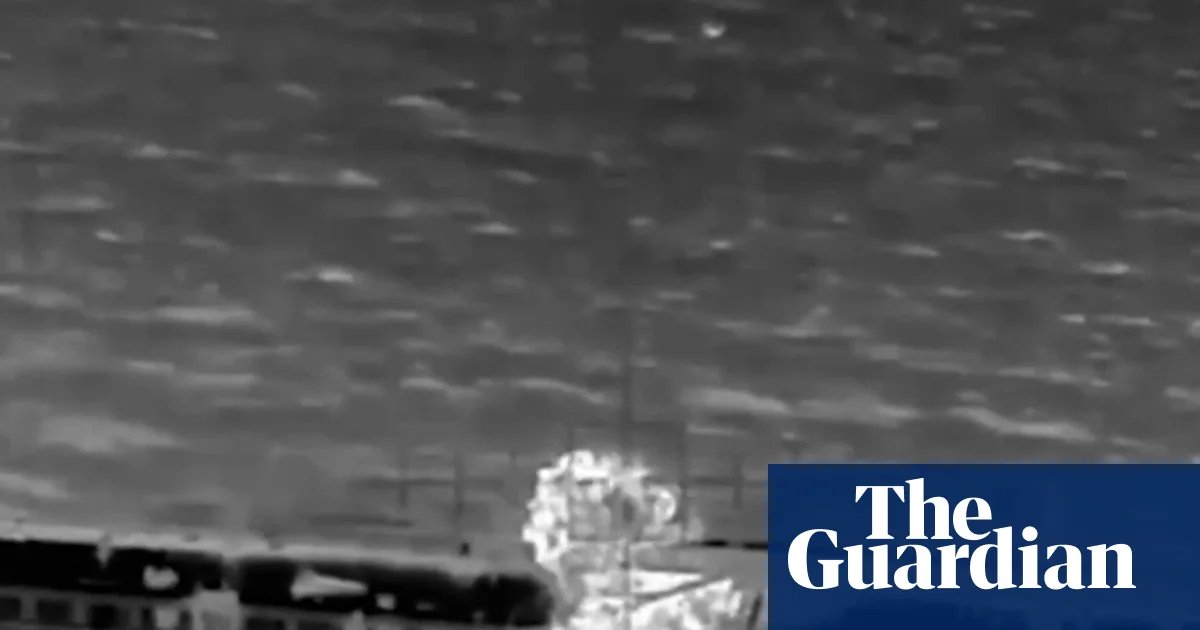
As efforts to regulate the shadow fleet intensify, experts warn of possible confrontations, especially after Ukraine revealed an attack on a Russian tanker in neutral waters near Libya. This operation marked a significant escalation, being the first of its kind conducted in the Mediterranean and far from Ukraine’s borders.
The Nature of the Shadow Fleet
Gonzalo Saiz Erausquin, a research fellow at the Royal United Services Institute, noted that while the shadow fleet is not a new issue, its scale has ballooned since Russia’s full-scale invasion of Ukraine in 2022, with estimates suggesting it comprises between 900 to 1,200 vessels globally. The fleet is characterized by a lack of structure, often involving secondhand vessels purchased by Russian interests, as well as companies willing to engage in unlawful activities.
Deceptive Practices
The shadow fleet operates through an intricate network of fake flag registries, unscrupulous brokers, and companies that enable illicit trade. An illustrative example is the tanker Boracay, which was recently intercepted by Estonia and France. Acquired by a shell company in the Seychelles, it faced blacklisting by the UK and EU due to its suspected role in transporting Russian oil and engaging in irregular shipping practices.
International Response and its Challenges
Countries looking to combat the shadow fleet often rely on international laws concerning seaworthiness and insurance to exert pressure. However, as the demand for enforcement grows—evidenced by the US blockade against sanctioned ships visiting Venezuela—so do the risks associated with such initiatives. France has also indicated a willingness to take a stronger stance against suspicious vessels operating in its waters.
Polarized Calculations
Despite tougher rhetoric from European leaders, some analysts believe there’s a hesitance to engage in maritime confrontations with Russia. The dynamics are complex, as the situation with Venezuela poses different stakes compared to operations involving Russia, which could escalate tensions significantly.
Enduring Market Dynamics
The resilience of the shadow fleet, particularly its Russian segment, partly stems from the US’s reluctance to impose sanctions on major Russian oil companies and the ongoing demand from markets like China and India for Russian oil. Russia has adapted rapidly to new US sanctions, with various entities arising purportedly to handle the export of oil from major producers like Rosneft and Lukoil.
Continued Sanctions Evasion
Despite recent sanctions, Indian imports of Russian crude have reportedly increased, showcasing Russia’s ingenuity in navigating the sanctions landscape. New sanctions from the EU targeting businessmen and shipping companies tied to the shadow fleet underscore the ongoing challenge of regulating this network.
Profiting from Illicit Trade
Tomer Raanan, a journalist specializing in the shadow fleet, highlights that the lucrative potential of operating older vessels draws numerous ship owners into this clandestine market. Reports have shown that some sanctioned tankers have begun broadcasting false registration signals to evade detection.
Conclusion
The shadow fleet’s expansion poses a multifaceted threat not only to sanctions enforcement but also to international maritime security. As nations grapple with how to effectively counter this illicit network, the risks of confrontation between military assets are becoming increasingly real.
Key Takeaways
- The shadow fleet has significantly expanded, with estimates ranging from 900 to 1,200 vessels.
- International efforts to counter the fleet face escalating risks of military confrontation.
- Fraudulent practices within the shipping industry complicate the enforcement of sanctions.
- Russia’s adaptability to sanctions has allowed it to sustain oil exports despite international pressures.