

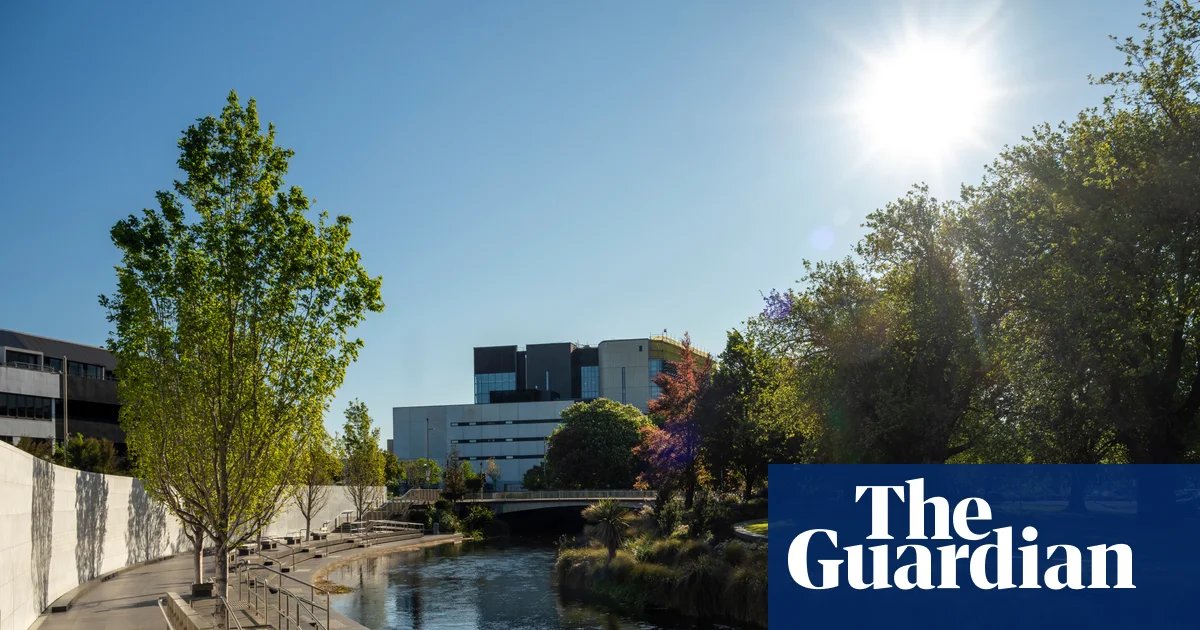
Christchurch: From Crisis to Vibrancy
Since 2010, Christchurch, New Zealand’s second-largest city, has faced a series of crises that transformed its identity. Initially renowned for its lush gardens and gothic architecture, the city has endured a tumultuous decade marked by catastrophic earthquakes, wildfires, and a horrific terrorist attack on two mosques, claiming over 50 lives. However, what once was a city defined by its challenges has now emerged as one of New Zealand’s most vibrant and appealing urban centers.
A City on the Rise
Today, Christchurch stands at the heart of New Zealand’s fastest-growing region, drawing in residents from the North Island and beyond. The city has experienced an uptick in business growth that surpasses the national average, and its cultural scene is thriving. Experts attribute this revitalization to its affordability and promising job prospects.
Mayor Phil Mauger proudly endorses Christchurch as “the capital of cool,” emphasizing its recognition as New Zealand’s most vibrant city and its top ranking in the 2024 Happy City Index. He highlights affordability and a high quality of life as significant draws for newcomers.
Resilience in the Face of Adversity
The remarkable change in Christchurch’s appeal would have seemed unimaginable just over a decade ago. In February 2011, a devastating 6.3-magnitude earthquake struck, leading to 185 fatalities and devastating the city center, with 80% left in ruins. This calamity prompted a mass exodus of residents.
In 2017, the Port Hills experienced destructive fires, claiming one life, destroying homes, and forcing evacuations for over a thousand locals. Then, in 2019, tragedy struck again when a white supremacist targeted two mosques, further highlighting the city’s vulnerability to violent extremism.
Amidst these challenges, however, Mauger stated, “When the ground literally shifted beneath us… we chose unity and hope to see us through.” Christchurch’s recovery has been marked by a concerted effort to rebuild with resilience, featuring new buildings, vibrant street art, and notable public artworks. “Amazing things can be born out of disaster when a community refuses to be defined by such devastating events,” he added.
Migration and Growth
Recent statistics reveal that Canterbury’s population grew by 1.1%, fueled by a net migration gain of 5,300 for Christchurch. Currently, the average home in Christchurch costs NZ$751,000 (approximately $439,000), a stark contrast to Auckland’s average of about NZ$1.2 million.
Musician Amelia Murray, who relocated from Auckland to Christchurch in 2022, expressed her astonishment at the housing prices. “I could actually afford to buy a house in Christchurch… I just felt like I was battling the city in Auckland, and it was draining me,” she said. Since her move, Murray’s career has flourished, with her album **Soft Power** winning Album of the Year at the Aotearoa Music Awards. For her, owning a home represents “a sense of dignity and pride.”
While some costs remain high, such as residential rates, Murray appreciates the investment in infrastructure and amenities, noting, “I’m happy to pay my rates. The gardens and cycle tracks are so well-maintained.”
Business Boom
Ali Adams, Chief Executive of ChristchurchNZ, describes the city as a “Goldilocks city,” striking an ideal balance for residents and businesses alike. With a commute of just 20 minutes to any location, Adams argues that Christchurch has become both an attractive location for global enterprises and a haven for personal well-being.
Recent data indicates a 2.4% increase in business locations within Canterbury over the past year, significantly outpacing national growth rates. Local entrepreneur Liam Kelleher, who returned to Christchurch after living in London, opened the city’s first urban cidery and restaurant, Lillies. Despite financial challenges faced nationally, Kelleher believed that Christchurch was ready for something new.
The city has experienced a 6% increase in its youth population aged 15-24, with the University of Canterbury exhibiting the second-fastest growth among universities in the country. This demographic shift often finds young people attracted to innovative careers in sectors like health technology and aerospace.
Future Prospects
Mauger envisions further growth for Christchurch, especially with the upcoming NZ$683 million One New Zealand Stadium at Te Kaha, set to open in 2026, and the new NZ$300 million Parakiore Recreation and Sports Centre, launching in December. However, he emphasizes that the city’s renaissance goes beyond mere infrastructure.
“The city’s resurgence has been built on the courage and compassion of its people. From tragedy has come positivity and resilience,” Mauger concluded.
- Christchurch has transformed from a crisis-laden city to one of New Zealand’s most vibrant urban centers.
- The population has increased due to migration, driven by affordable housing and job opportunities.
- Local businesses are thriving, with significant growth in sectors like health tech and aeronautics.
- The community’s resilience is evident in its diverse cultural scene and commitment to rebuilding after tragedy.