

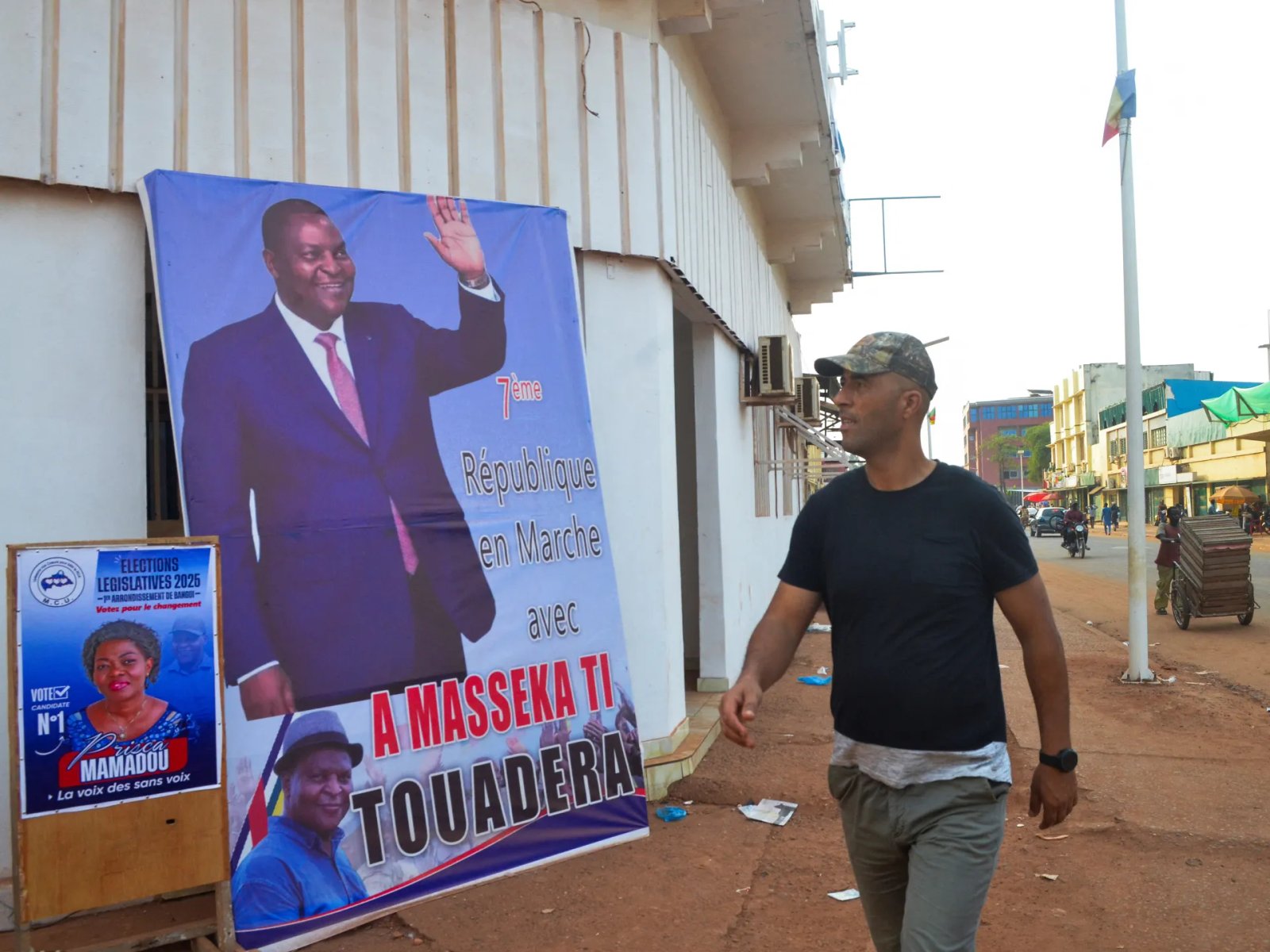
Central African Republic Elections: A Controversial Turning Point
This Sunday, the citizens of the Central African Republic (CAR) are set to cast their votes in highly debated presidential and legislative elections that could allow President Faustin-Archange Touadera to extend his time in office beyond the traditional two terms for the first time. His decision to adopt Bitcoin as legal tender in 2022 garnered international attention, and earlier this year, he advanced a referendum that eliminated presidential term limits. Numerous opposition groups have declared a boycott, labeling the upcoming vote a “sham” amidst claims of procedural delays that hindered major challengers from participating.
Local Elections and Political Landscape
In addition to national elections, CAR will witness local elections for the first time in four decades. The nation has endured a long history of political turmoil, including an ongoing civil war between the predominantly Muslim Seleka rebel group and the largely Christian Anti-balaka militia, resulting in the displacement of over a million individuals. Concerns have arisen regarding the electoral body’s capacity to manage such extensive elections effectively.
The landlocked CAR, bordered by Chad to the north and the Democratic Republic of the Congo (DRC) to the south, has a diverse population of around 5.5 million. French and Sango serve as the national languages. Although rich in resources like crude oil, gold, and uranium, persistent instability since gaining independence from France in 1960 has kept it among Africa’s poorest nations. Increasingly, CAR relies on Russian aid to secure major urban centers against rebel threats.
Understanding the Voter Base
Approximately 2.3 million Central Africans aged 18 and older are registered to vote for the next president, with 749,000 new registrations since the last election. Voters will also select national lawmakers and, for the first time in decades, municipal administrators. Historical turnout has hovered around 62 percent according to the International Foundation for Electoral Systems (IFES), with about 6,700 polling locations nationwide.
The National Elections Authority shifted the municipal elections from August to December, citing insufficient funds and logistical challenges. This late adjustment raises concerns regarding the readiness of the electoral body.
Voting Process and Election Outcome
The candidate who secures an absolute majority will be declared the winner; if no candidate achieves this in the first round, a second round will determine the victor. A recent referendum altered the constitutional terms from two five-year terms to seven years without limits, significantly changing the political landscape.
Key Candidates
The constitutional court has approved several candidates, including incumbent President Faustin-Archange Touadera and notable opposition leader Anicet-Georges Dologuele, among others. However, significant delays in the approval of major challengers have prompted the Republican Bloc for the Defence of the Constitution (BRDC) to boycott the election.
Faustin-Archange Touadera
At 68 years old, Touadera previously served as the vice chancellor of the University of Bangui and was Prime Minister from 2013 to 2015. He first became president in 2016 and was re-elected in 2020, although those elections were contested. His campaign prioritizes peace, security, and infrastructure development.
Despite his efforts to foster economic growth and infrastructure improvements, Touadera’s presidency has faced accusations of stifling opposition. His controversial measures include dismissing the constitutional court’s chief judge over disagreements regarding his referendum.
Henri-Marie Dondra
A former finance minister and prime minister, 59-year-old Dondra is running under his Republican Unity party (UNIR). His candidacy faced obstacles from Touadera’s administration, which accused him of dual citizenship, leading to delays in his approval process.
Anicet-Georges Dologuele
Dologuele, a prominent opposition figure, has diverged from the boycotting coalition to participate in these elections. As a dual citizen, he has faced scrutiny regarding his eligibility based on the recent constitutional amendments.
Key Issues at Stake
Armed Conflict
The ongoing political strife in CAR has persisted for over a decade, with many citizens desiring leaders who can ensure peace. The civil conflict began following a coup in 2013, leading to retaliatory violence by armed groups. Despite recent peace efforts, violence and displacement remain an issue.
Poverty
With over 60% of the population living in poverty, CAR is grappling with dire economic conditions. The country is heavily reliant on subsistence agriculture, with minimal access to basic services such as electricity and internet.
Divisive Politics
The fractious political environment has failed to produce a unified opposition capable of challenging Touadera. Following the changes to presidential term limits, concerns about potential life tenure for the presidency have arisen among opposition groups.
Conclusion
The upcoming elections in the Central African Republic represent a pivotal moment in the nation’s political landscape. With significant challenges looming, including the capacity of the electoral body, allegations of unfair practices, and the ongoing security crisis, the outcome could shape the future of CAR’s governance and stability.
- CAR faces its first local elections in 40 years amidst ongoing political instability and civil conflict.
- President Touadera’s controversial measures have raised concerns about the democratic process in CAR.
- Voter turnout historically hovers around 62%, with 2.3 million citizens eligible to vote.
- Key issues include armed conflict, widespread poverty, and deep political divisions.