

Remembering the Brussels Attacks: A Decade of Resilience
On Sunday, Belgium commemorated the tenth anniversary of the tragic 2016 jihadist bombings that rattled Brussels, an event that remains a haunting memory for the nation. The attacks, which were claimed by the Islamic State (IS), resulted in the deaths of 32 people and injured over 300, marking the darkest terrorist act in Belgium during peacetime. This somber reflection reinforced the country’s commitment to bolstering its intelligence and counter-terrorism efforts.
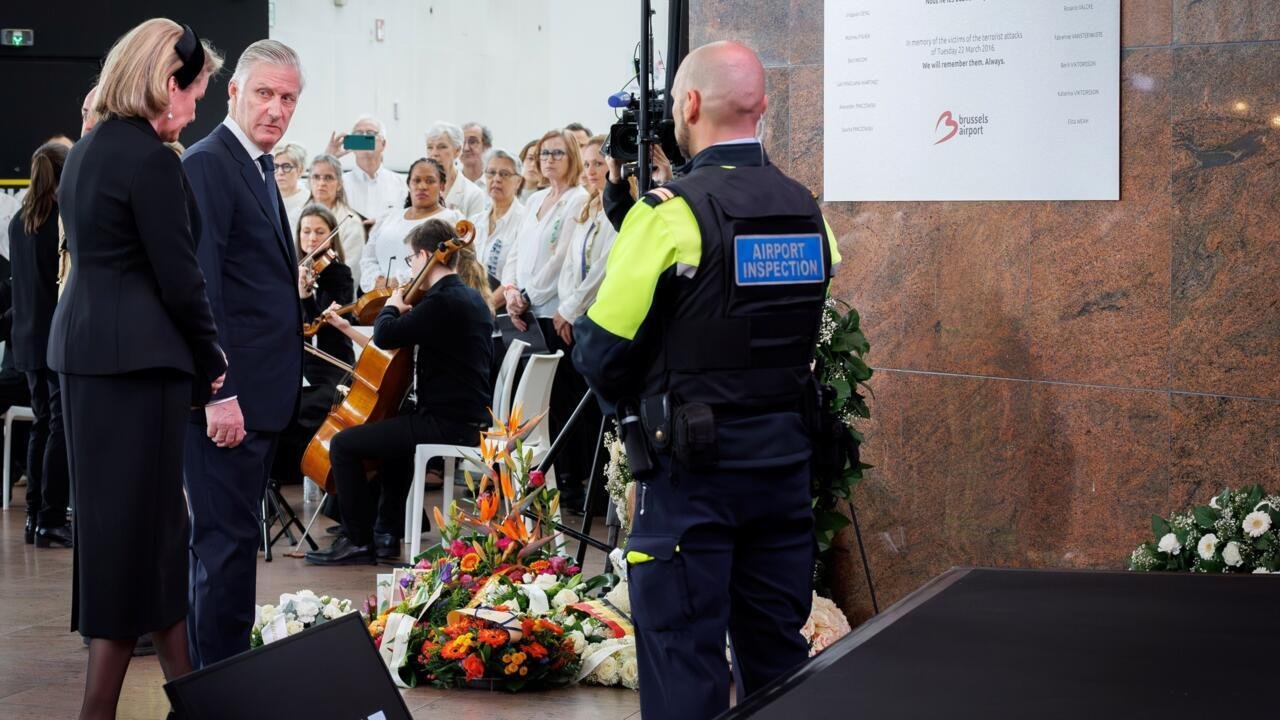
During a poignant gathering at a victims’ monument, King Philippe delivered a heartfelt message to the hundreds in attendance, stating, “Our country will never forget. We did not give in to fear, we did not give in to division.” Surrounded by Queen Mathilde and Prime Minister Bart de Wever, he listened attentively as survivors recounted their harrowing experiences from that fateful morning.
Commemoration Ceremonies
The remembrance activities began earlier in the day at the Brussels Airport in Zaventem at 8 AM, the same time the suicide bombers executed their attacks. An hour later, events unfolded at the Maelbeek metro station—one of the targeted places—before concluding at the victims’ monument.
“Living this life is not easy. I wake up every day with memories of horror,” shared Beatrice de Lavalette, who lost her legs in the airport explosion. “Every day, I remember lying on this floor bleeding out, and in that moment I told myself: ‘This is not my time. I will not die here.’”
De Lavalette, who now participates as a Paralympic horse rider, highlighted the profound impact of the tragedy. The attacks were executed by the same jihadist group responsible for the Paris attacks in November 2015, which claimed 130 lives. Following the arrest of Salah Abdeslam, the last surviving member of the Paris attackers, the group hastily organized the bombings, targeting both the airport and the metro station near the European Union headquarters.
A Reminder of Ongoing Threats
The commemorations took place against a backdrop of heightened anxiety regarding potential new attacks, largely influenced by the ongoing conflict in the Middle East. Earlier this month, a blast occurred at a synagogue in Liège, though fortunately, it resulted in no injuries. Similar incidents have also been noted in the Netherlands, prompting concerns about security across the region.
Currently, Belgium’s threat level stands at “serious,” just three out of four, following October’s terrifying incident where a gunman killed two Swedish football fans in Brussels.
Reflections on Security Improvements
In the aftermath of the 2016 attacks, Belgium faced significant scrutiny over its security measures. Gert Vercauteren, head of the national threat analysis center, reflected on this period, stating, “It’s a feeling of failure that obviously hit us all.” In response, the Belgian government undertook substantial reforms.
Prime Minister De Wever emphasized the necessity for those responsible for national security to learn from the past. He expressed this sentiment on social media prior to attending the ceremonies, underscoring the serious commitment to improving safety. Over the past decade, the state security service workforce has expanded from 600 to 950 agents. Vercauteren noted, “We have learned the right lessons,” highlighting the establishment of a shared database that tracks extremist profiles, a pivotal advancement for collaborative security efforts.
Despite improvements, many victims still feel insufficiently acknowledged for their physical and psychological traumas, complicating their access to compensation. “Many victims feel abandoned in their struggle for recognition and financial justice,” lamented Edmond Pinczowski, who tragically lost his two adult children during the attack.