

The Unyielding Spirit of a Ukrainian Olympian: Vladyslav Heraskevych
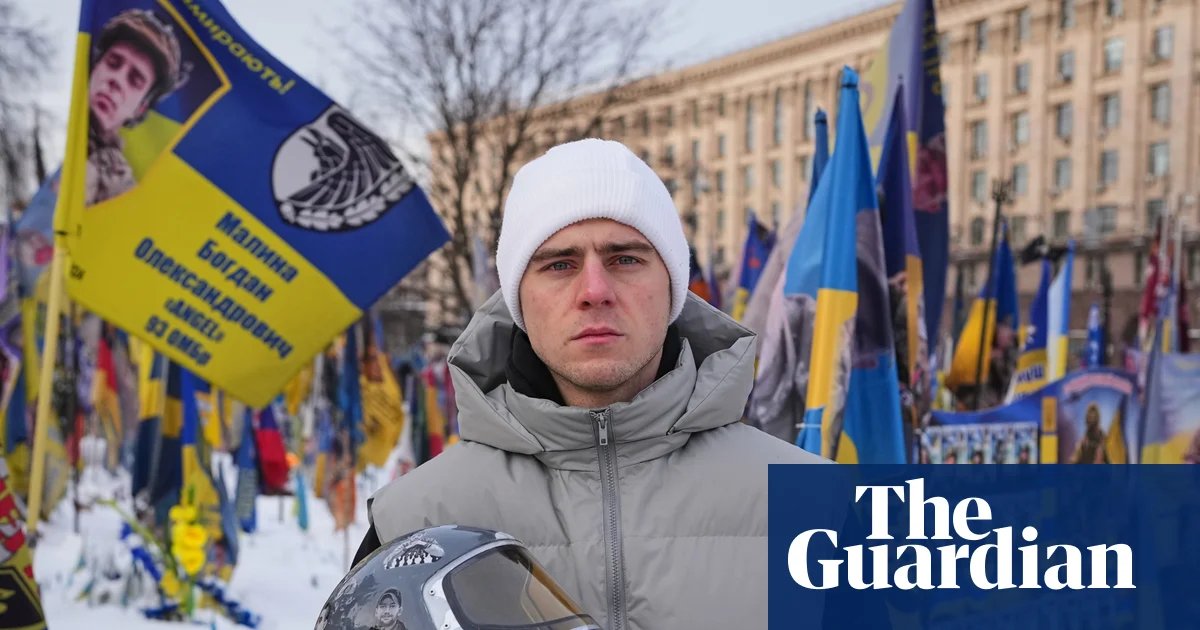
The 2026 Winter Olympics are forever marked by the image of a Ukrainian skeleton racer, Vladyslav Heraskevych, steadfast and resolute, brandishing a helmet adorned with the faces of 24 athletes who lost their lives due to the ongoing conflict with Russia. This striking visual serves as a poignant symbol of sacrifice and defiance, echoing the legacy of Tommie Smith and John Carlos’s iconic protest during the 1968 Olympics. In an exclusive interview following his disqualification from the Milano Cortina Games, Heraskevych makes it clear: he has unfinished business with the Olympic arena.
His ambition goes beyond merely competing in the 2030 Games set in the French Alps; he intends to secure a gold medal while donning the very “helmet of memory” that led to his recent ban. “I have a deep passion for skeleton,” he shares earnestly. “I aspire to return and compete in the Olympics. First, we need to appeal to a court that isn’t influenced by the International Olympic Committee. Our objective is to win that case. After that, I want to participate in the Olympic events with the same helmet. And of course, I aim to win a gold medal.”
Returning to Kyiv and Seeking Justice
After a whirlwind two weeks that catapulted him into the global spotlight, Heraskevych finds himself back in Kyiv. Within this period, he garnered significant recognition: an order of freedom from President Volodymyr Zelenskyy and a generous donation of $200,000 from Rinat Akhmetov, the president of Shakhtar Donetsk, matching the compensation typically awarded to Ukrainian gold medalists at the Olympics. Amidst this acclaim, Heraskevych is hesitant to view himself as a hero. “I don’t consider myself a hero. I did not act heroically. I’m grateful for the support, but the true heroes are the individuals on the helmet. Many of them never had a chance to live an adult life. Their sacrifice is why the world is talking about Ukraine, not me.”
Emphasizing his commitment to his homeland, he states that the $200,000 will be allocated to a charity foundation to aid fellow Ukrainians. Heraskevych admits that despite becoming a celebrated figure overnight, he never sought fame. “It was an odd experience. I felt somewhat caught in a whirlwind. I realized the impact during a drive from Milan to Munich when people began to recognize me at a gas station.”
Concrete Truths and Clarifying Misconceptions
Now that things have settled, Heraskevych wishes to clarify some misconceptions, particularly regarding rumors suggesting he collaborated with a global PR firm. He argues against such claims, pointing to the IOC’s rigid stance that transformed a personal tribute into an international news story. “I’m not a global superstar or a part of the PR world. Initially, the idea that the IOC would disqualify me without valid grounds was unexpected.”
Heraskevych decided to honor the 24 Ukrainians who lost their lives in the conflict just weeks before the Games. “I had personal connections with many of them, so it was vital to take them with me, as they too aspired to compete in the Olympics at some point.” He had previously honored the late Ukrainian activist Pavlo Petrychenko during the 2024-25 skeleton season by featuring one of his quotes on his sled.
Heraskevych reveals that he had recently signed a contract with Visa, one of the IOC’s key sponsors, making the prospect of controversy a significant risk. “If the IOC wishes to assign blame for this scandal, they should reflect on their policies. If I had a PR initiative, the IOC inadvertently served as my PR firm.”
A Confrontation with the IOC
He expresses frustration at the IOC’s justification for his disqualification, remarking that their reasoning suggested they could not allow any conflicts to be highlighted during the event. “My helmet displayed no violence, just portraits of athletes,” he argues. “There were no Ukrainian flags or symbols. While numerous conflicts exist worldwide, some days in Ukraine, we experience more casualties than in several others combined.”
Reflecting on his emotions during a tense final meeting with IOC president Kirsty Coventry, he recalls how she left the discussion in tears while he departed with his Olympic dreams shattered. “We spoke respectfully, but we discovered afterward that the decision for my disqualification had been made the night before,” he reveals.
During their conversation, he voiced his frustration over another athlete competing with a Russian flag, while many Russian fans in the audience remained unimpeded. “It appears the IOC is complicit with Russia,” he states. “They enforce rules with no repercussions. Why am I treated differently?”
Despite being allowed to practice with his “helmet of memory” and wearing a black armband during competition, he still believes he could have influenced a positive change. “I asked Coventry if I could wear the helmet, and later, they could revise the rules. I didn’t break any.”
Advocating for Solidarity
Heraskevych also suggested that the IOC could demonstrate their commitment to Ukraine by providing electric generators to assist athletes and facilities during the ongoing energy crisis. “It aligns with Olympic values of peace and friendship,” he remarked. “It would serve to enhance the IOC’s image.
Concerns about Future Competitions
Now, as the four-year anniversary of Russia’s invasion of Ukraine approaches, Heraskevych holds onto vivid memories of that fateful morning, waking to the sounds of explosions. “The initial days were terrifying, characterized by chaos. We lacked reliable news sources, leaving us uncertain about the troops’ movements and hesitations between false alarms and genuine threats.”
Ahead of the 2022 Games in Beijing, he displayed a sign that read, “No war in Ukraine,” and has since been vocal in condemning Russia’s involvement. With the upcoming Winter Paralympics, where athletes can compete under their flag for the first time since Sochi 2014, he is appalled at the decision made by the International Paralympic Committee. “It’s a grave error,” he shares. “Some athletes competing were former soldiers involved in this brutal conflict. They could be propagandized while competing under their flag.”
Reflections on Sacrifice and Regret
Before his disqualification, it was evident through our conversations that he was resolute in his beliefs. Yet, looking back, does he harbor any regrets? “Naturally, I’m saddened that I couldn’t compete as I was in peak condition. But betraying these athletes is something I wouldn’t live with. The world comprehends the unfairness of my disqualification. I don’t regret my actions.”
In closing, Heraskevych delivers a poignant message: amidst the turmoil of war, it’s the simple things that truly matter. “War reminds us of what’s truly important. In this age of social media, many chase superficialities. Post-conflict, the most fulfilling thing is to see friends healthy and share simple moments with loved ones. That is what matters most—far beyond material possessions.”
Key Takeaways
- Vladyslav Heraskevych aims to return to the Olympics, seeking justice for his disqualification.
- He emphasizes the importance of remembering the victims of war, not viewing himself as a hero.
- Heraskevych advocates for solidarity efforts from the IOC toward Ukraine.
- He believes in the power of simple human connections over material gains during challenging times.