

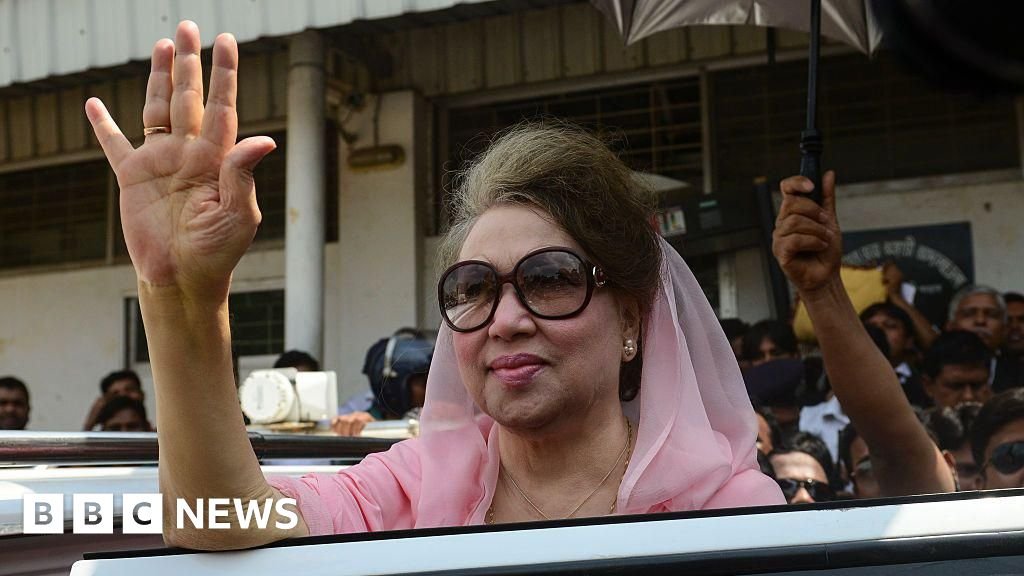
Khaleda Zia, Bangladesh’s First Female Prime Minister, Passes Away at 80
Bengal’s groundbreaking political leader Khaleda Zia passed away at the age of 80 after a long battle with health issues.
A Pioneering Political Figure
Khaleda Zia made history as Bangladesh’s first female prime minister, taking office in 1991 following a victory in the nation’s first democratic election in two decades. Sadly, her condition had been described as “extremely critical” by doctors just days before her death. Despite being on life support, medical professionals indicated that her age and deteriorating health limited treatment options.
Political Legacy and Feud
Her death marks the end of an era characterized by a fierce rivalry with Sheikh Hasina, another significant female leader in the country’s political landscape. Over the years, the two leaders alternated between holding power and serving in opposition roles, a dynamic that greatly influenced Bangladesh’s political scene.
The Bangladesh Nationalist Party (BNP), which Zia led, confirmed her passing via social media: “Our favorite leader is no longer with us. She left us at 6 am this morning.” Following this announcement, large crowds gathered outside Evercare Hospital in Dhaka, where Zia was being treated, with police attempting to manage the influx of supporters.
A Journey in Politics
Khaleda Zia initially came into the public eye as the spouse of former president Ziaur Rahman. Following his assassination in 1981, she ventured into politics, ultimately becoming a prominent leader for the BNP. Known for her tenacity, Zia refused to participate in a disputed election orchestrated by military ruler General Hussain Muhammad Ershad in the 1980s. This decision solidified her reputation as a formidable presence in a male-dominated political arena.
During her first term, she garnered praise for her initiatives to improve women’s education and social development while restoring parliamentary democracy through constitutional amendments. However, her second term was marred by controversy due to a one-sided election that drew ire from opposition parties.
Returning to power in 2001, her government faced accusations of corruption, and she stepped down in late 2006 ahead of another general election. Over the past 16 years, Zia became a symbol of resistance against what many perceived as an increasingly autocratic regime led by the Awami League.
Health Challenges and Legacy
Zia’s health had declined significantly in recent months, with severe kidney damage, heart disease, and pneumonia among her ailments. Nonetheless, she remained a vital figure for the opposition forces, as her party strategized for the upcoming general elections. Reports indicated that Zia would potentially run for office despite her health challenges.
In the aftermath of Zia’s passing, interim leader Muhammad Yunus expressed his condolences, recalling her as a “source of utmost inspiration for the nation.” He highlighted her role in promoting democracy, multi-party politics, and human rights within Bangladesh.
Family members, including her son Tarique Rahman, who only recently returned from 17 years in exile, were by her side during her final moments. The BNP has asked supporters to pay respects and pray for Zia’s soul, calling her a “great guardian” of Bangladesh’s democratic aspirations.
Conclusion
Khaleda Zia’s death marks a significant chapter in the political history of Bangladesh. As the nation reflects on her contributions and legacy, many will remember her as a trailblazer for women’s leadership in a challenging political landscape.
- Khaleda Zia, Bangladesh’s first female prime minister, has passed away at the age of 80.
- She was known for her rivalry with Sheikh Hasina, which shaped the country’s politics.
- Zia’s political career spanned several decades, marked by both significant achievements and controversies.
- Her passing has prompted an outpouring of grief and tributes from supporters and political figures alike.