

Protests Erupt in Bangladesh Following Activist’s Death
Bangladesh has witnessed a surge in protests after the recent death of a prominent youth activist, Sharif Osman Hadi. Known for his role in last year’s anti-government demonstrations that led to the ousting of former Prime Minister Sheikh Hasina, Hadi was fatally shot last week in Dhaka, spurring unrest across the nation and raising serious concerns about the future of independent journalism in Bangladesh.
Protests Target News Outlets
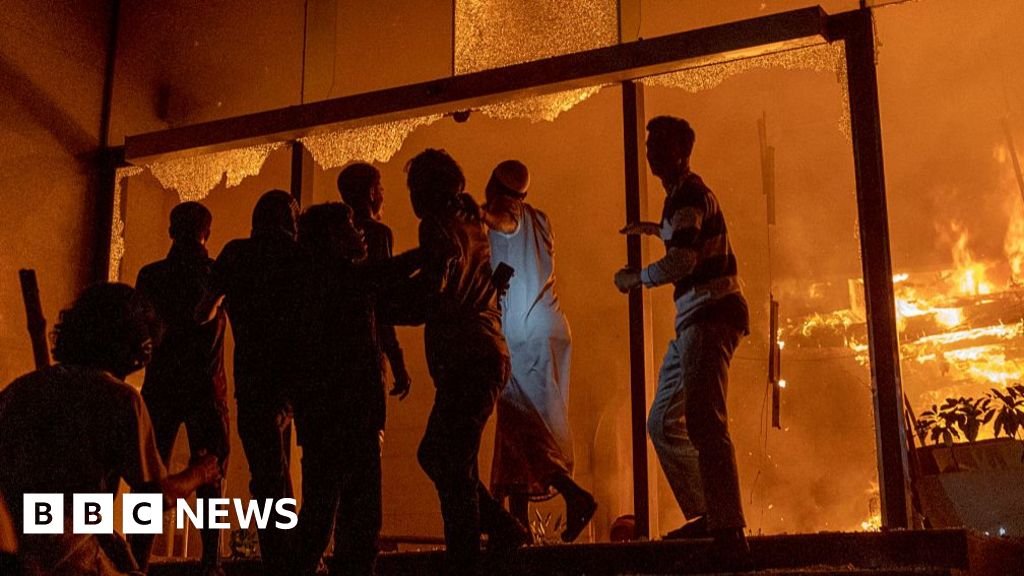
In the aftermath of Hadi’s death, the offices of two major newspapers, The Daily Star and Prothom Alo, faced a violent backlash from crowds of protesters. On Thursday night, these protesters stormed the buildings, leading to substantial damage and leaving staff members in a state of panic.
Kamal Ahmed, a consulting editor at The Daily Star, reported that for the first time in 35 years, the publication was unable to release its print edition, citing safety concerns for journalists trapped inside. “Twenty-eight of our colleagues were on the rooftop for several hours, gasping for fresh air, before military reinforcements finally rescued them,” he stated.
Fortunately, there were no serious injuries reported; however, both buildings were severely charred, with smoke still rising from Prothom Alo’s premises during an inspection the following day. The attacks highlight the escalating tensions between the government and media outlets perceived as critical of the interim administration led by Nobel laureate Muhammad Yunus.
Government Response
The interim government has publicly condemned the violence, emphasizing that “attacks on journalists are direct attacks on truth.” They expressed a commitment to bringing those responsible to justice, framing the incidents as harmful to the country’s democratic transition. In their statement, they advised against allowing “a few individuals who thrive on chaos” to disrupt the quest for stability.
Aside from the assaults on the newspapers, numerous historical sites, including the home of Bangladesh’s first president Sheikh Mujibur Rahman—who also happens to be the father of the former Prime Minister—were vandalized and set ablaze during the protests.
Sharif Osman Hadi: A Rising Star
Sharif Osman Hadi, just 32 years old, was a senior leader of a student protest group called Inqilab Mancha and had gained a reputation as a vocal critic of Hasina. Following last year’s protests, he became a prominent media figure, drawing significant attention to various social issues, while also accumulating adversaries. Tragically, on December 12, he was shot by masked assailants after leaving a mosque in Dhaka and later succumbed to his injuries in a Singapore hospital.
Expressing deep remorse, Yunus referred to Hadi’s death as “an irreparable loss for the nation,” contending it was part of a calculated effort to destabilize the country ahead of elections scheduled for February—marking the first political contest since Hasina’s removal.
The interim government has subsequently designated a national day of mourning to honor Hadi, who had planned to run as an independent candidate in the upcoming elections. Investigations are currently underway, and several arrests have been made in connection with the shooting.
Conclusion
The death of Sharif Osman Hadi has sparked a nationwide outcry and ignited further tensions in a country already grappling with political turbulence. As the people of Bangladesh approach a crucial election, the events following Hadi’s passing will likely shape the country’s political landscape for months to come.
- Protests erupted in Bangladesh following the death of activist Sharif Osman Hadi.
- The offices of major newspapers were targeted, leaving journalists trapped and fearful.
- The interim government condemned the violence and committed to justice for the attacks.
- Hadi’s death has raised concerns regarding the future of independent journalism and upcoming elections.