

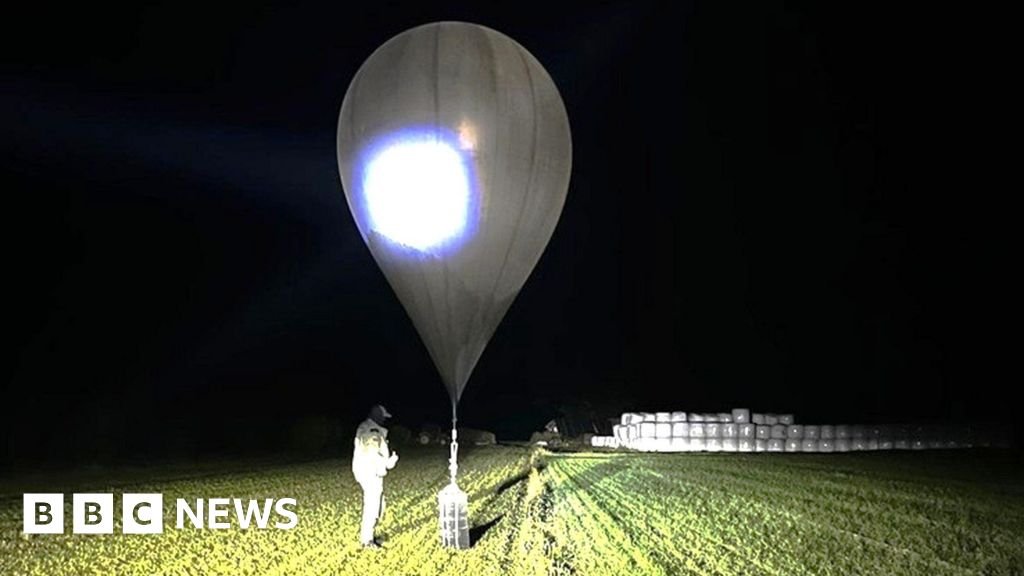
Hybrid Warfare: Balloons and Smuggling in Lithuania
As tensions rise between Belarus and Lithuania, an unusual threat has emerged: giant balloons carrying contraband items are crossing the border, disrupting air travel and raising concerns of hybrid warfare. This article explores the impacts of this phenomenon on Lithuania and its government’s response to what they consider a dire situation.
The Balloon Crisis
When winds blow from the northwest, Lithuania faces a unique challenge. Over the past ten weeks, large white balloons, which are often linked to smuggling operations, have been frequently spotted crossing from Belarus. These balloons carry crates of inexpensive cigarettes, and their presence has led to the closure of Lithuania’s main airport on 15 occasions, affecting thousands of travelers.
In one extreme case, airspace was shut down for an entire 11 hours. Lithuanian officials argue that this is more than just a smuggling issue; they believe these balloons are being used as tools in a larger strategy of hybrid warfare orchestrated by Belarus, Russia’s closest ally, amid ongoing tensions in the region.
Government Response
In response to this escalating situation, the Lithuanian government has declared a state of emergency. Traditionally, balloon smuggling has been a minor crime, but the frequency of these incidents has raised alarms. Foreign Minister Kestutis Budrys remarked, “This isn’t merely organized crime; it’s a strategic move by Belarus to exert influence and leverage over neighboring countries.”
He asserts that the balloons are strategically launched to target Lithuania’s airport—a mere 30 kilometers from the border, suggesting a calculated approach rather than random acts of smuggling.
Prevention Measures
The government has ramped up its patrols along the border, sending military police at night to check vehicles and search for any connection to the smuggling operations. Despite the high altitude of the balloons, which makes them difficult to intercept using conventional defenses, authorities are investing in tracking technology and offering substantial rewards for effective solutions to neutralize this airborne threat.
The Role of Belarus
The situation at the border has dramatically changed, with increased security measures now evident in the form of high fences and barbed wire. Belarusian President Alexander Lukashenko has denied these balloons are part of a state-sponsored operation, attributing their launch to rogue smuggling groups. However, authorities in Lithuania suspect otherwise, noting that the balloons’ patterns and timing suggest state involvement.
Evidence points to a deliberate strategy by Belarus to provoke political pressure and garner attention regarding sanctions imposed on its regime following human rights abuses and electoral controversies. This attempt to disrupt European security and influence policy is viewed seriously by Lithuanian officials.
Impact on Aviation
The aviation industry is facing unprecedented challenges due to these disruptions. As airports in Lithuania adapt to this new kind of threat, some airlines have relocated operations while others have altered their schedules. Airport CEO Simonas Bartkus warns that the financial impact could amount to around €2 million by year’s end, emphasizing concerns over passenger trust in air travel.
Conclusion
Overall, the ongoing situation with balloon smuggling from Belarus into Lithuania illustrates the complex nature of modern conflicts, where traditional boundaries are blurred by new forms of warfare. As authorities mobilize to tackle this challenge, the ripple effects on travel and regional stability are of significant concern.
Key Takeaways
- Giant balloons carrying contraband from Belarus are impacting air travel in Lithuania, leading to multiple airport closures.
- The Lithuanian government views these incidents as hybrid warfare, not mere criminal activity.
- Enhanced border security measures and military patrols have been implemented to counter this threat.
- The aviation sector faces economic losses and challenges related to passenger confidence due to ongoing disruptions.