

Expiry of Russia-Ukraine Truce Amid Accusations of Violations
The recent truce between Russia and Ukraine, aimed at coinciding with Orthodox Easter, has officially come to an end. Despite a brief period of reduced air raids, both nations accused each other of numerous ceasefire breaches during the 32-hour agreement. This article delves into the details surrounding the truce and its aftermath.
The Truce Details
Initiated on Saturday at 4:00 PM (1300 GMT) and concluding at the end of Sunday, the truce was meant to foster peace during the holiday. Russian President Vladimir Putin announced the ceasefire just days after Ukrainian President Volodymyr Zelensky had previously proposed it. However, like a similar pact last year, the 1,200-kilometer (745-mile) front line experienced only relative calm.
Ceasefire Violations
As of 10:00 PM (1900 GMT) on Sunday, the Ukrainian military reported an alarming 7,696 violations from the opposing side. While Russia adhered to certain aspects of the ceasefire, they acknowledged ongoing operations in some areas, including the deployment of FPV drones. In response, Russia claimed Ukraine had nearly 2,000 ceasefire breaches.
“A total of 1,971 ceasefire violations by units of the Ukrainian armed forces were recorded…,” noted Russia’s defense ministry.
A Call for Extended Peace
In his evening address on Saturday, President Zelensky urged for an extended ceasefire, proposing that Ukraine had communicated this to Russia. However, Kremlin spokesperson Dmitry Peskov dismissed the request, stating that any extension would require Ukraine to accept Russia’s conditions.
Peskov mentioned, “Until Zelensky musters the courage to assume this responsibility, the special military operation will continue after the truce expires.”
Effects of the Truce
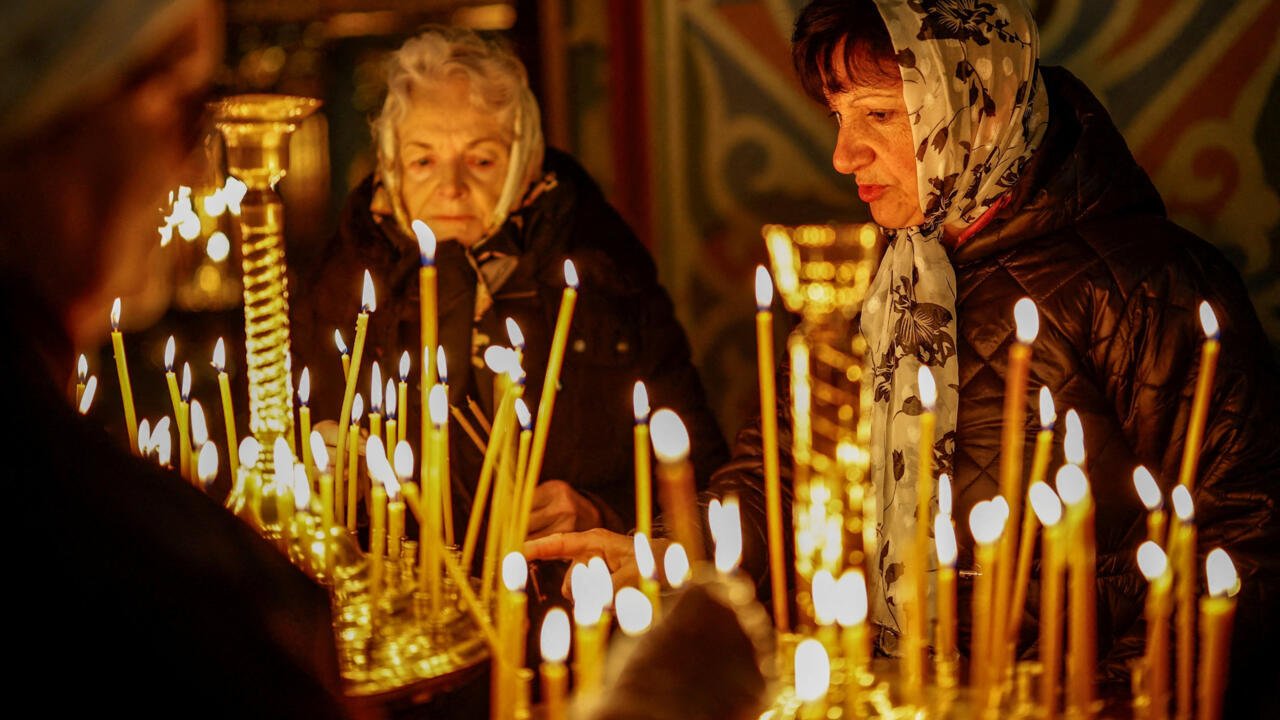
Despite violations, the ceasefire had some impact, as the Ukrainian army reported an absence of long-range drone strikes and missile attacks. This reprieve allowed soldiers in the Kharkiv region to partake in Easter traditions amidst the chilly forest.
Lieutenant Colonel Vasyl Kobziak remarked, “The truce wasn’t fully observed, but it provided an opportunity for our comrades to have their Easter baskets blessed.”
Skepticism Among Residents
In contrast, residents of Zaporizhzhia expressed doubts regarding Russia’s sincerity. One young manager commented, “I think they’re using this as a cover to regroup,” while a local economist insisted that a true ceasefire shouldn’t just last for a day.
Stalled Peace Process
Recent months have seen numerous failed negotiations aimed at reaching a resolution to the ongoing conflict, worsened by shifting international attention towards the Middle East. Efforts to establish a peace deal presented challenges, particularly surrounding territorial disputes.
Ukraine has suggested freezing the conflict along existing front lines, but Russia remains adamant about claiming the entire Donetsk area, which remains partially under Ukrainian control. This ongoing conflict has resulted in significant human and economic costs, marking it as Europe’s most deadly clash since World War II.
Conclusion
The expired truce between Russia and Ukraine underscores the complexities of achieving lasting peace amidst accusations of violations and ongoing military operations. As both sides reassess their strategies, the path forward remains fraught with uncertainty.
- The truce lasted 32 hours, with both sides reporting numerous violations.
- Russia and Ukraine accused each other of breaking the ceasefire.
- President Zelensky called for an extension, but the Kremlin denied the request.
- The ongoing conflict has resulted in significant casualties and displacement.