

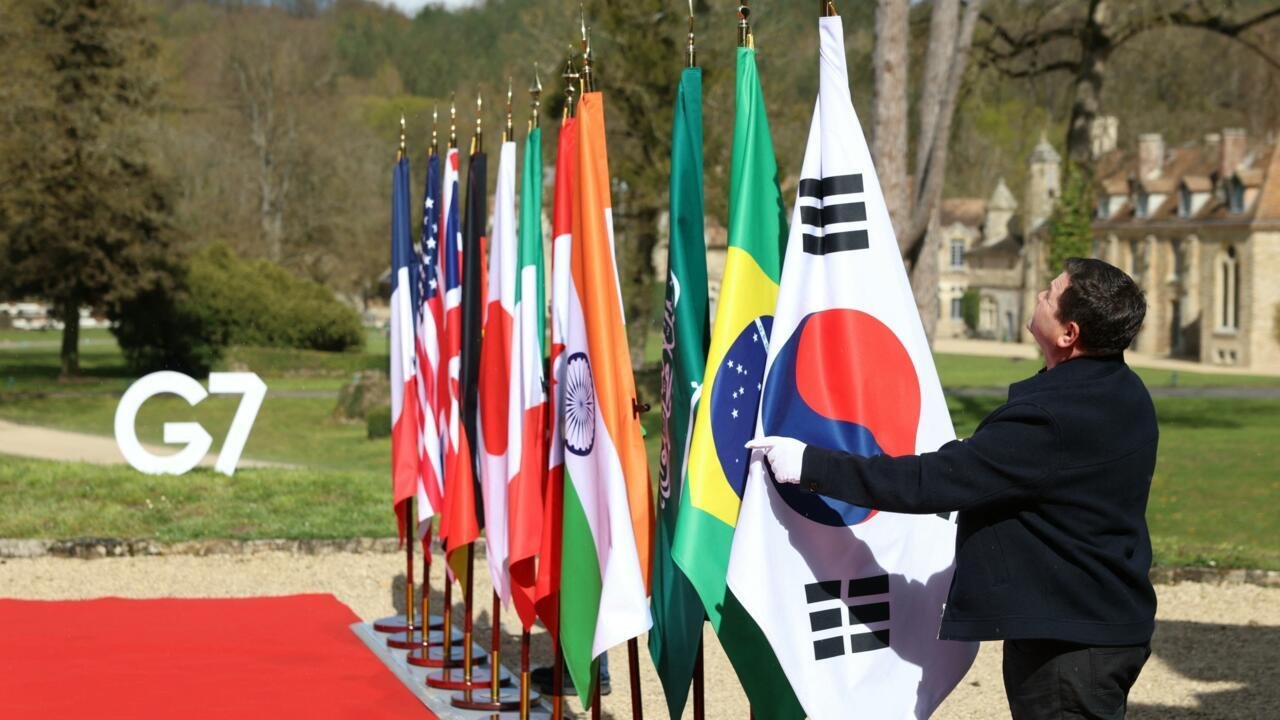
G7 Foreign Ministers Meeting: Addressing Global Tensions
This week, foreign ministers from the G7 nations convene just outside Paris in an effort to bridge differences with the US regarding the ongoing Middle East conflict. As discussions unfold over two days at Vaux-de-Cernay Abbey, key issues such as the Ukraine war and the Gaza crisis will also be front and center on the agenda.
U.S. Involvement and Regional Tensions
As tensions escalate, the White House has indicated that President Trump is prepared to take aggressive measures against Iran if diplomatic efforts fail to resolve the conflict between the US, Israel, and Iran. This meeting marks the first international engagement for U.S. Secretary of State Marco Rubio since the onset of the conflict. He will join his counterparts from Canada, Germany, Italy, France, Japan, and the United Kingdom on the second day of the conference.
France’s Leadership and Objectives
France, which currently holds the rotating G7 presidency, aims to tackle global disparities that are contributing to the rising tensions. French Foreign Minister Jean-Noel Barrot emphasized the need to address these imbalances, which have real repercussions for citizens worldwide. Amid the fighting, he urged Israel to avoid escalating its military presence in southern Lebanon, especially with Hezbollah’s recent attacks on Israeli territory.
Expanding the G7 Dialogue
In an effort to foster broader international collaboration, France has extended invitations to foreign ministers from emerging markets including Brazil and India, as well as representatives from Ukraine, Saudi Arabia, and South Korea. Additionally, France is set to convene finance ministers, energy ministers, and central bank governors in a separate G7 meeting on Monday to discuss pressing economic and energy challenges.
Concerns Over U.S. Policies
Despite the close alignment of G7 members with the U.S., several nations have hesitated to openly endorse military action against Iran, a stance that has frustrated President Trump. German Finance Minister Lars Klingbeil has publicly criticized what he termed Trump’s “misguided policies” in the region, highlighting the economic repercussions for Germany.
As diplomatic discussions aim to ease tensions, reports indicate that the U.S. is engaging with a significant figure in Iran’s clerical leadership. However, this initiative faces hurdles; Iranian state media has declared the rejection of a peace plan delivered through intermediaries. The potential U.S. action against Iranian energy sectors remains a point of concern for European allies, all of whom advocate for a de-escalatory approach.
Broader Implications for Global Stability
Moreover, British Foreign Minister Yvette Cooper expressed concerns that the violence in the Middle East may detract from efforts to address the situation in Gaza and the ongoing unrest in the West Bank. Meanwhile, with the conflict in Ukraine entering its fourth year, Barrot reaffirmed the G7’s commitment to supporting Ukrainian resistance and maintaining pressure on Russia.
Conclusion
The ongoing G7 meeting highlights the pressing global challenges that require collaboration and dialogue. As nations navigate the complexities of international relations, the hope is that collective efforts will lead to meaningful resolutions for the crises in the Middle East, Ukraine, and beyond.
Key Takeaways:
- The G7 meeting aims to address differences with the U.S. regarding the Middle East conflict.
- France seeks to tackle global disparities contributing to rising tensions.
- Concerns persist about U.S. policies impacting European economies.
- Support for Ukraine remains a priority for the G7 amidst various global crises.