

EU and Australia Finalize Landmark Free Trade Agreement
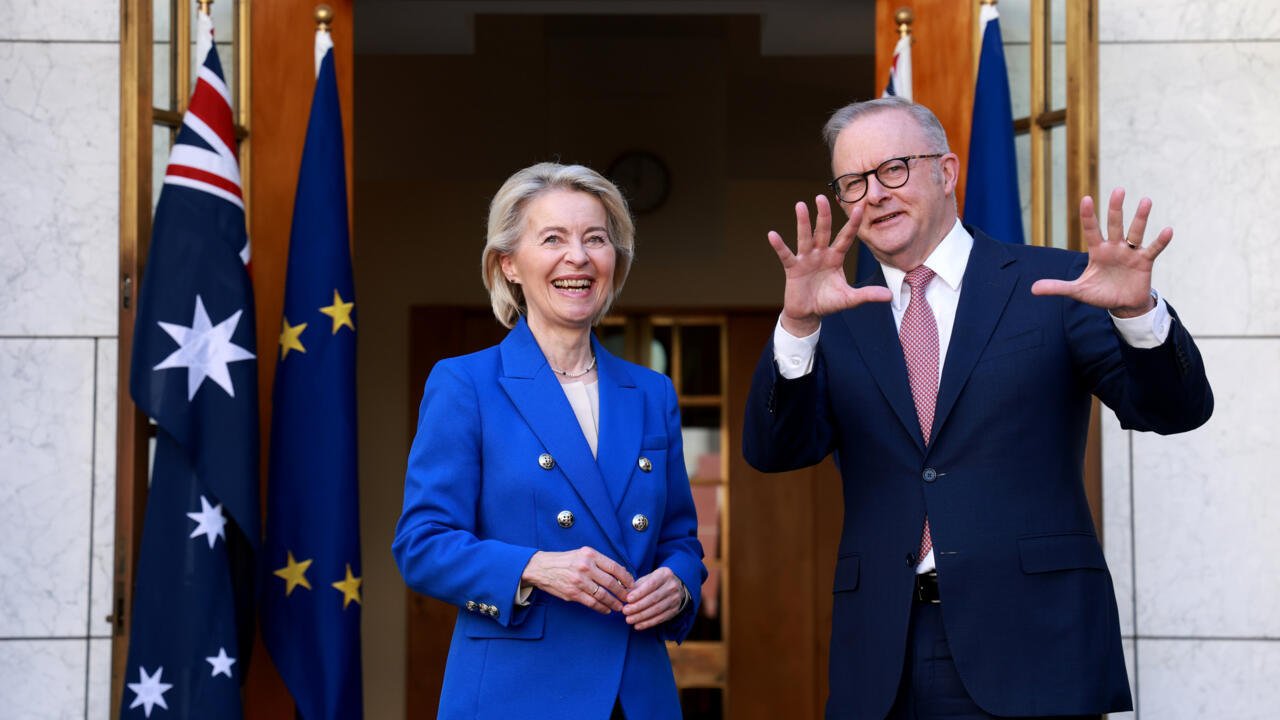
In a significant development, European Union chief Ursula von der Leyen and Australian Prime Minister Anthony Albanese have officially announced a long-awaited free trade agreement. This deal aims to enhance exports amid growing global trade uncertainties. Von der Leyen’s recent visit to Australia, accompanied by trade commissioner Maros Sefcovic, highlights the 27-nation bloc’s move to bolster trade relationships, particularly with Australia, as both entities navigate the challenges posed by the ongoing conflict in the Middle East.
Key Features of the Agreement
The newly inked accord is part of Brussels’ broader strategy to diversify its trading partners, particularly as tensions rise with the United States and China. Along with trade agreements, the two sides have also pledged to enhance cooperation in defense and secure access to critical raw materials.
Common Values for Collective Security
During her address to the Australian parliament, von der Leyen depicted an increasingly “brutal, harsh, and unforgiving” global landscape. In response, she emphasized the shared values between the EU and Australia and the necessity for collaboration to reduce dependence on nations like China for essential minerals.
“We cannot be over-dependent on any supplier for such crucial ingredients, and that is precisely why we need each other,” she stated, highlighting the inseparable ties between security in Europe and Australia.
A Win-Win Deal for Both Businesses
Von der Leyen characterized the agreement as a “fair deal,” benefiting both Australian and European businesses. After nearly eight years of negotiations, significant issues like the use of European geographical names and the access of Australian beef into Europe were successfully resolved.
Important Compromises Achieved
As part of the compromise, Australian winemakers will be able to use the term “prosecco” domestically but will have to cease its use for exports after a decade. Additionally, Australia will retain the right to use certain geographical names such as feta and gruyere, provided they have been in use for at least five years.
Furthermore, European car manufacturers stand to gain from Australia raising the exemption threshold for luxury car taxes on electric vehicles, meaning three-quarters of EVs will now be exempt from such taxes. The EU anticipates that exports to Australia will increase by a third over the next ten years due to this trade deal.
Growing Trade Dynamics
The volume of Australian beef allowed into the EU will increase significantly—more than tenfold over the coming decade, although this increase does not entirely meet the expectations of Australian farmers. In 2022, EU firms exported goods worth 37 billion euros (approximately $42.9 billion) to Australia, and an additional 31 billion euros in services are expected by 2024.
Navigating Global Uncertainty
As Australia’s primary export market is China, with the United States serving as the largest source of its investments, the nation has intensified efforts to diversify its export markets. This shift follows a dispute with Beijing in 2020 that led to the halting of agricultural exports and the recent global implementation of US trade tariffs.
Simultaneously, the European Union is seeking to forge new partnerships in light of the ongoing challenges posed by US tariffs and Chinese export controls.
Energy Concerns Amid Global Conflicts
von der Leyen’s visit was underscored by the escalating conflict in the Middle East, which has caused a surge in oil prices. During her time in Canberra, International Energy Agency chief Fatih Birol cautioned that the world might face an unprecedented energy crisis if the situation remains unresolved. Von der Leyen has called for an immediate cessation of hostilities, stressing the critical nature of energy supply chains worldwide.
Australia, heavily dependent on fuel imports, is also experiencing the pressures of this global energy squeeze.
Conclusion
The conclusion of this free trade agreement between the European Union and Australia marks a pivotal moment in strengthening international relations and enhancing economic cooperation. As both parties work to diversify their markets and boost exports, they remain committed to collaborative security and stability in a volatile global landscape.
Key Takeaways
- The EU and Australia have signed a significant free trade agreement aimed at boosting exports.
- Common values and mutual security are central themes in the agreement.
- Structural compromises have been made on geographical names and beef exports.
- The deal is expected to substantially increase trade volumes between the two regions.