

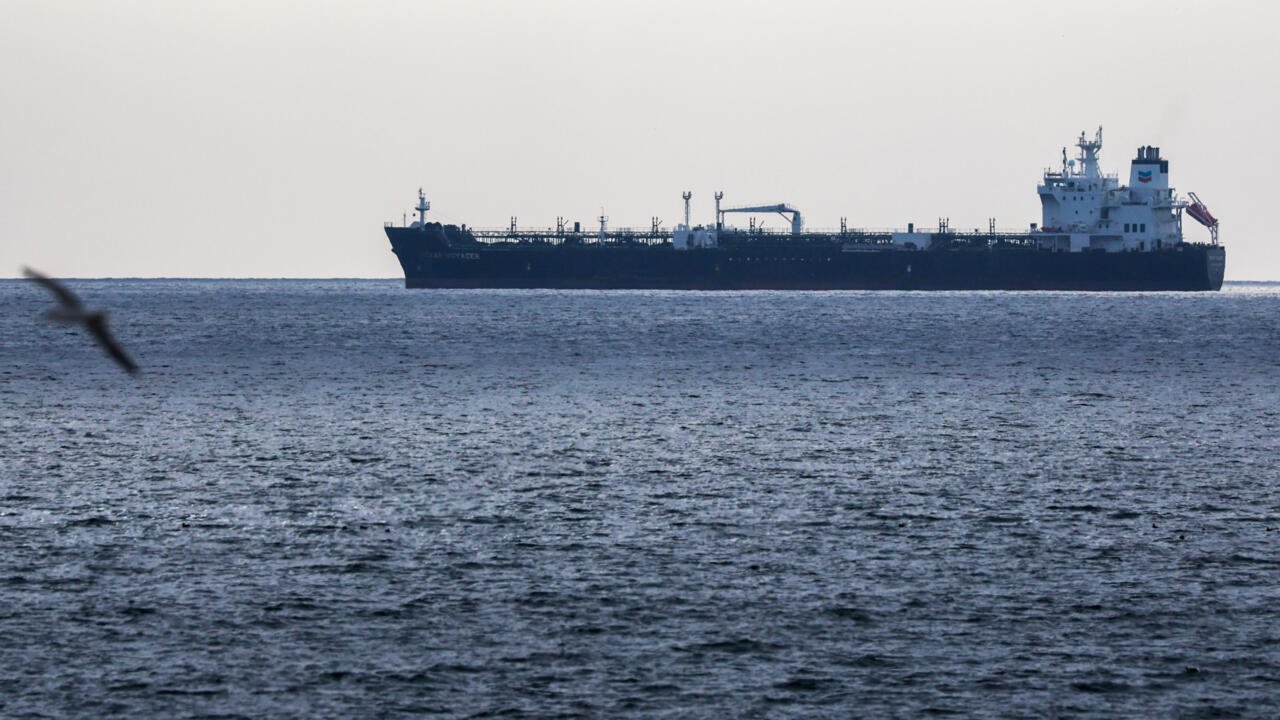
The US Eases Restrictions on Russian Oil Sales Amid Global Market Pressures
The United States has announced a temporary easing of restrictions on Russian oil sales as part of its efforts to stabilize global energy markets. This move comes in light of the ongoing conflict in the Middle East, particularly regarding Iran’s blockade of the Strait of Hormuz. But will this sanctions waiver significantly benefit Moscow? Here’s a closer examination.
Understanding the Sanctions Waiver
The newly granted waiver permits countries to purchase Russian oil currently in transit until April 11. However, analysts from Kpler, including Muyu Xu, emphasize that the impact will likely be limited due to its short duration and specific conditions. “This measure primarily allows Russian oil already at sea to complete its journeys and be offloaded,” she noted, characterizing it as a “wind-down, not a reopening.”
During the announcement, US Treasury Secretary Scott Bessent made it clear that this action would not yield a “significant financial benefit” for the Russian government, which relies heavily on energy revenue derived from taxes at extraction points. Current estimates suggest that about 120 million barrels of Russian crude are afloat, equivalently around two weeks’ worth of Russia’s total oil production. Nevertheless, Muyu Xu indicated that much of this oil has likely been pre-ordered by clients in China or India, reducing the potential for a substantial immediate increase in orders.
The Symbolic Value of the Waiver
While the waiver may hold more symbolic significance than financial clout for Russia, some analysts describe it as “a gift” in the context of ongoing sanctions. Richard Meade, editor-in-chief at Lloyd’s List Intelligence, observed that nations like Japan, Thailand, and the Philippines are exploring opportunities to buy Russian crude following the US announcement. However, Muyu Xu cautioned that there might still be hesitations among some countries, given that EU and UK sanctions remain intact. “It’s not straightforward; it’s not just a simple matter of opening the taps,” she stated.
The Kremlin has expressed approval of the US decision, with economic envoy Kirill Dmitriev urging further sanctions relief, asserting that more actions seem “inevitable” amid global market volatility. Additionally, Russian President Vladimir Putin recently indicated a willingness to supply oil to Europe if it were to reconsider its sanctions but insisted on terms that would protect it from political pressures.
The Impact of Rising Oil Prices
Beyond the recent US waiver, the uptick in oil prices since the start of the conflict in the Middle East has positively influenced Russia’s financial situation, which had suffered over four years of war against Ukraine and international sanctions. The ESPO blend of oil, often purchased by China and India, is now priced $30-40 higher per barrel than before the conflict began. Sergey Vakulenko from the Carnegie Endowment provides insight that each $10 increase per barrel could add an estimated $1.6 billion to Russia’s monthly tax revenue.
If oil prices maintain this $40 increase for six months, Russia could see an additional $38 billion, enough to offset most of the country’s projected $50 billion budget deficit for 2025. However, Russia has faced budget deficits since initiating military action against Ukraine and anticipates continued shortfalls in 2026. Revenues from oil and gas, which account for approximately 20% of the state income, had reached a five-year low earlier this year due to sanctions, production challenges, and attacks on energy infrastructure in Ukraine.
Commenting on the situation, Lloyd’s analyst Bridget Diakun remarked that the sanctions adjustments serve as a “godsend for Russia’s shadow fleet,” referring to tankers that navigate around sanctions. “This presents Russia with a significant opportunity to generate revenue,” she added.
Responses from Ukraine and Europe
Ukrainian President Volodymyr Zelensky criticized the US for its sanctions relief, asserting that it “certainly does not promote peace.” In contrast, European leaders have remained firm against easing sanctions. French President Emmanuel Macron noted that the closure of the Strait of Hormuz “in no way” justifies lifting restrictions on Russia, while British officials insisted on maintaining pressure on Moscow. German Chancellor Friedrich Merz echoed this sentiment, stating that “easing sanctions at this time, for any reason, is inappropriate.”
Conclusion
As the geopolitical landscape continues to shift, the recent easing of US restrictions on Russian oil sales raises important questions about its broader implications. While the measure might provide some immediate relief, both the symbolic and financial consequences for Russia remain to be fully evaluated in the context of ongoing global tensions.
- The US has temporarily eased restrictions on Russian oil imports through a new waiver.
- Analysts suggest that the measure will have limited immediate financial benefits for Russia.
- Russian oil prices have surged, generating additional revenue amidst ongoing sanctions.
- European leaders remain critical of any measures that could potentially ease pressure on Russia.