

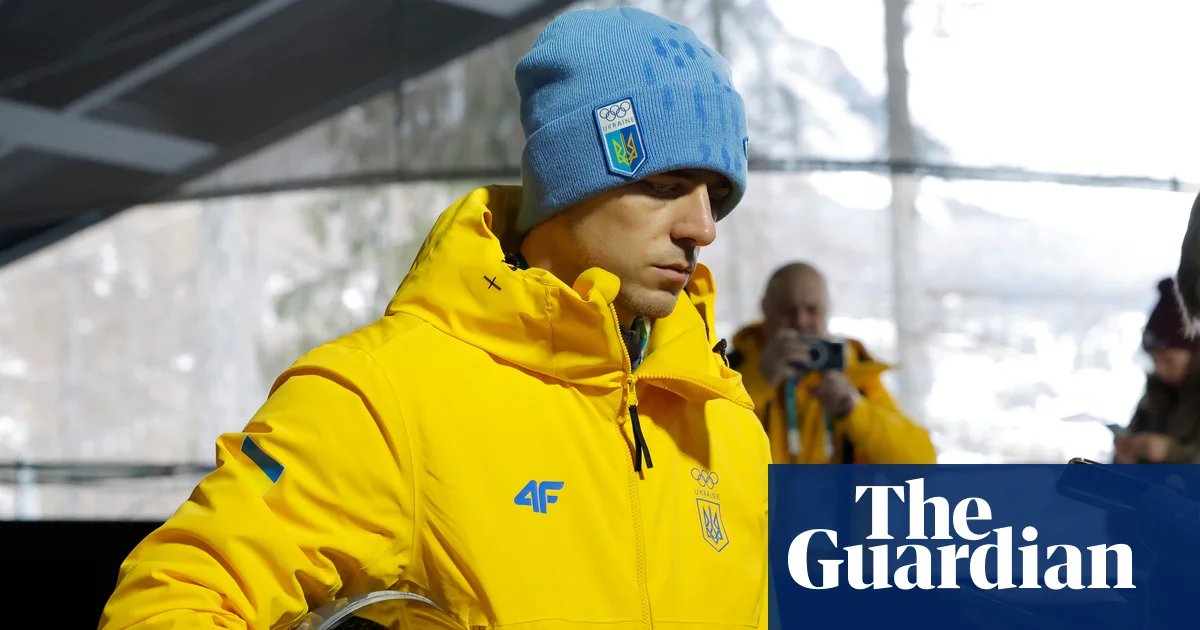
Vladyslav Heraskevych’s Stand at the Olympics: A True Test of Dignity
Competing at the Olympic level in skeleton racing demands not only unparalleled skill but also a remarkable resolve, especially when navigating treacherous corners at breathtaking speeds. As the world turned its attention to Ukraine’s Vladyslav Heraskevych, many wondered if he would maintain his composure. The International Olympic Committee (IOC) seemed to doubt his resolve, oscillating between threats of exclusion and soft diplomacy over the past weeks, yet failing to sway his convictions. Heraskevych, demonstrating profound commitment, made it clear he was ready to forfeit his dreams of Olympic glory for a more significant cause.
Both in public and private discussions, Heraskevych remained steadfast: he would not waver. If barred from competing while wearing his “helmet of memory,” honoring the 600 Ukrainian athletes and coaches who have lost their lives due to the ongoing conflict, he would face the consequences without regret. When the moment arrived on Thursday morning, just before 8:30 a.m., he articulated his message powerfully: “This is the price of our dignity,” alongside a poignant image of his helmet.
For the IOC, witnessing this was akin to enduring a public relations disaster; it felt inevitable, yet they were powerless to change the narrative. Heraskevych’s messaging was insightful, focusing not on political issues but on honoring his fallen compatriots, allowing him to navigate around the IOC’s stringent regulations against political statements in sports. Did everyone agree with his interpretation? Certainly not, but it was a clever maneuver.
He also pointed out the inconsistencies within the IOC’s policies regarding athlete expressions. For instance, during the opening ceremony, fellow skeleton racer Jared Firestone from Israel wore a commemorative kippah to honor victims of the 1972 Munich massacre, which proclaimed: “We remember. We endure. We rise.” Additionally, U.S. skater Maxim Naumov paid tribute to his deceased parents by displaying their photo during his event. Heraskevych asked a pressing question: why was his situation treated differently?
In further remarks submitted to the Court of Arbitration for Sport in an attempt to counter his competition ban, he questioned the proportionality of the IOC’s decision. With his helmet showcasing images of those lost to the war, the implications of his stand loom large.
The IOC evidently sought to steer clear of one of the most contentious moments in Olympic history. President Kirsty Coventry made an urgent trip to Cortina in an effort to bridge the divide. Her emotional state following the encounter highlighted her compassion and leadership approach. Nevertheless, allowing Heraskevych to practice with his helmet and wear a black armband during competitions proved insufficient to modify his stance.
The IOC under Coventry differs significantly from the one led by Thomas Bach, who rarely appeared sympathetic unless votes were at stake. Contrast this with past behaviors, such as when athletes Tommie Smith and John Carlos faced expulsion for their black power salute at the 1968 Olympics, supported by a then-IOC president who defended Nazi Germany, Avery Brundage.
Fast forward to today, and the IOC still struggles with acknowledging the intersection of sport and politics. Just last week, the IOC, alongside FIFA, hinted at reinstating Russia into the international sporting community. This comes despite Russia’s involvement in various incidents, from cyber-attacks during the Olympic Games to the destruction of sports facilities in Ukraine.
While some may argue that the IOC was inadvertently aiding Russian propaganda in banning an athlete honoring his friends, it undeniably presented a troubling image to the public. As the conversation around potential adjustments continues, the real concern remained that granting Heraskevych permission to display his helmet could have opened the floodgates for further political expressions in sports.
Perhaps the IOC could have explored alternatives. If they managed to establish an independent committee to determine Russian athletes’ eligibility as authorized neutral competitors, they could have done something similar for Heraskevych. A compromise might have muted the situation, allowing for continued discussions rather than an abrupt withdrawal from the competition.
Nonetheless, with Heraskevych’s resolute stance resonating, he has successfully brought the ongoing crisis in Ukraine back into public consciousness, achieving what he originally set out to do. As discussions around the inclusion of Russian athletes at upcoming Winter Paralympics unfold, it’s clear that the dialogue surrounding his actions will linger in the race to restore normalcy.
Conclusion
Vladyslav Heraskevych’s unwavering commitment to honor his fallen friends has sparked significant discussion around the intersection of sport and politics. His helmet, a powerful symbol of sacrifice, has drawn attention to the ongoing conflict in Ukraine and the ramifications of such political expressions in athletic arenas.
Key Takeaways
- Heraskevych chose to prioritize commemorating lost friends over Olympic aspirations.
- The IOC faced criticism for its inconsistent policies on political expressions in sports.
- Heraskevych’s actions brought Ukraine’s ongoing crisis back into the spotlight.
- The discussion surrounding sports and politics remains a contentious issue for the IOC.