

The Struggles and Hopes of Gaza’s Wounded
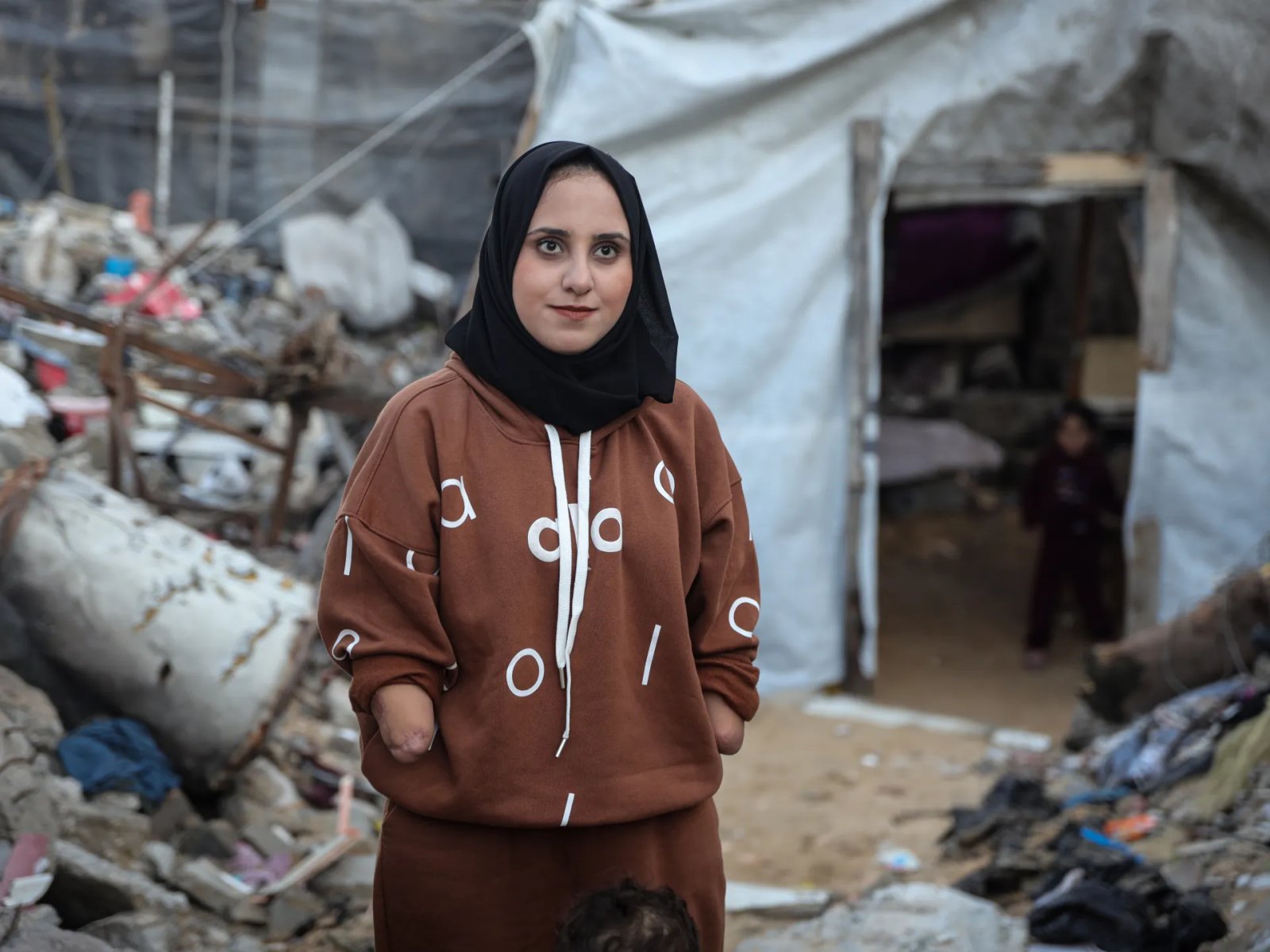
In the heart of Gaza City, 25-year-old Nebal al-Hessi patiently scrolls through her phone with what remains of her injured forearms. From her family’s makeshift tent in an-Nazla, Jabalia, she eagerly awaits updates on the potential reopening of the Rafah land crossing to Egypt. Nebal’s life took a tragic turn when her hands were amputated during an Israeli artillery strike on the home she was sheltering in on October 7, 2024. Like many others, she is hoping to seek the medical treatment that remains out of reach in her war-torn surroundings.
A Year of Suffering and Hope
For Nebal, it has been over a year since her injuries, and each day brings a blend of hope and despair. “Every day, I think about tomorrow, that I might travel, but I don’t know,” she shares, her voice barely above a whisper.
Recall of a Traumatic Day
As Nebal recalls that dreadful day, she remembers cradling her baby daughter, Rita, while trying to contact family members. The sudden explosion changed everything. “I was trying to catch an internet signal to call my family… and then, suddenly, the shell hit. There was dust; I don’t remember anything else,” she explains. The fragments of that shell were the reason for her amputations.
Daily Challenges
Post-attack, Nebal has faced an ongoing battle for survival. After spending around 40 days in the hospital for various surgeries, she now navigates life in displacement tents, lacking even the most fundamental care. “I can’t eat or drink on my own,” she admits. “My mother, sister, and sister-in-law help me with almost everything.”
The poignant reality of motherhood weighs heavily on her. “My little daughter wants me to change her, feed her, give her milk, hold her… she asks me, and I can’t,” she laments. “My life is completely paralyzed.”
A Path to Healing
Doctors stress the urgency of her situation, emphasizing that she needs advanced prosthetic limbs to regain some semblance of independence. “I need someone to take charge of my case so I can start living a normal life again,” she adds.
Living in Anticipation
With Palestinian authorities hinting at the reopening of the Rafah crossing for medical patients, Nebal is caught between hope and fear. Thousands of individuals, including herself, are still waiting for the specialized treatments they desperately need. The Ministry of Health in Gaza has indicated that many need urgent care unavailable within the territory, yet the process remains unclear and anxious.
Attempts to prepare for travel have left Nebal despondent, as she has received conflicting information. “I was told I would be among the first to travel… But this time, no one has contacted me yet,” she shares, a hint of resignation in her tone.
The Plight of Others
Similarly, 16-year-old Nada Arhouma’s life has been forever changed by a single injury. Displaced from Jabalia, she suffered severe facial injuries after being struck by shrapnel while in a displacement tent. The loss of her eye and ongoing health complications have left her family in despair.
A Father’s Frustration
Nada’s father, Abdul Rahman Arhouma, expresses his helplessness as he watches his daughter’s condition deteriorate despite attempts to treat her in Gaza. “We are waiting to travel for reconstructive surgery and a prosthetic eye, but we’re uncertain when the Rafah crossing will open,” he says with sadness.
Health System in Crisis
This pilot reopening of Rafah is mired in confusion, with many patients, like Raed Hamad, trying to access treatment for serious health issues like cancer. Interrupted treatment protocols and deteriorating health systems have left families grappling in desperation. “The war has made it almost impossible to obtain medicines,” Raed states, revealing the catastrophic impact on his journey to health amidst the ongoing conflict.
Conclusion
The experiences of Nebal, Nada, and Raed reflect the harrowing realities faced by countless individuals in Gaza. As they navigate life in the shadow of war, their stories highlight the urgent need for comprehensive medical support and infrastructure to address their critical health needs.
Key Takeaways
- Gaza’s medical infrastructure is on the brink of collapse, severely limiting access to necessary treatments for injured individuals.
- Many patients depend on the reopening of the Rafah crossing to seek critical medical care outside of Gaza.
- Injured individuals like Nebal and Nada illustrate the profound emotional and physical struggles faced due to their injuries.
- Ongoing conflicts and the resulting humanitarian crisis hinder timely medical interventions and recovery for patients.